There is a moment on this hike, maybe three hours up from the Valbona side, when the trail finally stops climbing. You come over a lip of rock, the wind changes, and a second valley opens up below you. It is green and deep and looks nothing like the one you left after breakfast. That saddle is Qafa e Valbonës, the Valbona pass, and it is the whole reason people come.
The walk from Valbona to Theth is the most famous hike in Albania, and for once the reputation is earned. In a single long day you cross from one of the most beautiful valleys in the Albanian Alps into another, over a pass at around 1,800 metres, through the heart of the range Albanians call Bjeshkët e Nemuna, the Accursed Mountains. You do not need to be a mountaineer. You do need a reasonable level of fitness, sensible shoes, and a bit of planning.
If you are still weighing up whether Albania is the right place for a hiking trip at all, start with our complete first-timer’s guide to hiking in Albania. This article assumes you have already settled on the Valbona to Theth crossing and want to know how to do it well.

Why This Is the Hike Everyone Walks
Albania has hundreds of kilometres of mountain trails, many of them emptier and wilder than this one. So why does almost every visitor end up on this particular path?
Partly it is the shape of the thing. This is a true point-to-point crossing. You start in one valley, climb to a pass, and walk down into a different valley, a different village, a different river. You finish the day somewhere you could not have reached from your starting point without hours in a car. That feels like a journey in a way an out-and-back walk never quite does.
Partly it is access. The route is graded and marked, the climb is demanding but never technical, and in summer you can walk it without a guide and without any permit. It is the rare hike that suits both experienced walkers and reasonably fit people who have never done a mountain day before.
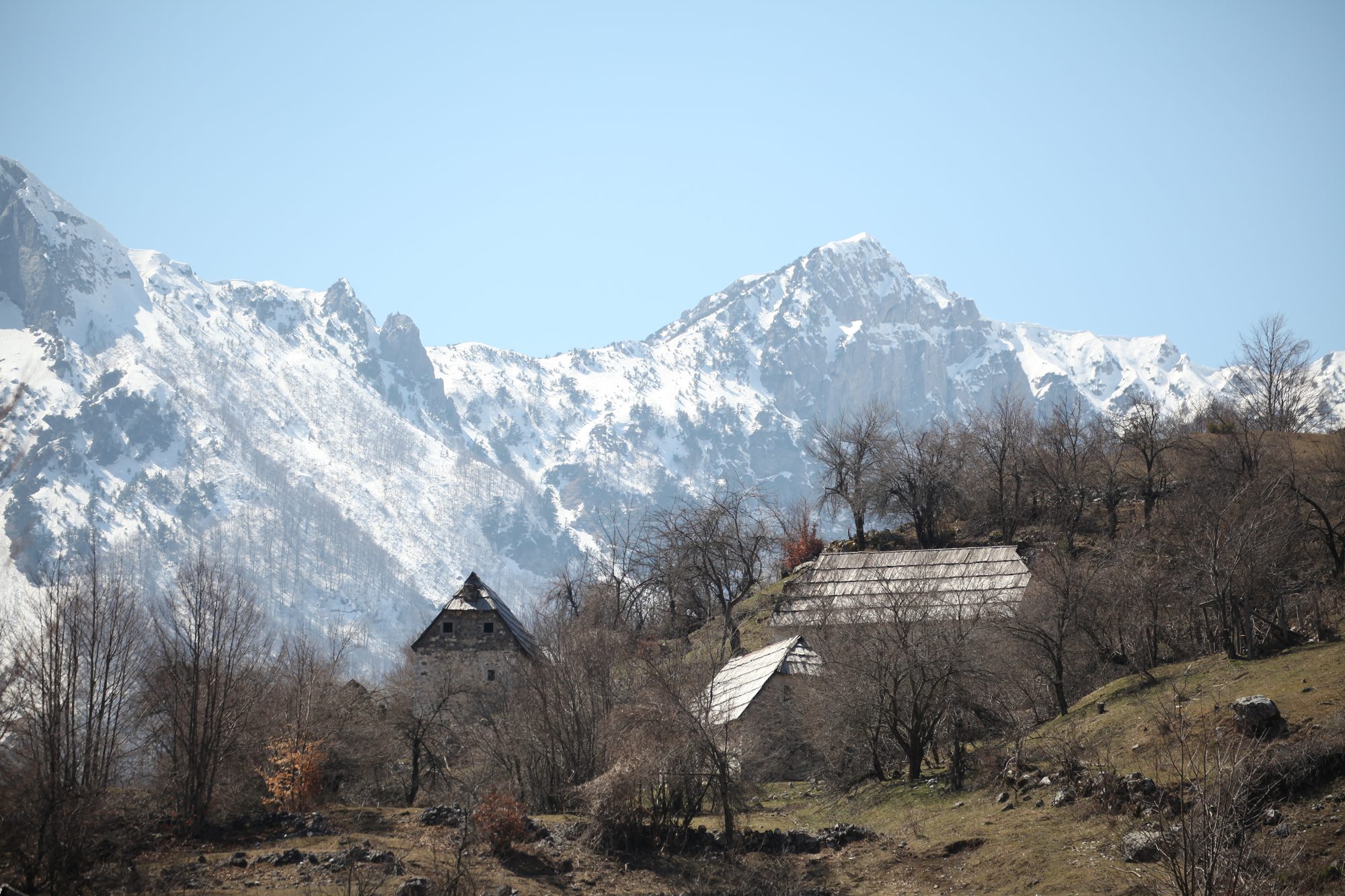
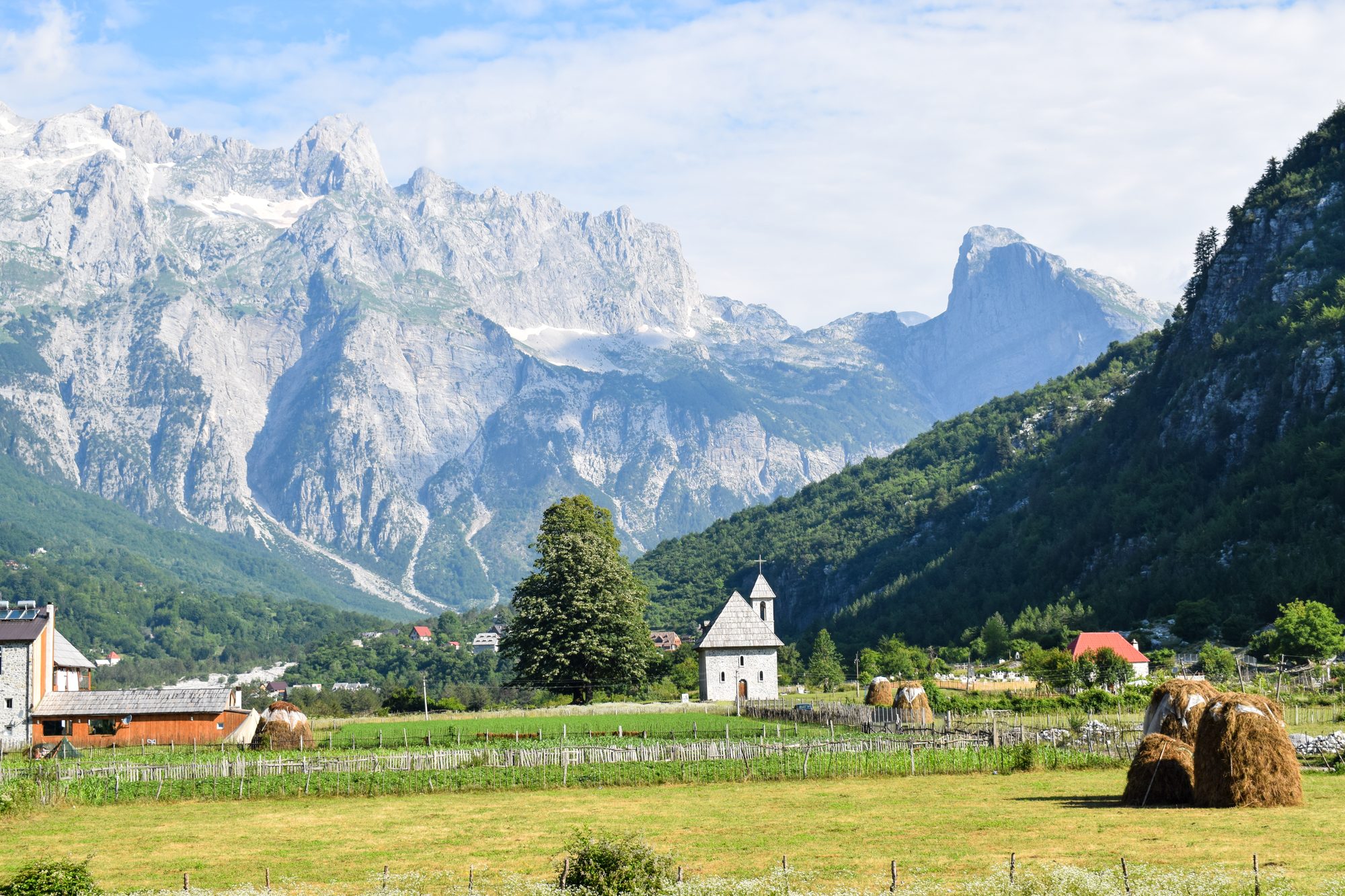
And partly it is simply the scenery. The Accursed Mountains are limestone at its most theatrical, grey towers and scree and pockets of dark forest, and the trail spends the whole day among them. It is busy by Albanian standards, which means you might see thirty other walkers across six hours. By the standards of the Alps almost anywhere else in Europe, that is solitude.
The Route, Hour by Hour
The hike proper runs from the hamlet of Rragam, at the head of the Valbona valley, to the village of Theth. Most Valbona guesthouses sit a few kilometres down-valley from Rrogam, so the day usually starts with a short lift to the trailhead. Your guesthouse can arrange it, either a shared minibus for around 4 euros a person or a private car for 20 to 30. Walking that road instead adds the better part of two hours and very little pleasure.
From Rragam the trail climbs, and it keeps climbing for about three hours. The first stretch winds up through beech forest, shaded and gentle. Higher up the trees thin and the path opens onto bare slopes of grass and rock. It is a steady ascent rather than a brutal one, and there is a small cafe roughly ninety minutes in where you can refill water and buy a drink.
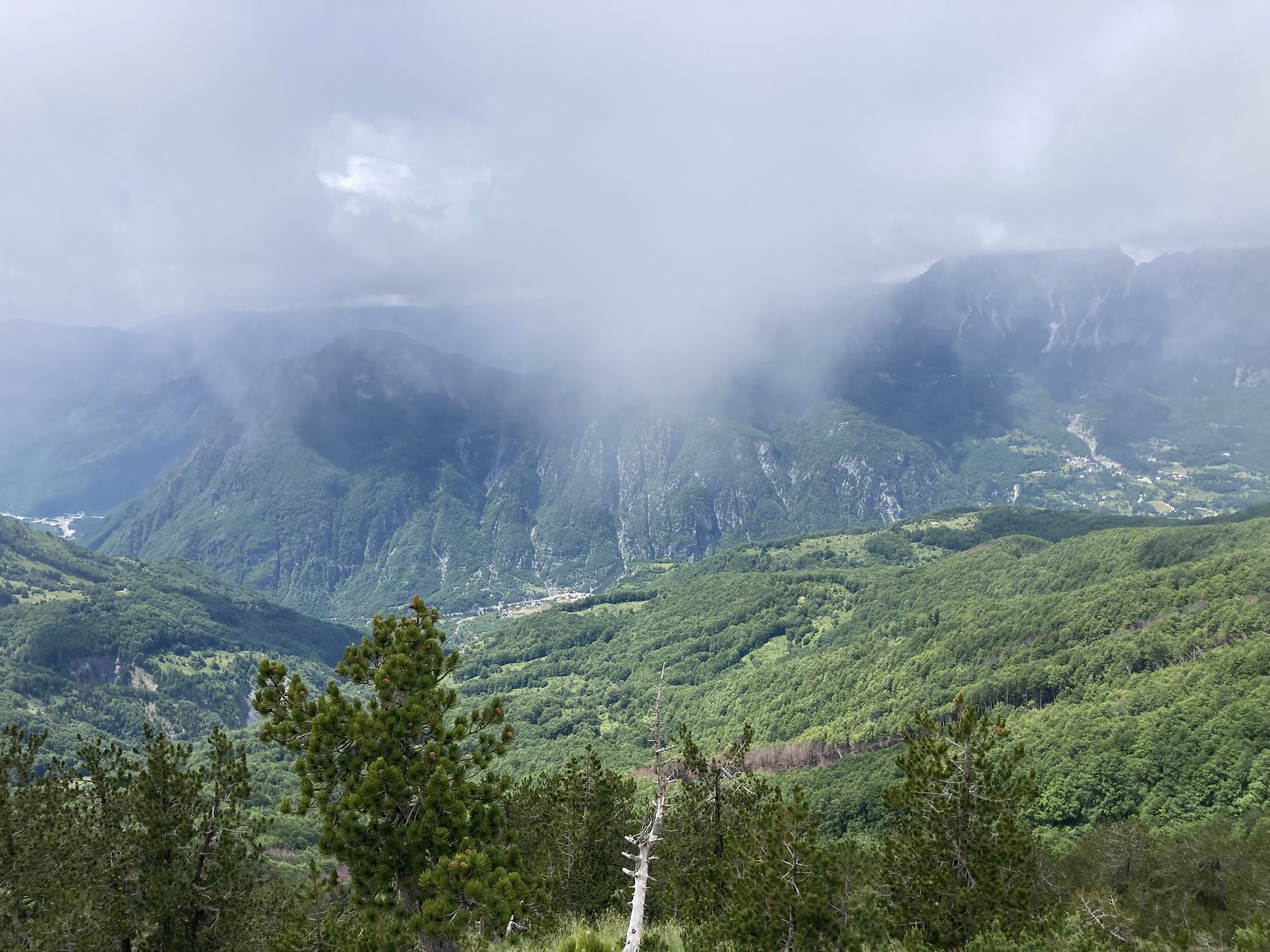

The pass is the natural lunch stop. Sit, eat something, look back at where you came from. The weather here decides what kind of afternoon you will have, so do not linger so long that you lose the morning.
The descent to Theth takes another two and a half to three hours. It is steeper than the climb and harder on the knees, dropping through rock and then forest toward the valley floor. A second cafe, about an hour above Theth, has cold drinks, simple food and a toilet. Then the gradient eases, the valley widens, and the stone church of Theth appears ahead of you.
End to end the crossing is between 14 and 17 kilometres depending on exactly where you start and stop, with about 700 to 800 metres of climbing from the Valbona side. Most people take six to eight hours including stops. It is a full day, not a stroll, but it is within reach of anyone who hikes occasionally at home.
Which Direction to Walk It
The trail is walked in both directions, and the path itself does not care. But if you are asking, I would point you from Valbona to Theth, for two reasons.
The first is logistics. Getting to Valbona is the longer, more involved journey: a minibus, a ferry, another minibus. Getting out of Theth is now a single straightforward drive. It makes for a smoother trip to do the complicated travel first, while you are fresh, and save the easy leg for when you are tired and happy at the end.
The second is the gradient. From the Valbona side the climb to the pass is gentler and a little shorter. From Theth it is steeper and gains more height. Walking up the kinder slope and down the sharper one is, for most knees, the more comfortable way round.
There is a fair case for the opposite direction too. If you want to base yourself in Theth first and spend a day or two on the national park trails there, the Blue Eye, the Grunas waterfall, the lock-in tower, then it makes sense to walk out to Valbona afterwards and finish your trip with the Koman ferry as a grand last act. Both versions are good. Just book your guesthouses to match whichever way you choose.
Getting to Valbona
For most people the journey to Valbona starts in Shkodër, and it is one of the best half-days of travel in the country.
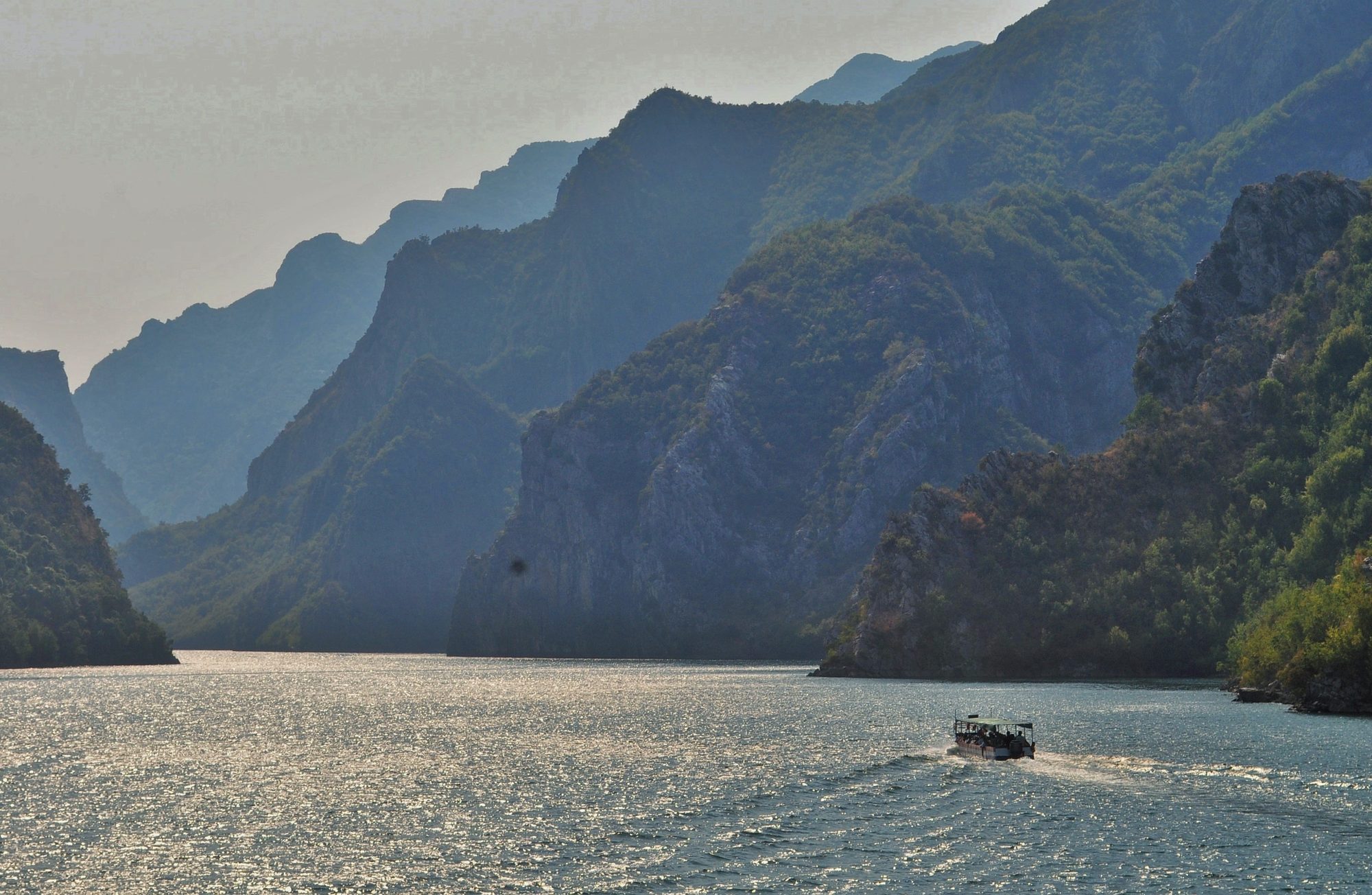
The classic route has three legs. A morning minibus, or furgon, runs from Shkodër to the dam at Koman. From Koman you board the Lake Koman ferry, which threads a flooded river gorge for around two and a half to three hours, the canyon walls rising straight out of green water. At Fierza, where the ferry docks, another furgon carries you up the valley to Valbona. Minibus, boat, minibus, and you arrive in time for dinner.
.jpg)
In practice this is easier to arrange than it sounds. Most Shkodër guesthouses will book the entire chain for you the day before, and several transport operators sell it as one connected ticket. The ferry is the part to reserve ahead in July and August. The Fierza to Valbona furgon costs around 8 euros. For more on the boat itself, which deserves its own day in any Albania trip, see our guide to the Koman Lake ferry. If you want to understand how minibus travel works here in general, the furgon guide covers the etiquette and the quirks.
One note on reaching Shkodër itself. Furgons run there from Tirana all day and cost a few euros. If you are landing at Tirana airport with bags and a dawn ferry to catch, a fixed-price transfer straight from the airport to Shkodër (Kiwitaxi lists the route) costs more than the furgon, obviously, but it is door to door and worth splitting between three or four hikers.
There is a road to Valbona that avoids the ferry, looping inland through Bajram Curri, and drivers with their own car sometimes use it. It is longer, far less beautiful, and I would not choose it unless I had to.
Getting Out of Theth
This used to be the hard part. The road from Theth down to Shkodër was, for years, a rough unpaved track that took around four hours and tested every nerve in the vehicle.
It was fully paved in 2021, and the drive now takes roughly two hours on proper asphalt. Furgons leave Theth for Shkodër in the morning, with a second run usually in the early afternoon, for about 1,200 lek. Your guesthouse will book you a seat if you ask the night before. From Shkodër, onward connections to Tirana are frequent and simple.
When to Go
This is a summer trail. The realistic season runs from the middle of June to early October.
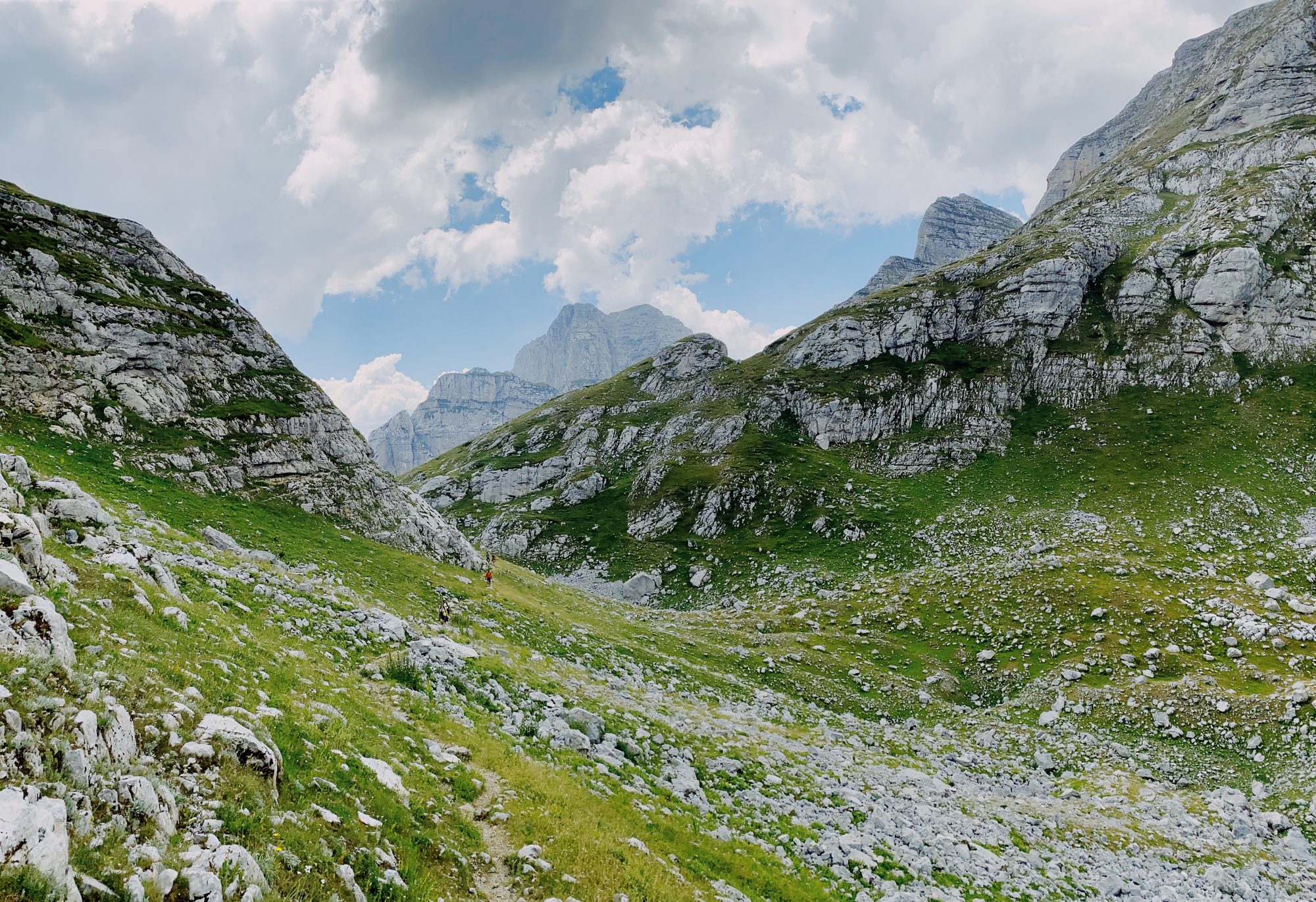

The guesthouses at both ends mostly open in the second half of May and close again toward the end of October. July and August are the warmest and busiest months, though “busy” here would count as deserted almost anywhere else.
September is the month I send people to first. The weather is stable, the days are still warm, the worst of the heat has passed, and there are fewer walkers on the trail. May and early October can both be lovely too, but check before you commit that the pass is clear of snow and that the guesthouses you want are still open. Through the winter the crossing is a serious mountain undertaking, not something to attempt casually.
Where to Sleep and What It Costs
At both ends of the hike you sleep in a bujtina, a family-run guesthouse. This is not a compromise. For a lot of people the bujtina are the best part of the trip.
The standard arrangement is half board: a bed, a cooked dinner, and breakfast, for somewhere around 30 to 45 euros per person. Dinner is whatever the family is making, often mountain trout, byrek, garden vegetables, local cheese and honey, and a glass of homemade raki you will be encouraged not to refuse. Breakfast is built to get you over a pass. Book a night in Valbona before your crossing and a night in Theth after it.
.jpg)
A few notes on money and logistics. There are no ATMs in either Valbona or Theth, so bring all the cash, in lek, that you will need for guesthouses, furgons and the trail. The two cafes on the route are cash only. A small national park fee, a few hundred lek, is sometimes collected at a ranger post. And if you would rather not carry a full pack over the pass, guesthouses can send your main bag around by vehicle for roughly 25 to 45 euros, leaving you to walk with a daypack.
Add it up, with two nights of half board, the transport chain and a little spending money, and the whole Valbona to Theth experience comes to something like 120 to 160 euros per person. For what you get, that is very little.
A Few Honest Practicalities
A handful of things worth knowing before you set off.
You do not need a guide. In season, this is the one Albanian hike that is genuinely fine to walk solo or in a pair. The trail is marked with red-and-white blazes and has enough other walkers that you will rarely be alone. Still, download an offline map on OsmAnd or a GPX track from Wikiloc, because phone signal on the pass is unreliable. If your phone takes an eSIM, sort an Albanian data plan like Airalo’s before you travel. It will not save you on the pass, but it means maps, ferry timetables and guesthouse WhatsApp messages work everywhere else.
Carry enough water. Refill at the guesthouses and the two cafes, and start with at least a litre and a half. Parts of the climb are open and exposed, and it is warmer up there than the cool morning suggests.
Shepherd dogs are not a reason to panic. You may pass summer pastures with large livestock-guarding dogs. Do not run and do not make eye contact. Keep a walking pole or your pack between you and the dog, and move in a wide, calm arc around the flock. They are working, not hunting, and the shepherd is usually nearby.
Weather turns quickly. A clear morning can build into an afternoon thunderstorm. Start early, aim to be over the pass by lunchtime, and pack a layer and a waterproof even when the forecast looks kind.
Insurance that actually covers hiking. Rescue in these mountains means a long carry by volunteers or a helicopter from Tirana, and a standard travel policy does not always pay for either. Check the small print before you go, or pick up a policy from a travel insurer like EKTA and make sure mountain hiking is included.
Good footwear matters more than anything else on this list. The descent is loose and stony in places, and trainers will leave you sore. Beyond that, this is a normal three-season hiking day. If you can manage a long walk with one sustained climb at home, you can manage this.
When You Reach the Pass
I have walked this crossing more than once, in different summers and in both directions, and the pass always does the same thing. The climb is work. You are watching your feet, counting switchbacks, wondering when it ends. Then it ends, all at once, and the second valley is simply there below you, and the effort of the morning rearranges itself into something that feels like a gift.
That is the hike. A hard, honest morning, a long lunch at 1,800 metres with a coffee bought from a wooden hut, an afternoon walking down into a valley you have never seen toward a guesthouse where dinner is already cooking. If you do one hike in Albania, make it this one. Come in September, take the ferry, and give the day the time it deserves.