Albania has a reputation problem with women travellers that has very little to do with Albania and quite a lot to do with what people half-remember about the Balkans in the 1990s.
The short version, and then the long one: solo women travel here in large numbers, most report feeling safe, violent crime against visitors is genuinely rare, and the country ranks around 36th of 148 on the global gender gap index, which puts it ahead of several places nobody hesitates about. The crime index sits at 44.1 and has fallen four years running.
The longer version is that “safe” and “comfortable” are not the same word, and Albania will hand you a fair amount of the second problem while almost never producing the first. That distinction is what this article is actually about.
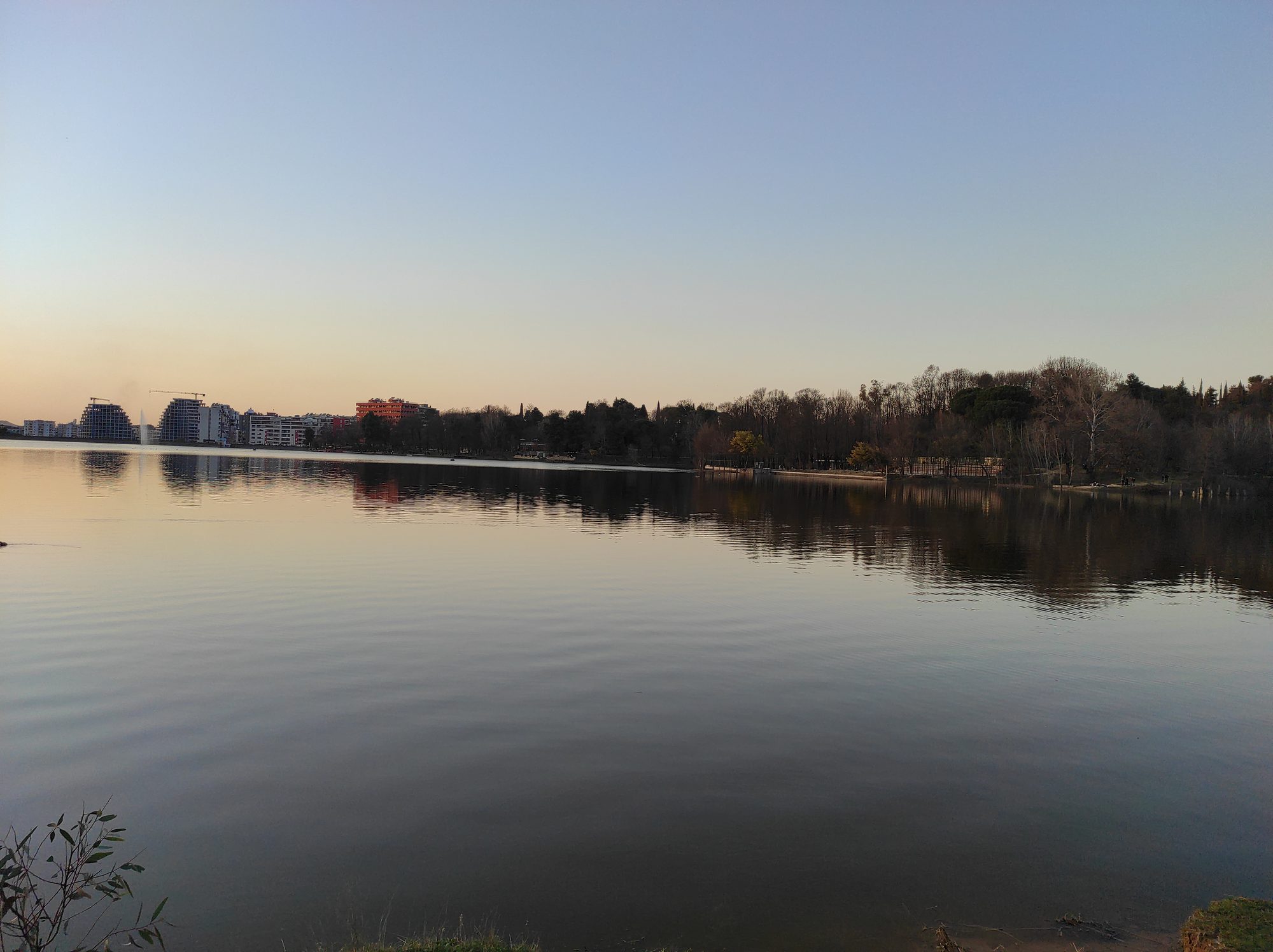

What You Will Actually Encounter
Not violence. Attention.
Persistent, usually clumsy, usually non-threatening attention from men, mostly in the form of staring, being spoken to repeatedly after you have disengaged, and being asked where your husband is. It is tiring. It is rarely frightening. And it varies enormously by where you are, in a pattern worth knowing in advance.
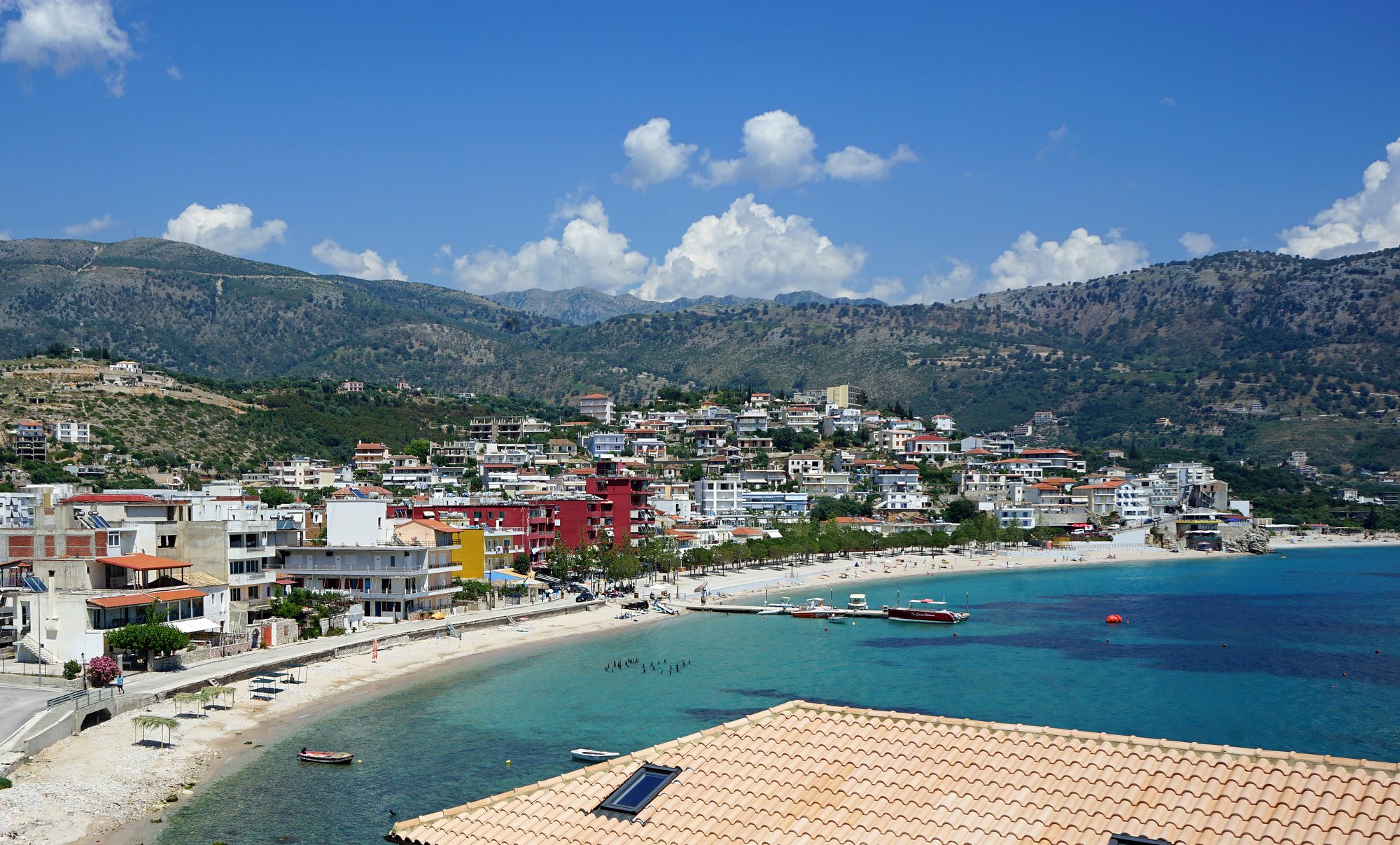
Worst: Sarandë and Ksamil in high summer. The party end of the coast, where a lot of behaviour that would not fly in a small town has been normalised by the season and the drink. Almost every solo woman I have spoken to who had a bad time in Albania had it in one of those two places in July or August.
Barely present: the north, the interior, and the quieter coast. Himarë, Shkodër, the Alps, Korçë, Berat, Përmet. Women hiking alone in the mountains routinely report zero unwanted attention, which surprises people who expect the opposite. It should not. The rural north runs on a hospitality code where a guest is under your protection, and that code applies to a woman walking into a village with a rucksack more strongly than it applies almost anywhere else.
Tirana: entirely ordinary. A European capital with a European capital’s behaviour, better than some.
The Staring, Which Is Not What You Think
This one causes more anxiety than anything else, so let me be precise about it.
Albanians look at people. Directly, at length, without the western reflex of pretending not to. In a cafe, on a furgon, in a village square, you will be looked at, and so will everyone else who is new. It reads as aggressive to people raised not to do it, and it is not.
How to tell the difference: genuine harassment follows you, speaks after you have stopped answering, or moves closer. Curiosity looks, and then goes back to its coffee. In four cases out of five it is the second thing, and the correct response is a nod and nothing else.
The Phrases That End It
Keep these short and unfriendly. Politeness is read as engagement.
- “Jo, faleminderit.” No, thank you. For the first approach.
- “Më lër të qetë.” Leave me in peace. Say it flatly and then stop talking.
- “Jam e martuar.” I am married. It should not work and it works immediately, because the social rule being invoked is stronger than the man’s interest in ignoring it. Use it without guilt. Half the women I know here have used it.
Do not smile while saying any of these. Albanian women do not. A firm, unsmiling refusal is a normal social move here and it does not read as rude.
Where the Real Risk Is
Here is the part that gets lost in every conversation about women’s safety in Albania.
The dangerous thing here is the road. Albania’s road death rate runs around 10.8 per 100,000 against a homicide rate of 1.4, meaning you are roughly eight times more likely to die in a car than at anyone’s hands. That statistic does not care what gender you are, and it is the one that should shape your decisions. I set out the full case in the safety article, and if you are going to drive, the honest guide to Albanian roads matters more than anything in this section.
The other genuine risks, in order: sun and dehydration on unshaded coastal walks, stray and shepherd dogs in rural areas, the sea where there are no lifeguards, and spending your money badly at an ATM.
Not men in alleys. The alleys are fine.
Which is why insurance is the practical version of caring about this. Not because Albania is dangerous, but because private care is billed on the spot, the public system is thin outside Tirana, and standard policies frequently exclude both driving and hiking, which are the two things most likely to put you in a clinic here. A policy that names them explicitly costs a few euro a day and is the single most useful thing on any solo packing list.

Eating Alone, and the Cafe Question
Restaurants: no issue anywhere. A woman eating alone in a restaurant in Albania in 2026 attracts no comment. Take a book if you want one.
Cafes are the interesting case. In Tirana and the bigger towns, mixed and unremarkable. In small towns and villages, the traditional daytime cafe is still functionally a male space, and walking into one alone will be noticed. Nothing bad happens; you will be served, probably with extra courtesy. But if you would rather not be the event of the morning, the pastry shop or the hotel terrace two doors down is the easier option, and that is what local women often do too.
The xhiro is your friend. The evening walk, between roughly six and eight, fills every Albanian main street with entire families. It is the safest, most sociable hour of the day in any town in the country and the easiest time to be out alone. I have written about what the xhiro actually is, and for a solo traveller it is genuinely the best way to spend a first evening somewhere new.
After the xhiro ends, small towns go quiet fast. Tirana does not; Blloku runs until two and is well lit and busy. Elsewhere, plan to be somewhere by ten rather than wandering.
Accommodation
Family-run guesthouses are the strongest option, and not only on price. In a bujtina or a family apartment you have a household that has effectively taken responsibility for you, which in Albanian terms is a real thing and not a metaphor. Hosts routinely walk solo guests to the furgon, phone ahead to the next guesthouse, and object strenuously if you try to leave without breakfast.
Hostels in Tirana, Shkodër and Berat are good, sociable and well run, and the easiest way to find people to do a hike with.
Avoid ground-floor apartments with street-facing doors in Sarandë in August, which is the one accommodation situation I have heard complaints about.
The region-by-region guide to picking a base goes into where each of these works.
Getting Around Alone
Furgons are fine and the drivers will look after you. It is normal for a driver to check where you are going and to tell you when to get off. If a seat next to a man feels wrong, women here simply move, and nobody treats it as an insult.
Taxis: use the apps. Neither Uber nor Bolt operates in Albania. Patoko and Clust are what people use, and the advantage over a street taxi is a recorded ride, a named driver and a price agreed before you get in. That requires data, so sort an eSIM before you fly rather than after; a few euro of Albanian data also means live location sharing works from the moment you land, which is the thing most solo travellers actually want it for.
Arriving at night is the one moment worth spending money on. The airport bus runs around the clock and is perfectly safe, but if you are landing at one in the morning into a city you do not know, a named driver holding a sign who has tracked your flight is worth the difference over improvising at arrivals. All the airport options are here.
Driving alone is completely normal and I would not hesitate. Just not at night outside towns, where the combination of unlit roads, unlit pedestrians and livestock is the real hazard.
Hiking Alone
This is where Albania surprises people most, because the mountains are where solo women consistently report the best experiences in the country.
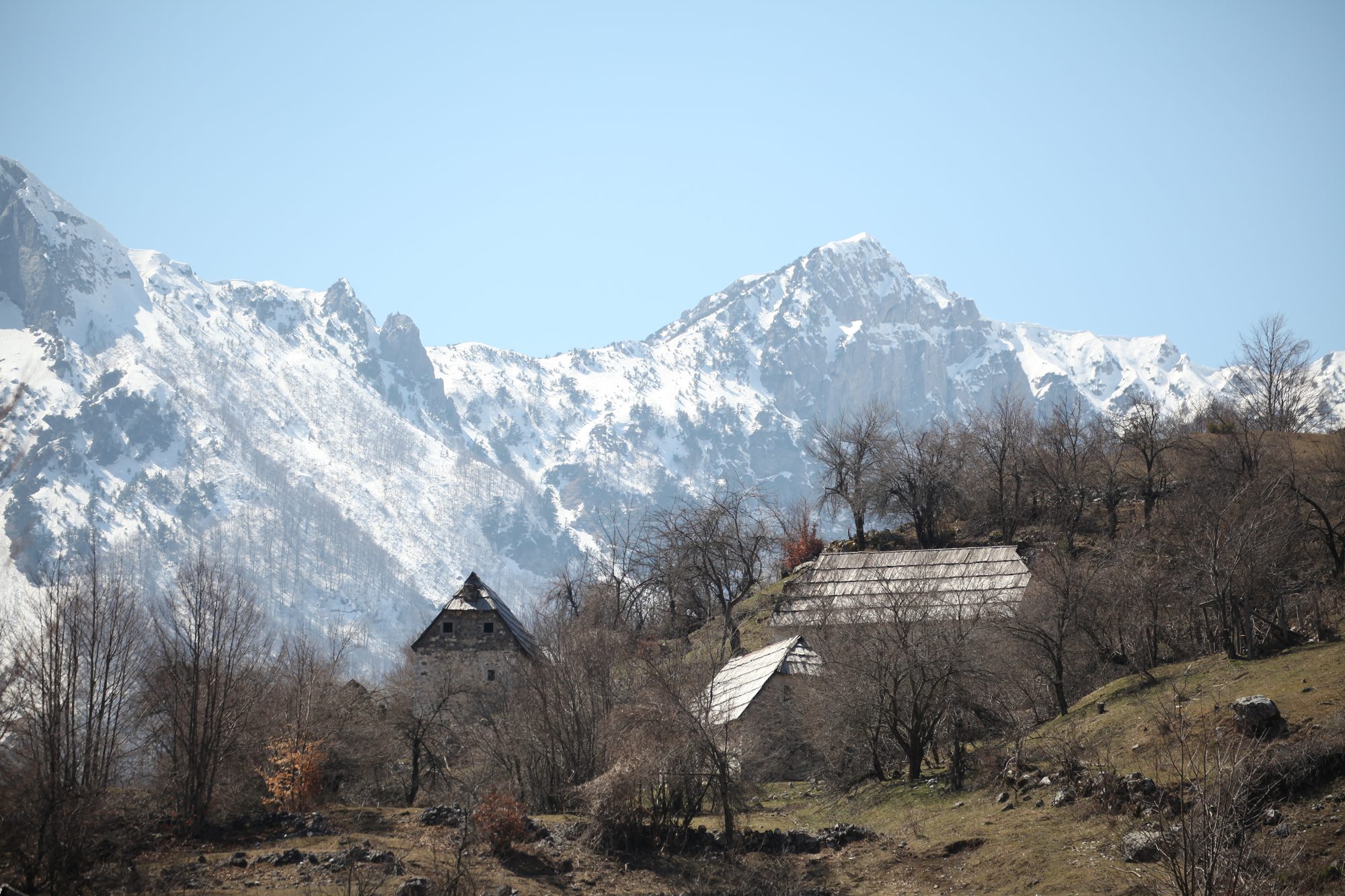
The Valbona to Theth pass is well trodden, waymarked, and busy enough in season that you are rarely out of sight of someone. The full route guide is here. Plenty of women walk it alone.
The bujtina network is the safety system. Guesthouses know each other, and if you tell yours where you are going, the one at the other end is expecting you. That is a better arrangement than most European trails have.
Two real cautions. Coverage dies on the passes, so carry an offline map and tell someone your plan. And shepherd dogs are working animals guarding livestock, not pets; stop, do not run, let the shepherd call them off.

A Few Things Worth Knowing About the Culture
Hospitality is not politeness here, it is obligation. If someone invites you for coffee, refusing three times before accepting is the normal ritual, and the invitation is usually exactly what it appears to be. This is the same code, besa, that made Albanians shelter strangers at real cost during the war, and it is still load-bearing in rural areas.
Dress is not a rule but it is a signal. Tirana and the coast are entirely western. In villages, in the north, and in mosques and churches, covering shoulders and knees is what local women do and it will change how you are received. This is not about respectability; it is about not being the only person in the square dressed for a different place.
You will be asked why you are alone. Repeatedly, and mostly by women, and mostly out of genuine curiosity rather than judgement. “Më pëlqen” (I like it) ends the conversation cheerfully.
Albanian women are not a homogenous group and the country is arguing with itself about this. Thirty-five percent of parliament is women. There are also villages in the north where the old patriarchal structures are entirely intact. Both are Albania. If you want the strangest and most illuminating version of that story, it is the burrnesha.
The Version I Would Give a Friend
Go. Go in June or September rather than August, because the Riviera in high summer is where nearly all the unpleasantness in this article is concentrated.
Base yourself in Himarë rather than Sarandë. Give Tirana two nights. Do the north, where you will be treated better than anywhere else in the country.
Take the phrases seriously, say them without smiling, and use “I am married” without any embarrassment at all.
Sort your data and your insurance before you fly, and worry about the road rather than the men.
And accept, in advance, that you will be looked at. It is not the thing you think it is, and once you stop reading it as a threat, Albania becomes one of the easiest countries in Europe to travel alone in.