Most people see Shkodër at a quarter to seven in the morning, from the window of a minibus that is about to leave for the Koman ferry. They arrived the night before, slept a few hours in the cheapest bed in the north, and by the time the sun is properly up they are on a boat through the Drin canyon telling each other that Shkodër seemed nice. It did seem nice. It is nice. It is also the city that was the Illyrian capital before Rome arrived, the place where Albania’s Catholic memory and its Ottoman memory share a single street, home to one of the most important photographic archives in the Balkans, and the only Albanian city where the bicycle beat the car.
This guide is for the version of the trip where you give it two nights. One for the castle, the walking street and the carp. One for the lake. Then the early bus on the third morning, which feels very different once you know what you are leaving behind.

Why Shkodër Is Worth More Than a Night
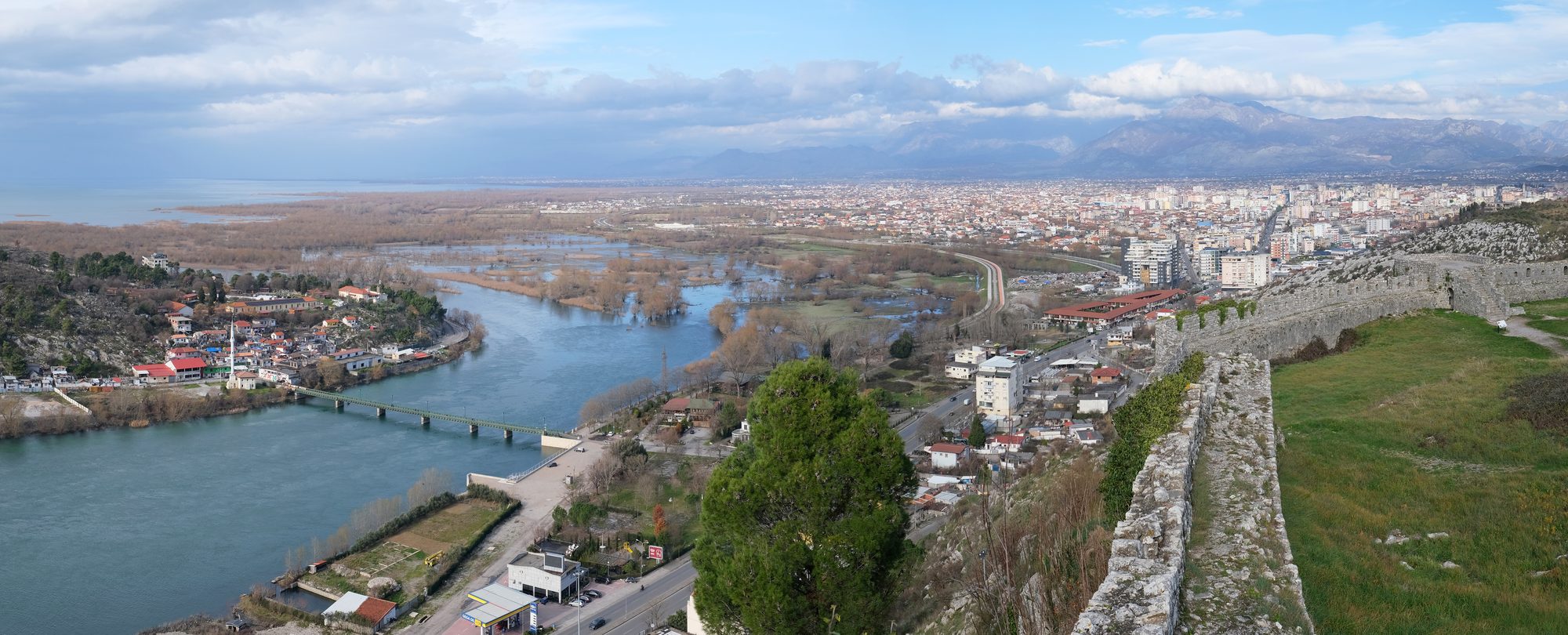
Shkodër sits on a flat plain between the largest lake in Southern Europe and the first wall of the Albanian Alps, at the point where three rivers, the Drin, the Kir and the Buna, tangle together on their way to the Adriatic. The Illyrian Labeatae founded it in the fourth century BC and made it the capital of their kingdom. Rome sacked it in 168 BC after defeating King Gentius. Venice took it over in 1396 and held it until Mehmed the Conqueror’s siege of 1478 and 1479, when the surviving defenders sailed for Venice and the Ottomans moved in for four and a half centuries. The Bushati pashas ran the north from here through the late 1700s as something close to their own state. In 1913 the Great Powers argued over the city for months before handing it to the new Albania.
Every one of those layers is still visible, which you cannot say about many Albanian cities after the twentieth century did its work. Venetian walls on the castle. An Ottoman bridge and a lead-roofed mosque in the fields. Italianate facades on the walking street, painted in the colours of a Habsburg railway town. A cathedral that spent twenty-three years as a sports hall. And the communist layer, which Shkodër suffered harder than anywhere else in the country, because this was the Catholic north and the regime was building the world’s first officially atheist state.
That combination gives the city a mood I have not found anywhere else in Albania. Tirana is busy, Korçë is tidy, Gjirokastër is stone. Shkodër is unhurried, a little melancholy, and very sure of itself. My aunt lives here, reads fortunes in the grounds of Turkish coffee, and has never once seen a reason to move to Tirana. After a few visits you understand her.
What to See
Rozafa Castle
Start with the castle, and start with the legend, because everyone in Shkodër knows it and will assume you do. Three brothers were building the walls. Every night the day’s work collapsed. A wise old man told them the wall wanted a sacrifice: whichever of their wives brought lunch the next day must be built into it. The two older brothers warned their wives. The youngest wife, Rozafa, came up the hill with the food, heard her fate, and accepted it on one condition: that they leave her right eye, right hand, right foot and right breast free, so she could see, caress, rock and nurse her infant son. Every Albanian child learns the story. A life-sized sculpture of Rozafa half buried in a wall stands in the small museum inside the fortress, for anyone who arrives without it.
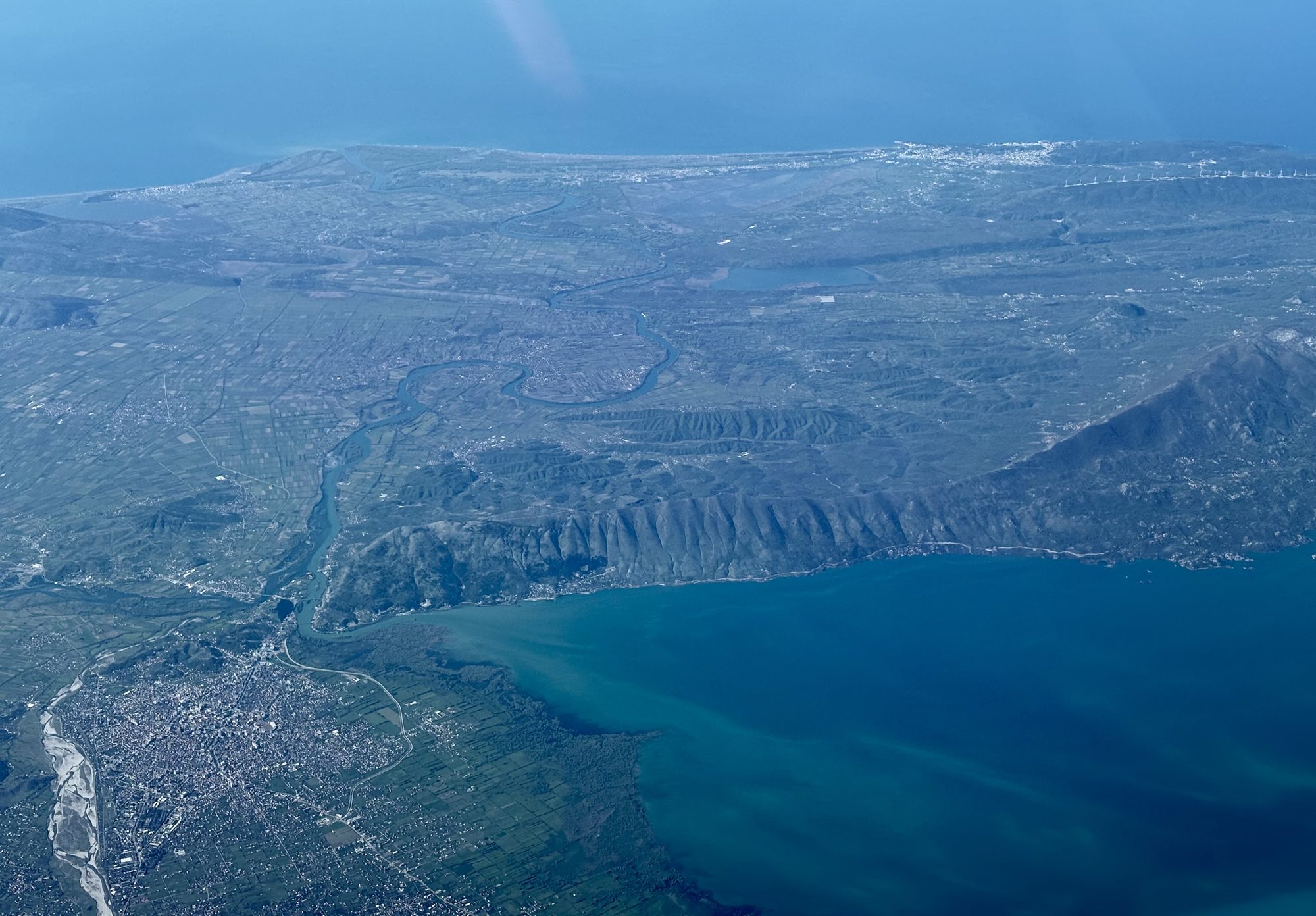
The castle sits on a rocky hill south of the centre where the Buna leaves the lake and meets the Drin. The visible walls are mostly Venetian, built over Illyrian foundations, and the whole hill is an archaeological park. The view is the reason to climb: the lake spread west toward Montenegro, the rivers braiding through the plain, the city to the north with the twin minarets of the Great Mosque and the cathedral towers, and the Alps behind everything.
Entry was 400 lekë at the gate when I last checked, with reduced tickets for students, and the site has been staying open until 20:00 through the summer, which matters because the hill is brutal at two in the afternoon. Go for the last two hours of light. It is a twenty-minute uphill walk from the road below, or a short taxi ride to the gate, and there is a cafe inside the walls that charges less than its position would allow.
The Pedonalja
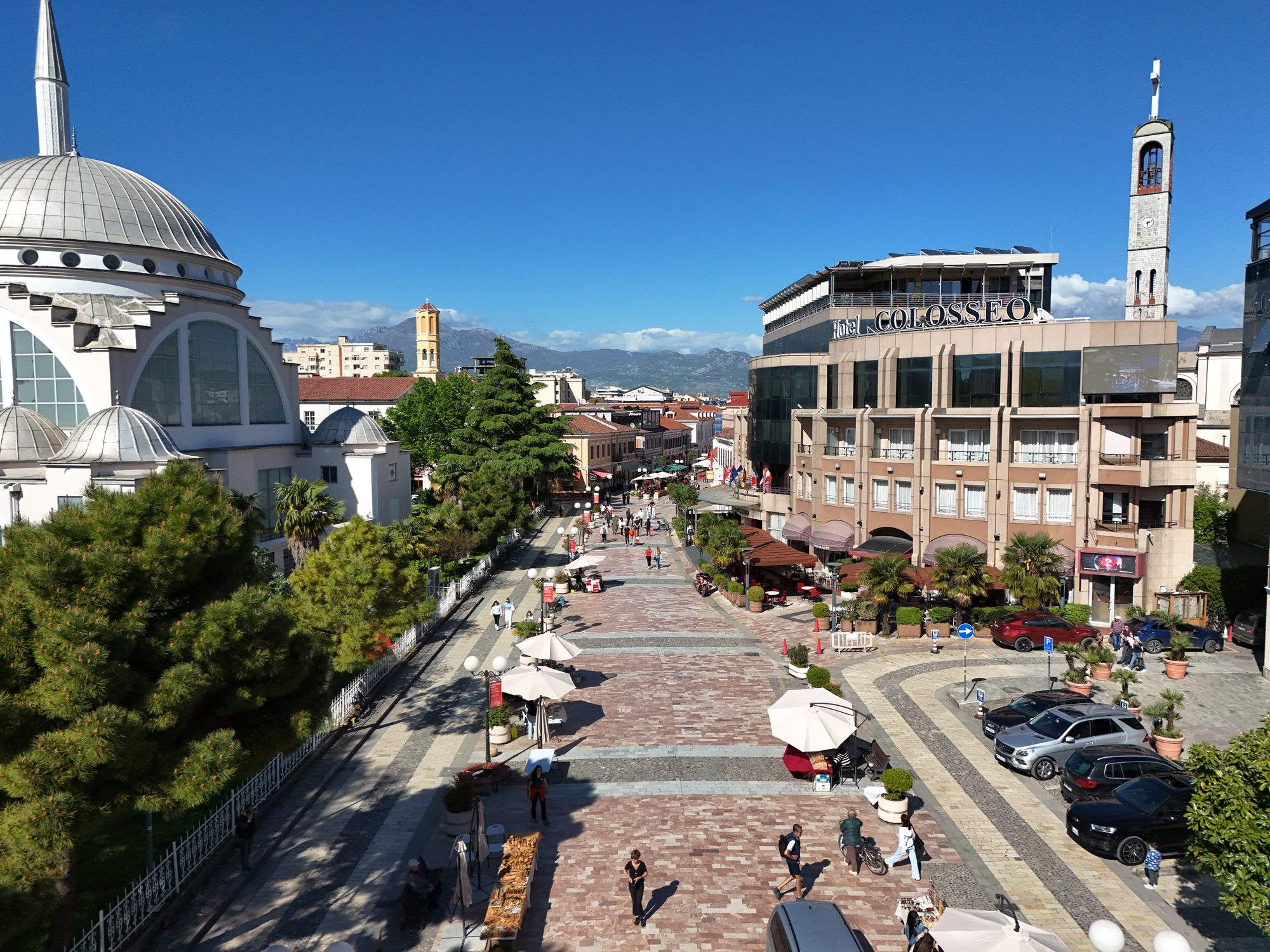
Rruga Kolë Idromeno is Shkodër’s walking street, and nobody calls it that. It is the Pedonalja, the pedestrian street, and it runs south from the Great Mosque between two rows of restored nineteenth-century facades in yellow, ochre and rose. It is named for Kolë Idromeno (1860 to 1939), a painter, photographer and architect who was born and died in this city. Every ground floor is a cafe, a bar or a shop, and from about six in the evening the whole city walks its xhiro (the evening stroll) here, which I covered street by street in the promenades guide.
What makes it different from other Albanian walking streets is what happens at the edges. Shkodër is flat, so the bicycles come out: grandfathers in flat caps, teenagers three to a bike, women with the shopping in the basket, all threading through the walkers at the speed of conversation. Borrow or rent one and you will understand the city’s geometry in an afternoon.

Marubi National Museum of Photography
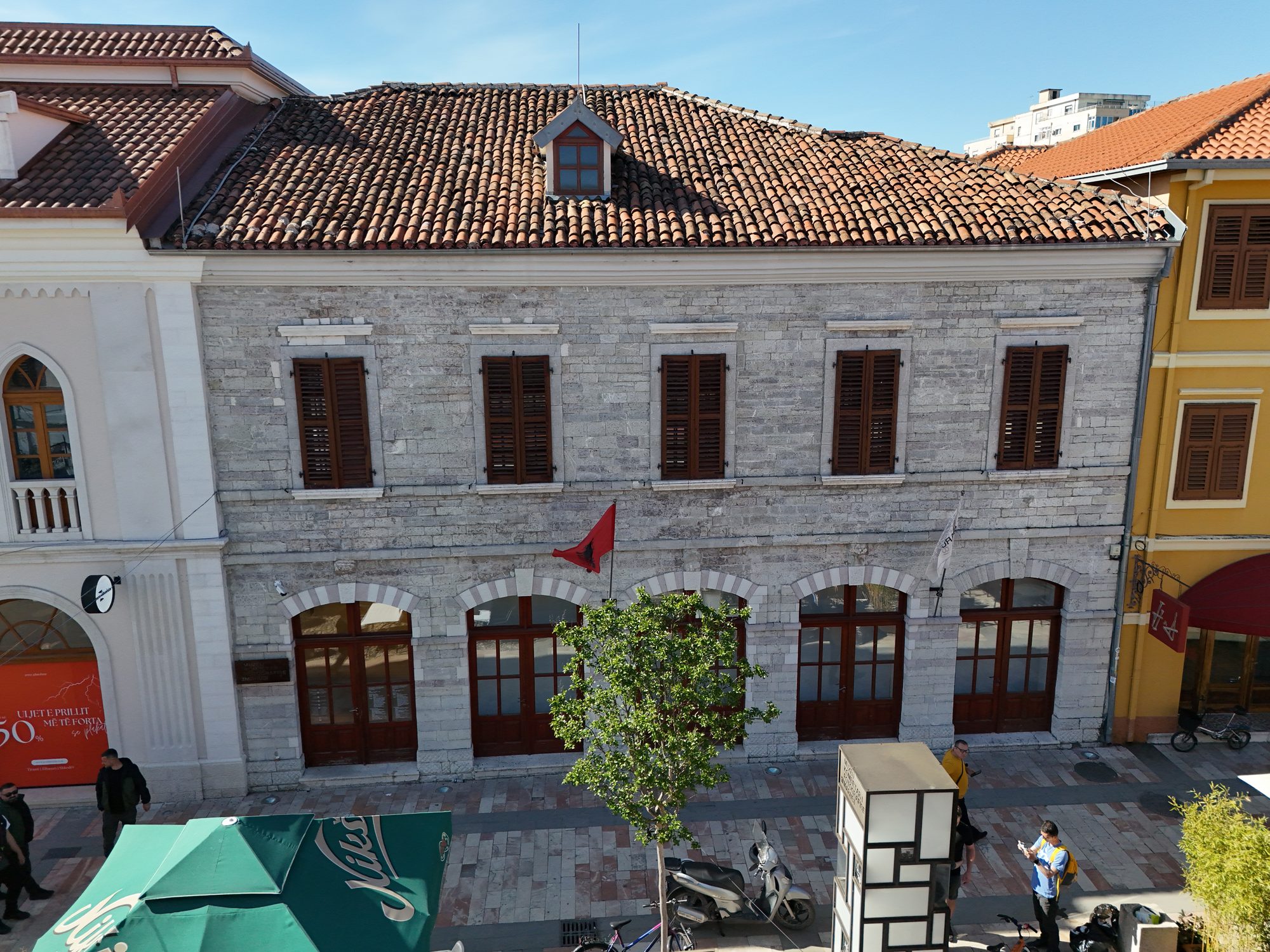
On the Pedonalja, in a restored stone building, is the reason Shkodër matters to anyone who cares about the history of the Balkans. In 1856 an Italian painter named Pietro Marubbi had to leave Italy for his part in the Garibaldi movement. He settled in Shkodër and opened the first photography studio in Albania. He came from Piacenza, an hour from where I spent my own Italian years, which I did not know until I stood in front of his portraits. Three generations of photographers carried the studio into the early 1950s and photographed the north for a century: highland chieftains in full dress, wedding parties, market days, the raising of the flag at Vlorë in 1912, the first cars on unpaved streets.
The archive now holds more than half a million negatives on glass and film from fifteen photographers, and the museum shows a rotating selection with good English captions. It is open every day from 09:00 to 19:00, adults pay 700 lekë, and it is the best hour you will spend indoors in northern Albania. If you have read the burrnesha piece, this is where several of those faces come from.

The Site of Witness and Memory
Two streets away is the other half of the twentieth century. The Site of Witness and Memory (Vendi i Dëshmisë dhe Kujtesës) occupies a nineteenth-century building that the communist interior ministry used as an interrogation centre and prison. It was the first memorial to the regime’s victims opened anywhere in Albania, and it is very direct: the cells are as they were, the exhibits name names, and much of the story concerns the Catholic clergy of Shkodër, who were shot, tortured or worked to death in numbers the rest of the country did not see. In November 2016 the Church beatified thirty-eight Albanian martyrs of the regime, many of them Shkodër clergy, in a ceremony held in the square outside the cathedral here.
Shkodër is also where the end began. On 2 April 1991, four young men were shot dead by police in the centre of the city during protests after the first multi-party elections. The city marks the date every year. The museum keeps office hours, roughly 08:30 to 14:30 on weekdays and Saturday mornings only, closed on Sunday, so plan it for a morning. If you have read the communism piece it will make more sense. If you have not, this is where to start.
Three Faiths, One Skyline
Shkodër is Albania’s Catholic capital, and the Cathedral of St Stephen, begun in 1858 and consecrated in 1867, is its centre of gravity. In 1967 the regime closed it, pulled down its towers and turned the nave into a sports hall. In November 1990 it reopened, and Shkodër celebrated the first public Masses held in Albania since 1967, first in a cemetery chapel and then here, in front of a crowd that filled the square. Ten minutes north, the Ebu Bekr Mosque, which everyone calls the Great Mosque, is the newest thing on the skyline: finished in 1995 with Saudi funding on the site of an Ottoman mosque the regime had demolished, with two tall minarets and a dome you can pick out from the castle. People cross between the two without thinking about it, which is roughly the point.
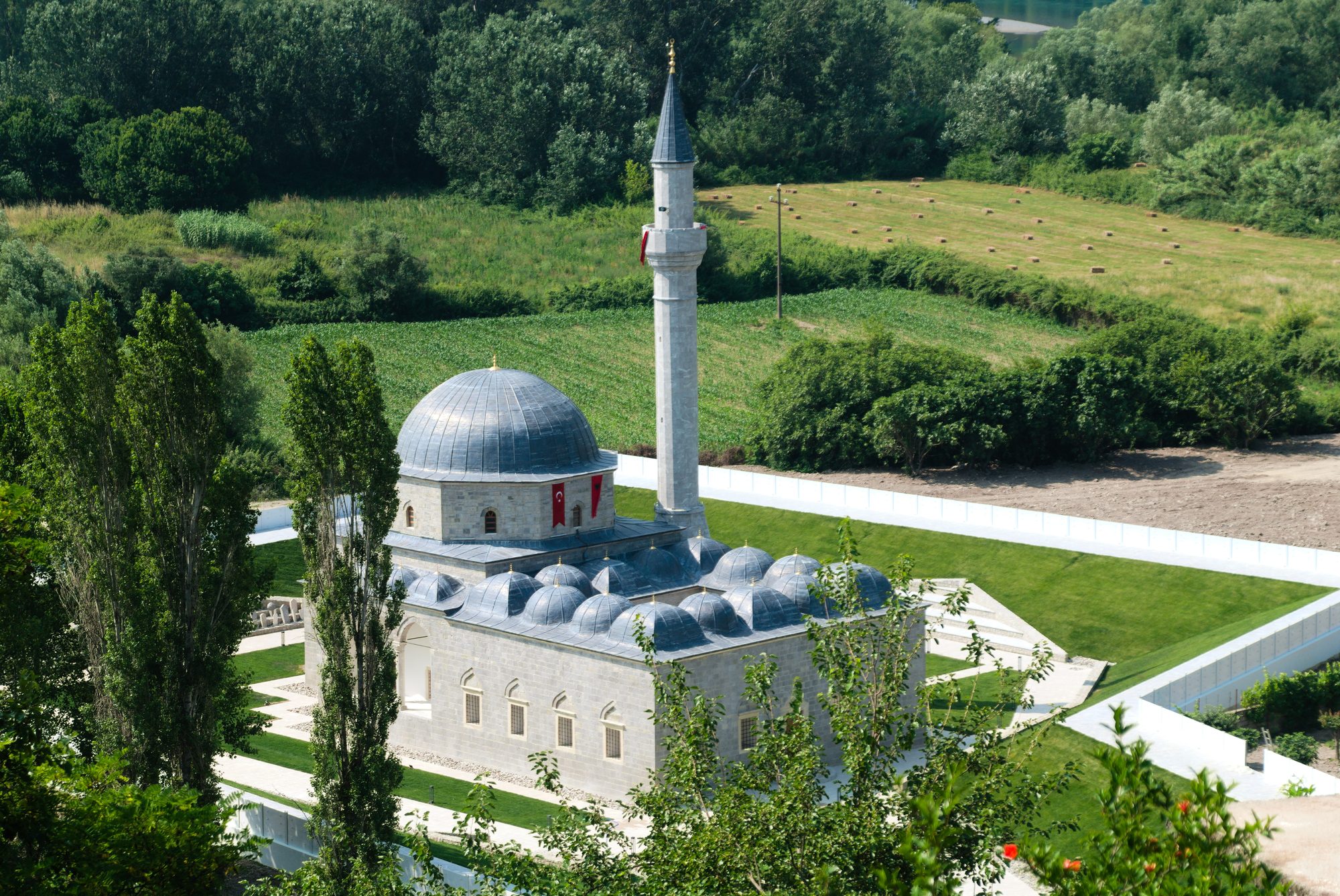
The oldest of the three is out of town. The Lead Mosque (Xhamia e Plumbit) stands in the fields below the castle, built in 1773 and 1774 by Mehmed Pasha Bushati and roofed in lead, the only mosque in Albania built in the classical Ottoman style of Istanbul. It floods in wet winters and has been photographed a thousand times standing in water. In summer it is a flat fifteen-minute walk from the bottom of the castle road.

Venice Art Mask Factory
An odd one, and worth an hour. On the edge of the centre, a workshop makes Venetian carnival masks, real ones in papier-mâché and ceramic, hand-painted and feathered, for carnival shops and theatres across Europe. The showroom is open to visitors, and if you ask politely someone will usually walk you through the workshop. It is one of those Shkodër things that makes sense once you remember the city was Venetian for eighty years and never entirely forgot.
The Lake
Lake Shkodra (Liqeni i Shkodrës, Skadar on the Montenegrin side) is the largest lake in Southern Europe, somewhere between 370 and 530 square kilometres depending on how much rain the winter brought. About a third of it is Albanian. It is shallow, warm by June, thick with carp, bleak and eel, and it is one of the few places in Europe where you can see Dalmatian pelicans, usually from a boat in spring. The Albanian shore has been a protected wetland since 1996.
The lake does not touch the city. To reach it, follow Rruga e Shirokës west along the shore, twenty minutes on a bicycle or ten in a taxi, to Shiroka, a village of fish restaurants with terraces over the water and a small stony beach. Zogaj is seven kilometres further along the same road, closer to the Montenegrin border, quieter, known for its fishermen and its carpet weavers. Boat trips leave from Shiroka in season, from around 25 to 30 euro a person for a couple of hours among the reed beds, and a sunset dinner here is the second act of a Shkodër evening once the Pedonalja has done its work.

Eating and Drinking
The dish is tavë krapi, carp casserole. A whole carp from the lake is baked in a clay dish with onions, garlic, grape vinegar, dried plums, a little sugar and herbs, and served with cornbread. Sweet, sour, soft and faintly smoky, it is unlike anything else in Albanian cooking, which leans on lamb and yoghurt, and it costs 10 to 16 euro depending on the size of the fish. Order it in Shiroka, where the fish came out of the water that morning, or in town at Tradita Geg & Tosk, a hotel and restaurant in a house built in 1694 that the owner, Gjon Dukgilaj, restored and filled with his ethnographic collection. The food is northern and heavy, the setting is the best in the city, and the raki is likely to be raki mani, made from mulberries.
That last point matters. Northern raki is softer and sweeter than the grape raki of the south that I grew up on, and if you have read the raki guide you know I am biased toward Skrapar. Shkodër is where I stop arguing.
Beyond the carp, eat byrek from the bakeries around the market in the morning, drink coffee at any table on the Pedonalja, where a macchiato costs around 100 lekë and nobody will move you along for two hours, and have dinner late, because the city does.
Side Trips
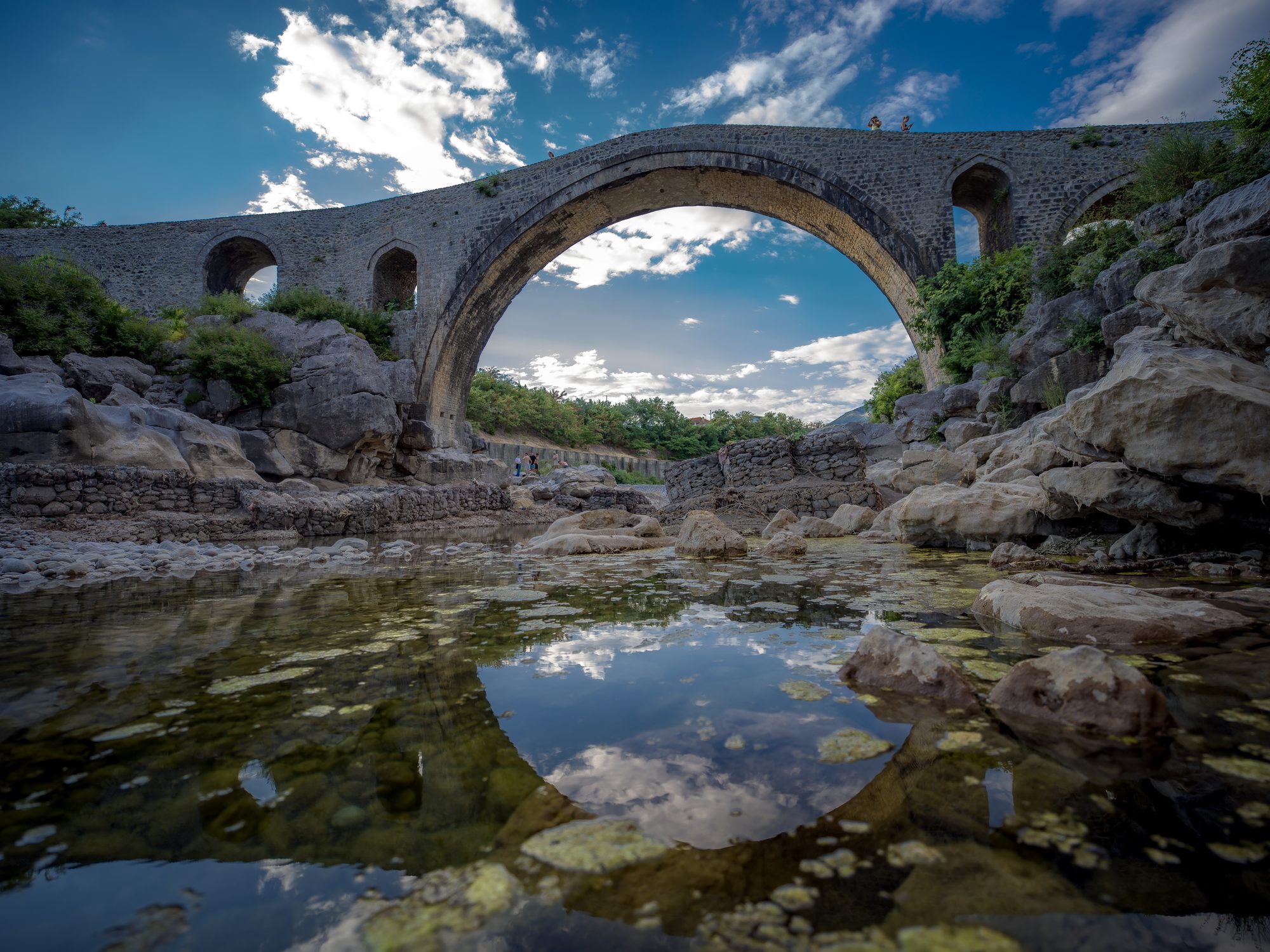
Mesi Bridge. Eight kilometres north-east of the city, in the village of Mes, an Ottoman stone bridge of thirteen arches steps 108 metres across the Kir river. The Bushati pashas built it around 1770 on the old road toward Kosovo, and in summer the Kir shrinks to green pools under the arches. Take a taxi and agree the price before you get in, since the driver will need to wait, or cycle it on the flat road out of town. Combine it with the Lead Mosque if you have a car.
Mrizi i Zanave. Forty minutes south in Fishtë, the farm restaurant that started Albania’s agroturizëm movement. I wrote about it in the agroturizëm guide. Book ahead, especially at weekends.
Velipojë. The nearest sand is half an hour south-west, where the Buna reaches the Adriatic. A long, flat family beach with a pine forest behind it, busy with visitors from Kosovo in August and nearly empty in June.

The Gateway: Theth, Koman and Valbona
This is why most people come, so let me be precise. Everything into the Albanian Alps starts in Shkodër, and nearly all of it starts before seven in the morning.
Theth. Minibuses leave Shkodër around 07:00 and reach Theth by about 10:00 on the road that was finally paved in 2021. The hostels run their own shuttles and sell seats for around 15 euro; local furgons (shared minibuses) charge a little less. Book the day before through your hotel or hostel, which will also arrange your guesthouse at the other end. What to do in the valley, from the Blue Eye of Theth to the Grunas waterfall and the lock-in tower, is in the first-timers hiking guide.
Koman and Valbona. The Berisha minibus leaves from near the Rozafa Hotel at 06:45 for the Koman dock, about 800 lekë for a ride whose second half is rough, in time for the 09:00 ferry through the flooded canyon of the Drin to Fierzë: two and a half hours, 900 to 1,000 lekë. A furgon waits at Fierzë for Valbona. The whole chain, and why the ferry is one of the great journeys in the Balkans, is in the Koman ferry guide, and the walk over the pass is in the Valbona to Theth guide. The ferries run from mid-April to early November. Outside that window the Alps close.
The two friends I walked the Peaks of the Balkans with in 2023 are both from Shkodër, and their rule for visitors is simple: sleep in Shkodër the night before, buy the connected ticket for the whole chain at your guesthouse the evening before, and never plan to arrive from Tirana on the same morning you leave for the mountains. The Tirana bus does not run that early and the ferry does not wait. The other thing they insist on is insurance that covers mountain rescue, because a helicopter out of the Valbona valley is not a bill you want to fund yourself. A policy from EKTA takes five minutes to arrange online and can be set to cover hiking.
Getting There
From Tirana. Buses and furgons leave the Regional Bus Terminal for the North and South (Terminali i Autobusave të Jugut dhe Veriut), on the north-western edge of Tirana, from early morning until about 18:00. The trip takes around two hours and costs about 500 lekë. Read the furgon guide first if you have not used Albanian intercity buses before. In Shkodër the buses drop you a short walk from the centre; ask for the Rozafa Hotel, which is also where the Koman minibus leaves.
From the airport. A direct bus runs from Tirana International Airport to Shkodër several times a day, from 05:00 to late evening, for 10 to 13 euro, and takes about ninety minutes, which spares you the detour through the capital. All the airport options are in the Rinas transport guide. If you are landing with bags and a dawn ferry to catch, or arriving between buses, a fixed-price transfer booked through Kiwitaxi will take you door to door in about the same time.
From Montenegro. Shkodër is the natural first stop coming south. Buses from Ulcinj take about an hour and a half and from Podgorica about two, for 10 to 15 euro, several times a day in summer and less often in winter.
By car. Shkodër is two hours from Tirana on the SH1 and an easy city to drive into, with parking around the centre. If you are renting for the northern loop, the local agencies list cars in Shkodër itself through Localrent, which saves the Tirana pick-up. Read the driving guide before you point a car at Theth. The road is paved now, but it is still an alpine road.
Best Time to Visit
May, June, September and the first half of October are the months. The lake is warm enough to swim by June, the Alps are open, the Pedonalja is at full strength in the evening and the castle hill does not try to kill you. July and August are hot, regularly above 35 degrees, with a lake breeze that helps in Shiroka and does nothing in the centre; this is when the city empties toward the coast and the mountains, and when the Shkodra Jazz Festival fills the second half of August with concerts around the old town. Winter is wet. In bad years Shkodër floods properly, when the Drin and the Buna back up across the plain, and the ferries and most Theth guesthouses close from November to mid-April. The city is still worth a night on a winter drive to Montenegro, but it is a different, quieter place.
Where to Stay
For a first visit, stay in or near the old town so the Pedonalja is your front door. Tradita Geg & Tosk has hotel rooms in the 1694 house, which is the most atmospheric bed in the city. The two hostels that hikers use, Mi Casa es Tu Casa and The Wanderers, are the logistics hubs for the Alps: both sell the Koman chain and the Theth buses, and The Wanderers runs its own minibuses, so even if dormitories are not your style their private rooms are worth considering for the night before you go up. Guesthouses along the lake in Shiroka are the quieter option, with the trade-off of a taxi or a bicycle into town for dinner. The region-by-region picture is in where to stay in Albania.
Practical Tips
- Cash. Cards work in hotels and the bigger restaurants on the Pedonalja. The castle gate, the minibuses, the fish restaurants in Shiroka and the market take lekë only. There are ATMs on and around the walking street.
- Bicycles. Ask your accommodation first; many lend them for nothing. Otherwise the shops around the Pedonalja rent for a few hundred lekë a day. Shkodër drivers are used to bikes, which is more than can be said for Tirana.
- Hours and prices. Marubi is open daily 09:00 to 19:00, 700 lekë. The Site of Witness and Memory keeps weekday and Saturday morning hours and is closed on Sunday. The castle stays open until 20:00 in summer, 400 lekë. State museum prices have been climbing, so carry a little extra.
- Timing the mountains. Every bus into the Alps leaves at or before 07:00. Book the day before, sleep in town, eat the carp.
- Coffee. My aunt’s rule: never refuse a coffee in Shkodër, and never expect it to take less than an hour. If she reads your cup afterward, the fortune is always good. The city is like that.
- Heat and water. Carry water for the castle. There is a cafe at the top, but the climb is exposed.
- Safety. Shkodër is safe in the way most Albanian cities are; the risks are the road and the heat, not the people. The numbers are in is Albania safe.
- Signal. Phone coverage drops in the Drin canyon and is thin in Theth. Sort an Albanian SIM or eSIM before you leave the city.
Give it the two nights. When the minibus pulls out at 06:45 and the castle slides past on your right, you will know what the hill is for.