A rental car is the right decision in Albania more often than it is the wrong one. The country is small, the good parts are scattered, and the places that reward you most are exactly the places public transport reaches worst. You can see a great deal of Albania without one. You cannot see it on your own terms.
But this is also the country where I have watched more visitors lose money and temper at a rental desk than anywhere else I know, and where the driving itself is genuinely the most dangerous thing most travellers will do here. So before the romance of the coast road, the practical version.

What It Actually Costs
Prices swing hard with the season, more than most people expect.
| Off season (Nov to Apr) | Shoulder (May, Jun, Oct) | High season (Jul, Aug) | |
|---|---|---|---|
| Economy manual | 10 to 20 EUR/day | 20 to 30 EUR/day | 25 to 40 EUR/day |
| Small SUV | 25 to 35 EUR/day | 35 to 50 EUR/day | 45 to 70 EUR/day |
Those are the honest ranges for 2026. A small hatchback in November genuinely goes for 10 to 15 euro a day. The same car in the second week of August, booked three days out, will cost you triple that if it is available at all.
Which brings me to the single most useful thing in this article: book early for July and August. Albania does not have a deep rental fleet. It is not a country with ten thousand spare cars sitting in a lot at Rinas. When the summer fleet is out, it is out, and what remains is priced accordingly.
The international chains cluster at the airport and charge for the privilege. The Albanian agencies are generally cheaper and more flexible about delivering the car to your accommodation, and most of them are listed on Localrent, where the deposit terms are shown next to the price. Given what comes next in this article, being able to compare those before you commit is worth more than the few euros a day you save.
Automatics are the specific bottleneck. Albania drives manual. Automatic transmission costs roughly 15 to 25 percent more and the supply is thin, so if you cannot drive a stick, book it weeks ahead and treat the confirmation as important. Turning up at the airport in August hoping for an automatic is how people end up in a taxi to Tirana.
Fuel is not cheap here, and this is where Albania stops being an inexpensive country. As of late August 2026, petrol sits around 189 lekë a litre and diesel around 206, which is roughly 2.03 and 2.22 euro. That puts Albanian petrol level with Italy and Greece, and Albanian diesel above both.
Note the direction of that, because it catches people out: diesel costs about 9 percent more than petrol in Albania, which is the reverse of most of Europe. If a rental desk steers you towards a diesel on the grounds that the fuel is cheaper, it is not. Work it out on consumption instead, and on a small hatchback over a week the difference rarely justifies the upgrade.
Prices vary very little between stations, so there is no point hunting for a bargain. Stations are common on main routes and thin in the mountains, and many prefer cash. Fill up before you go north or east, not after.
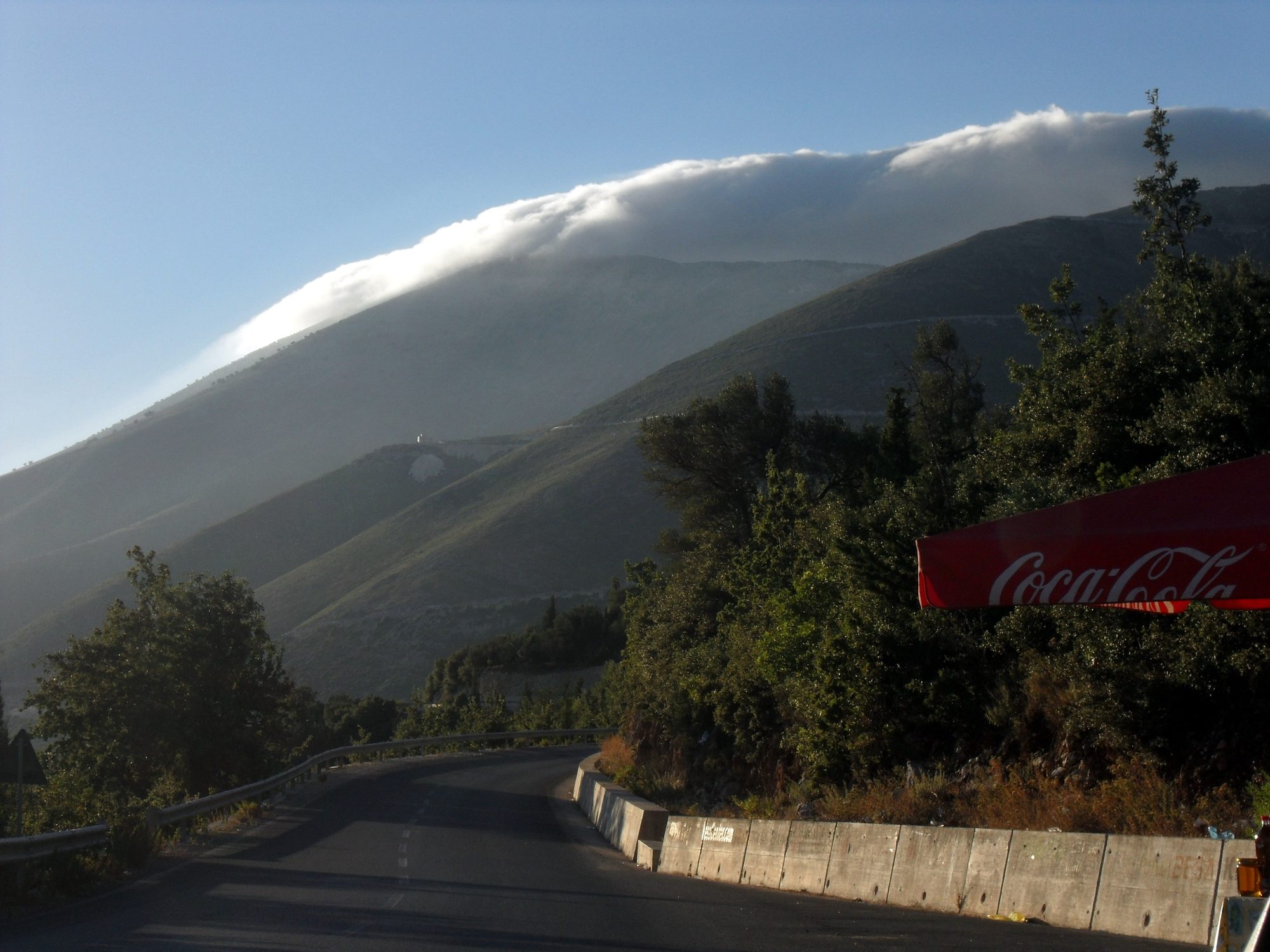
Other line items worth knowing: drivers under 25 pay a surcharge of around 3.50 euro a day. One-way drop-offs within Albania are sometimes free within a short radius and otherwise carry a fee that can reach 120 euro. And since April 2026 the Llogara Tunnel carries a toll of 250 lekë, about 2.50 euro, for a car. The old pass road over the top is still open and still free, and on a clear day it is the better choice anyway.
The Insurance Conversation, and the Deposit
This is where the money actually goes, and where the arguments happen.
Basic third party cover comes with the car. On top of that sits CDW, collision damage waiver, which is not insurance so much as a cap on what you owe. It leaves you with an excess, the deductible you pay yourself, and in Albania that excess is commonly 500 to 1,500 euro.
The desk will then offer you full cover, sometimes called Super CDW, at 10 to 20 euro a day, which reduces the excess to zero. Whether that is worth it depends entirely on where you are going. For a week on the motorway between Tirana and Durrës, probably not. For the Riviera in August, or anything in the north, I would take it, and I say that as someone who is not usually a fan of upsells.
Here is the detail almost nobody reads: even full cover routinely excludes tyres and undercarriage. Those are precisely the two things Albanian roads damage. A kerbed alloy on a Berat side street or a stone through the sump on a gravel section is very likely on you regardless of what you paid. Ask specifically. Get the answer in writing.
The deposit is the real trap. Expect a hold of 200 to 500 euro on an economy car, more on anything larger, placed on a credit card in the main driver’s name. That is normal and reasonable. What is not normal:
- Being told your credit card was “rejected” and offered a cash deposit or a much more expensive insurance package instead. This is a known tactic. Walk away.
- Being asked for cash. Never pay a cash deposit. A card hold is reversible and traceable. Cash is neither.
- Vagueness about release. Ask exactly how much, on which card, and how many days after return. Some operators sit on holds for weeks, which matters if that money is also your holiday budget.
Use a credit card rather than a debit card if you have the choice. Disputes are far easier to win.
What to Check Before You Drive Away
Ten minutes in the car park saves you a very bad final morning.
Photograph everything, on video, slowly. Walk the whole car with your phone running. Narrate it. Get the wheels and the alloys individually, the windscreen, the roof, the bumper corners, and the underside of the front lip if you can. Do it in daylight. Timestamps matter.
Make them mark the damage sheet. Every scuff you found goes on the paper before you sign. If the agent waves it off as “no problem, is small”, that is exactly the one that becomes a problem.
Check the spare and the kit. Albanian law requires you to carry a warning triangle, a first aid kit and a reflective jacket, and snow chains between 1 November and 30 April. Confirm the spare is real and inflated, and that there is a jack.
Note the fuel policy and photograph the gauge and the odometer.
On return, get a signed confirmation that the car came back with no outstanding claims. Do not leave the lot without it. That single piece of paper is the whole argument if a charge shows up three weeks later.
Taking the Car Across a Border
Albania sits in the middle of a very tempting cluster of countries, and this is the part people get wrong most often.
You need written cross-border permission from the rental company, arranged in advance, not at the counter on the morning you leave. You also need a Green Card, the international motor insurance certificate, which since 2025 is accepted as a PDF. Expect the company to charge somewhere between 20 and 60 euro for the authorization, and the Green Card itself to run around 15 euro for a couple of weeks.
Kosovo is the easy one and the most common trip. Montenegro is straightforward but sits at the upper end of the fee range. North Macedonia is fine with the paperwork.
Greece is the exception, and it is a hard one. Most Albanian rental companies simply do not permit their cars to enter Greece. If your plan involves Corfu or Ioannina, check this before you book, not after. The usual workaround is to leave the car in Sarandë and take the passenger ferry across.
One more thing that surprises people: if your route north involves the Koman Lake ferry, the boat does take cars, charged by the square metre at roughly 700 to 800 lekë. Confirm your rental agreement allows it.
The Roads: What You Are Actually Signing Up For
I want to be plain about this, because the brochures are not.
Albania’s road traffic death rate is about 10.8 per 100,000 people. France is 4.9. Britain is 2.6. Albanian statistics attribute more than 85 percent of accidents to driver behaviour rather than road condition, which means the hazard is other people, and you cannot fix other people. I have written about why the numbers look like this in our piece on whether Albania is safe, and the short answer is that this country went from almost no private cars to full motorization in about fifteen years.
What that means behind the wheel:
Assume an overtake is coming. On mountain roads, drivers commit to passing without sight of the road ahead. Leave yourself an exit. This is the single behaviour that will keep you alive here.
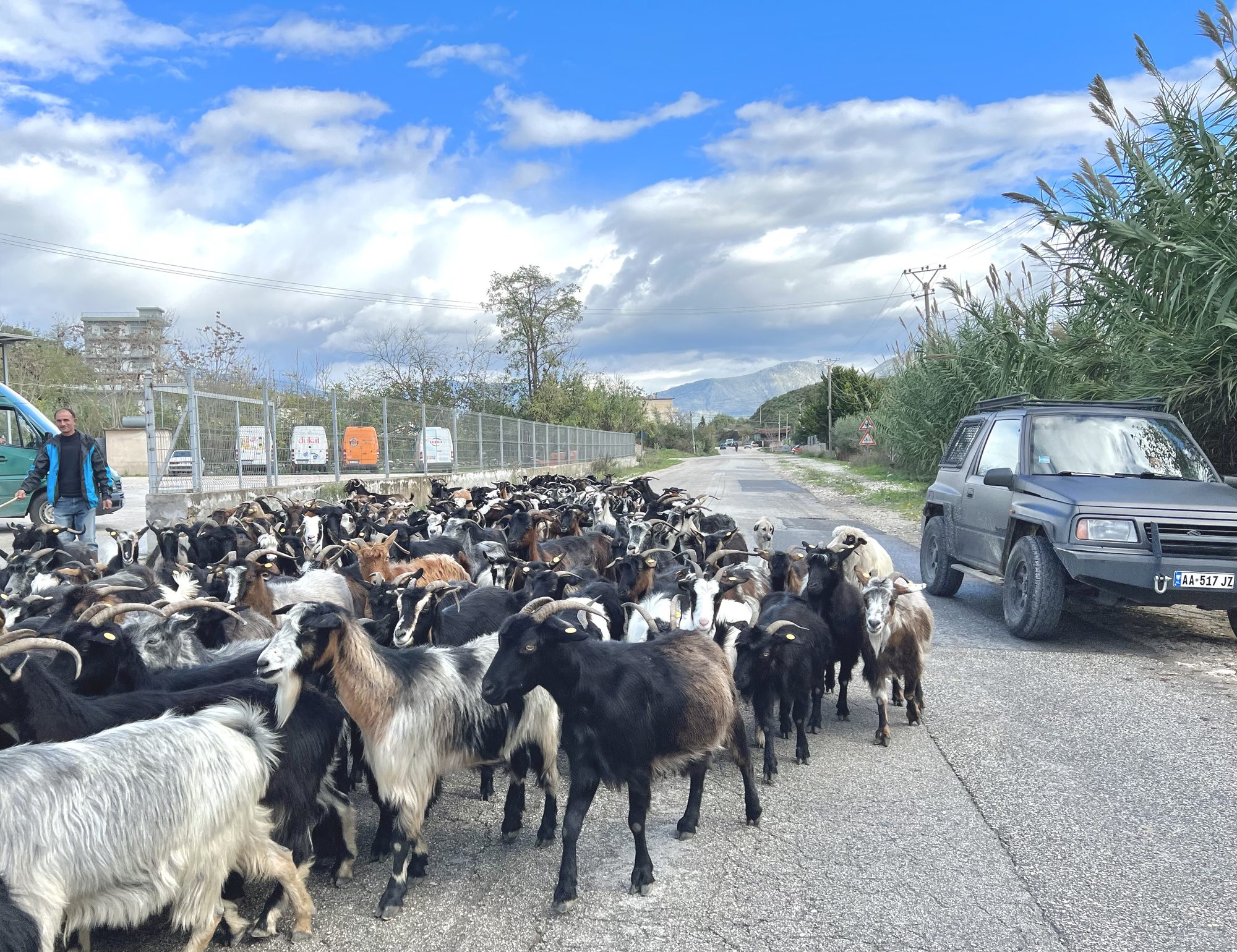
Do not drive at night outside cities. Unlit vehicles, unlit carts, livestock, pedestrians on the carriageway. Removing night driving removes a large share of your risk for free.
Expect the surface to change without warning. Good asphalt becomes gravel with a lip in it, unsigned, mid corner.
Do not argue at the roadside. Minor disputes escalate faster than you expect. Let it go, every time.

The main corridors are genuinely fine now. The Tirana to Durrës motorway, the SH1 north to Shkodër, the road south to Gjirokastër are all normal European driving. It is the secondary network that asks something of you.
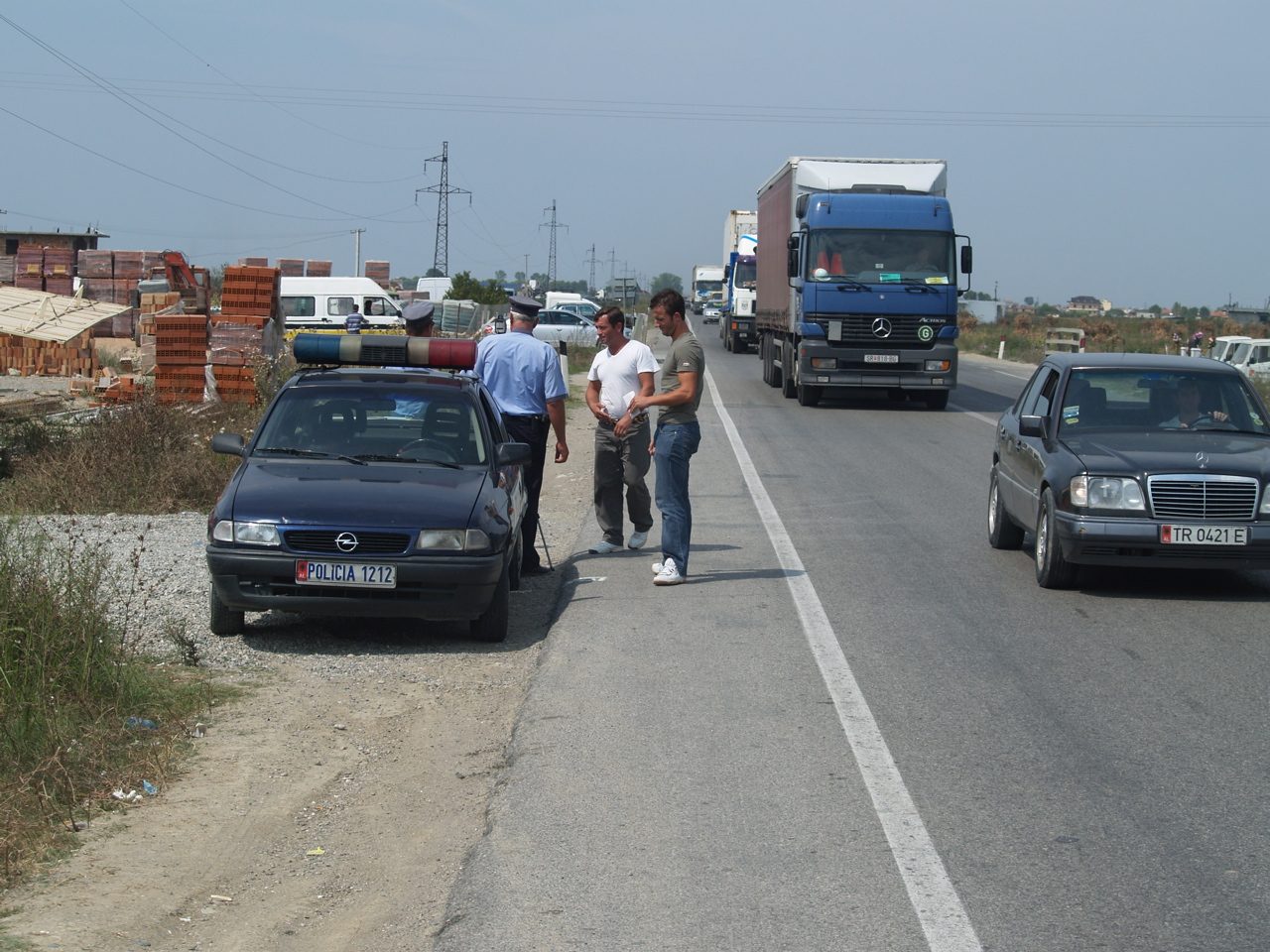
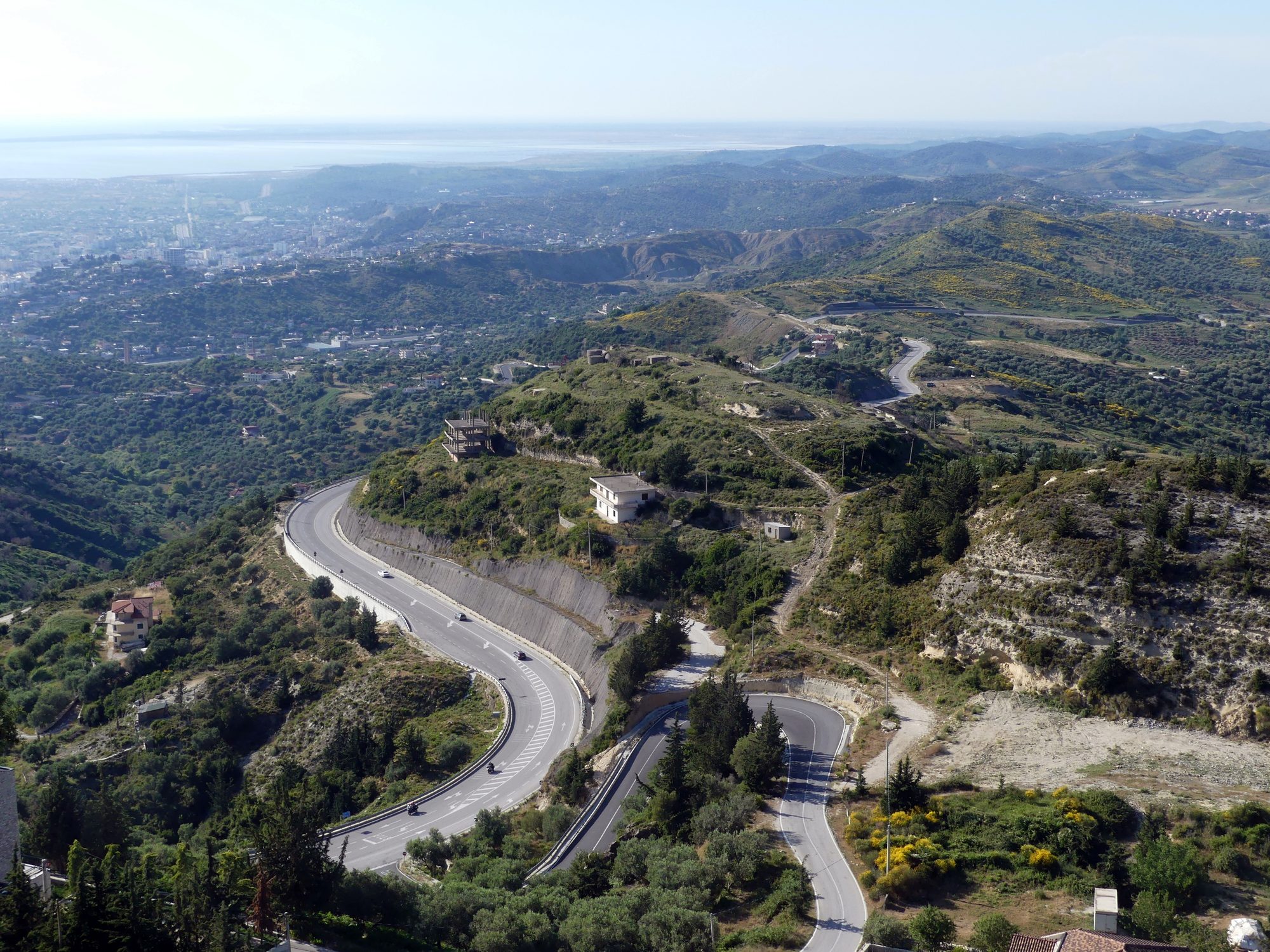
On the mountain roads specifically. The SH21 up to Theth is now fully asphalted, and a normal hatchback handles it in summer without drama, though the streets inside Theth village are still gravel. That road is usually impassable from mid November to late March. The Llogara descent to the Riviera and the SH8 along the coast are spectacular and unforgiving in equal measure, and neither is a place to be in a hurry. You do not need a 4x4 for the great majority of Albania. You need patience and a car you are not afraid to scratch.

Rules, Fines, and the Police
Speed limits are 40 km/h in towns, 80 to 90 on rural roads, 110 on motorways.
The drink drive limit is 0.01 percent, which is effectively zero. One raki puts you over. Take this seriously, because Albania does. Refusing a breathalyser can cost up to 20,000 lekë.
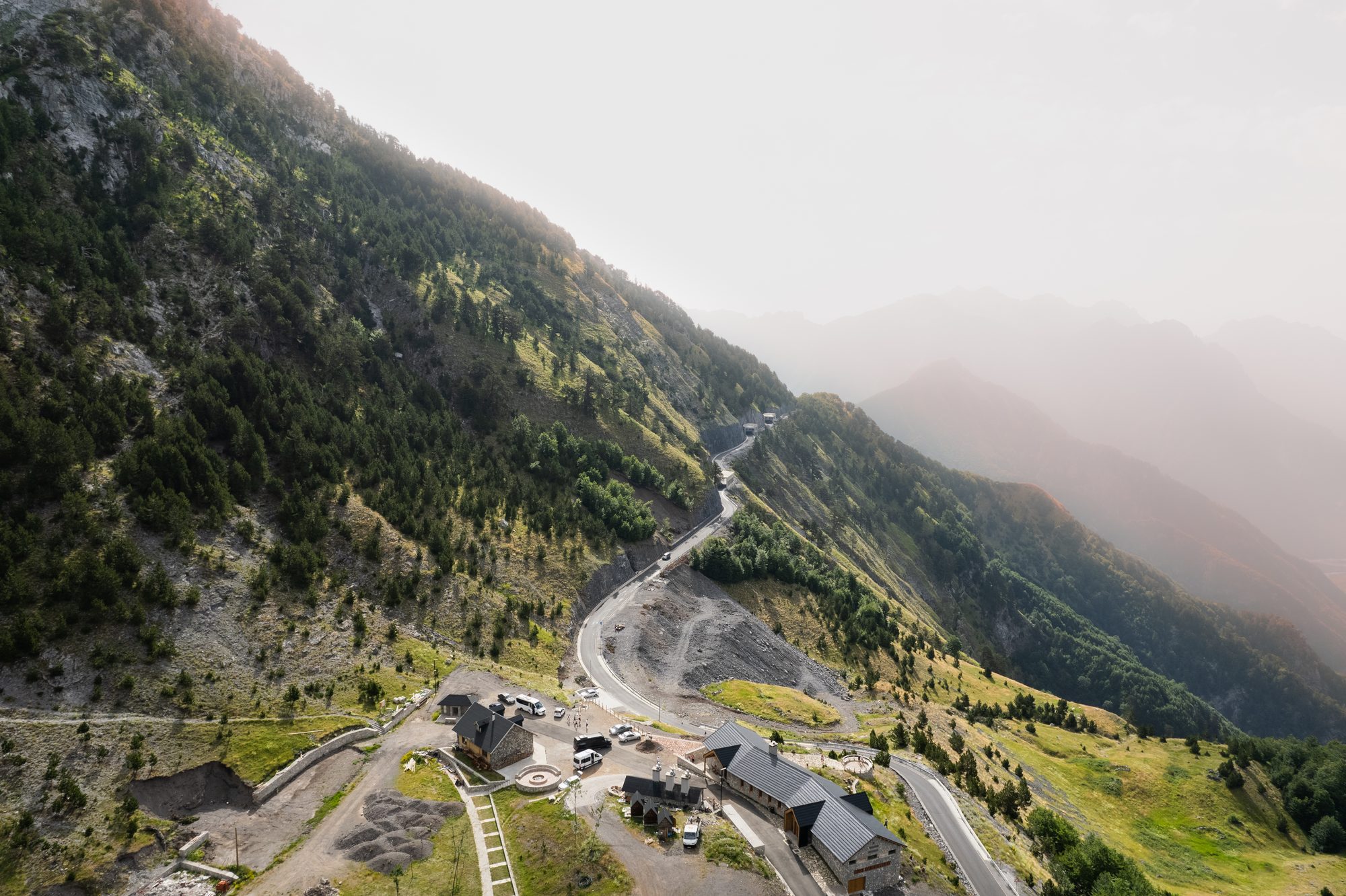
Police issue fines on the spot. Speeding runs 1,000 to 15,000 lekë, phone use 5,000 and up, seatbelts up to 5,000. Being stopped is routine and usually uneventful. Hand over the documents, be polite, do not offer anything, ask for the written ticket. An officer who wants paperwork will produce paperwork.
Carry the documents. Licence, passport, the rental agreement and the insurance paper live in the car, not in the hotel. The road code technically requires non-resident foreigners to carry an International Driving Permit alongside their licence; in practice EU, UK and US licences are accepted without one almost everywhere, but it is cheap, and if your licence is not in the Latin alphabet it is not optional.

Where a Rental Car Earns Its Money
Be specific about this rather than renting for the whole trip by default.
The Albanian Riviera. This is the strongest case. The coast road from Vlorë south through Llogara to Dhërmi, Himarë and Sarandë is one of the great European drives, and the entire point is stopping. Furgons do not stop for photographs. If you rent for one stretch of your trip, rent for the southern beaches.
The mountains and anything with a trailhead. Valbona, Theth, the Dajti back roads, Qafështamë. Public transport to these places exists but runs once a day in season and not at all outside it.
Agroturizëm and villages. The farm restaurants and the small places inland are, almost by definition, not on a bus route.
Groups of three or four. The arithmetic flips completely. Once you are splitting the cost, a car is usually cheaper than four furgon fares and infinitely more flexible.
.jpg)
Where It Does Not
I will be honest against my own advice here, because renting is not always the right call.
City to city on the main routes. Tirana to Berat, Tirana to Shkodër, Sarandë to Gjirokastër. These are well served, cheap, and someone who drives that road every day is a considerably better driver on it than you are on day three. Our guide to using furgons covers how the system works, which is less chaotic than it first appears.
If you are staying in Tirana. A car in central Tirana is a liability. Parking is scarce, the traffic is the worst in the country, and a ride on the local taxi apps costs almost nothing. Rent on the day you leave the city, not the day you arrive.
If you are not a confident driver. This is not the place to rediscover your nerve. There is no shame in the bus, and I would rather you saw less of Albania relaxed than more of it frightened. For the fixed legs you know about in advance, an airport run or a long transfer with luggage, a prebooked car through Kiwitaxi costs more than the furgon and removes the part of the day you were dreading.
If your trip is short and coastal. Two or three days around Sarandë and Ksamil works perfectly well on furgons and water taxis.
Practical Notes
112 is the emergency number.
Get insurance that explicitly covers driving. Given the road statistics, this is not optional. Plenty of standard travel policies quietly exclude it, so check yours rather than assuming, and if it does not cover you, a travel insurer like EKTA covers Albania and sells online in minutes. This is separate from the CDW at the rental desk, which protects the car, not you.
Download offline maps before you leave a city. Coverage in the mountains is patchy and a wrong turn on an unsigned junction is easy.
Carry cash in lekë. Fuel stations, tolls and village parking often want it.
Fill up before the mountains, not in them.
Allow more time than the map says. Google’s estimates for Albanian secondary roads are optimistic by a comfortable margin. A 90 kilometre drive can genuinely take three hours.
The Honest Version
Rent the car. For the Riviera, for the north, for the days when you want to stop at a roadside stall selling honey and figs and nobody is waiting on you, rent the car. It is the difference between seeing Albania and moving through it.
Then drive it like the road is trying to teach you something, because on the stretch between the tunnel and Dhërmi, it is.
Book the automatic early. Refuse the cash deposit. Film the car before you leave the lot. Add an hour to whatever the map tells you. Do those four things and most of what goes wrong to visitors here simply never happens to you.
The rest is the part I cannot put in a table. It is pulling over on the road above Qafështamë because the light has done something to the hills, with nowhere to be and nobody waiting on you, and realising that this is what the twenty euro a day was actually for.