Ask any Albanian where the best raki comes from and you will start an argument that outlasts the bottle. But when the argument finally settles, usually two names are left standing. Skrapar, whose grape raki is the bottle you bring when you want to show respect. And Përmet, where the mulberries that grow along the Vjosa turn into raki mani, the softest and most fragrant spirit this country makes.
I wrote a full guide to what raki is and how to drink it. This is the companion piece: how to actually go where it comes from. The two towns sit on opposite sides of a mountain range in Albania’s deep south, connected by one of the country’s wildest roads and, more sensibly, by a paved loop through the Vjosa valley. Between them you get a river canyon that swallows the light, Ottoman bridges over thermal pools, and villages where October smells like woodsmoke and crushed grapes.
It is my favorite kind of Albanian trip, the kind where the destination fits in a glass.

Skrapar: The Gold Standard
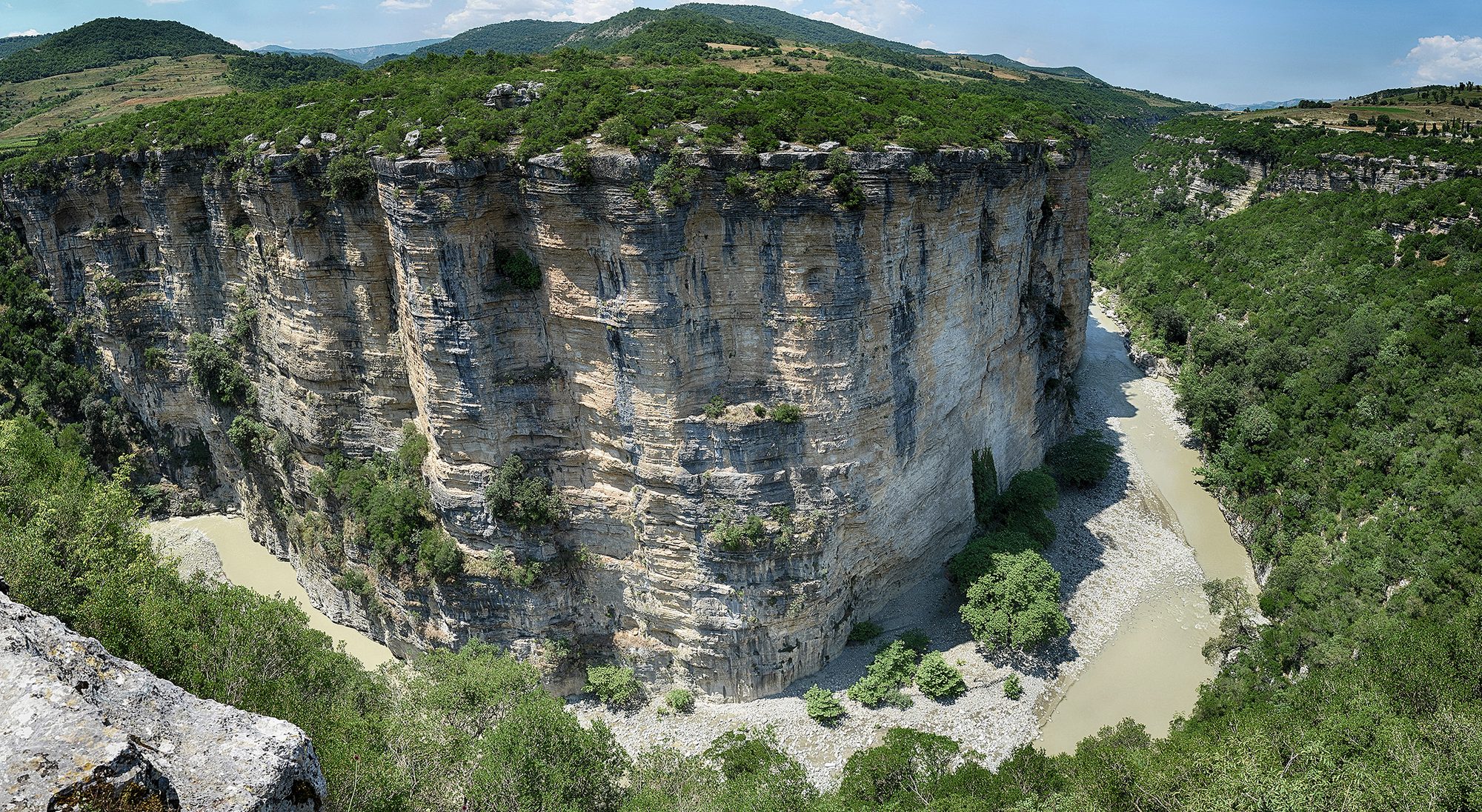
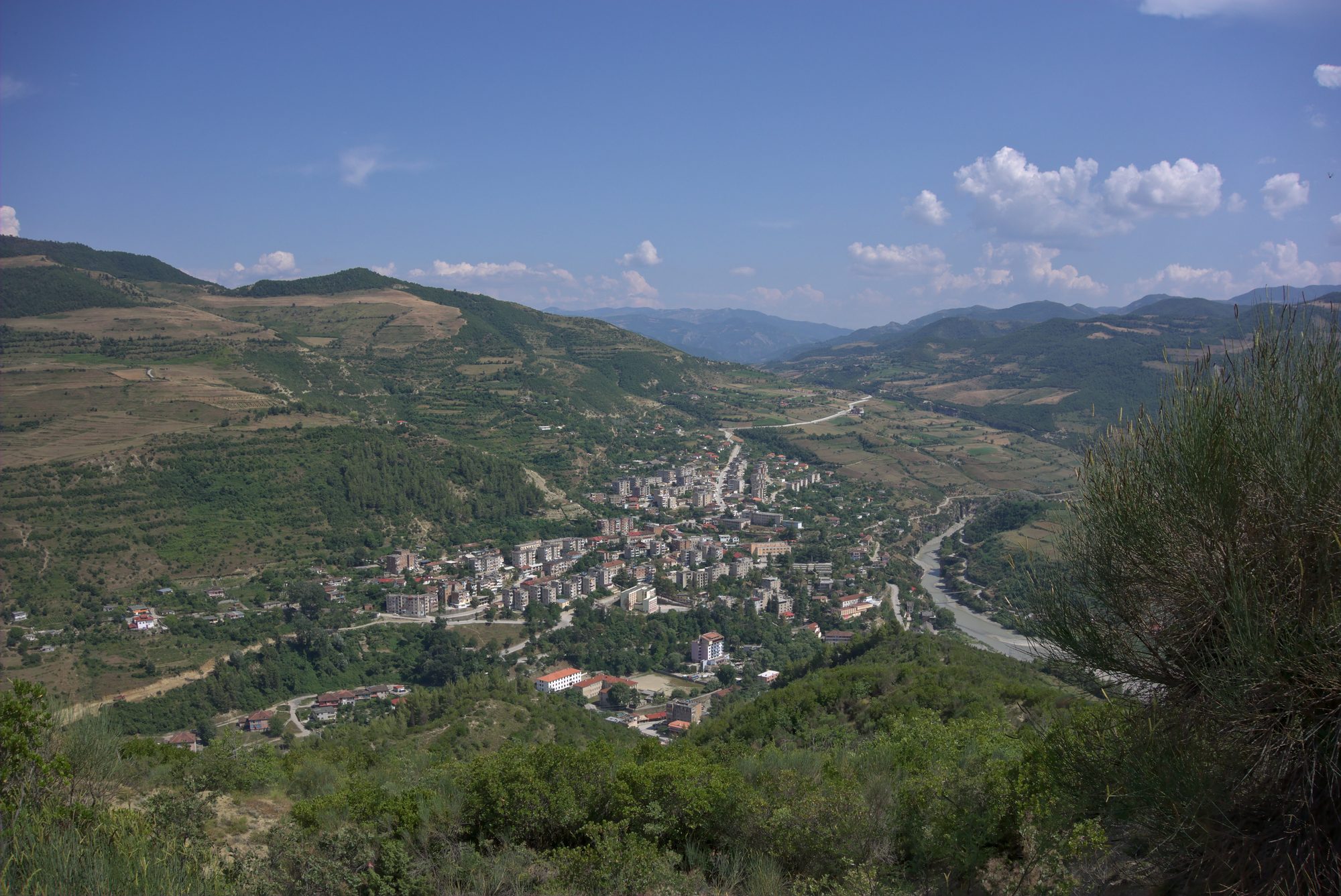
Çorovoda, the seat of Skrapar, is not a pretty town in the postcard sense. It is a working mountain town of apartment blocks and plane trees wedged between ridges where the Osumi and Çorovoda rivers meet. Do not let that put you off. Prettiness is not the point of Skrapar. The point is what happens in the villages around it, where the grape harvest comes down every autumn and the kazanë (copper stills) get sealed with dough and set over slow fires.
Skrapar raki is the one Albanians treat as a unit of seriousness. When my grandfather, who distills his own every autumn in his village near Berat, wants to compliment a batch, he says it is almost Skrapari. The real thing is clean, strong, faintly mineral, and dangerously smooth for something that usually runs 45 percent and up.

Tasting it at the source. The producers here are small and family-run, and most have no signage, no website, and no tasting room in the sense a wine tourist would expect. The reliable method is to ask where you are staying. Every guesthouse owner in Çorovoda has a cousin, a neighbor, or a shelf of their own, and a phone call ahead opens doors that a walk-in never will. The exception with a commercial footprint is the Alba-Lejla distillery, whose Skrapari bottles you will spot in good Tirana bottle shops and, improbably, in liquor stores in the United States these days. From a village producer, expect to pay 1,000 to 1,500 lekë for a liter of the real thing, handed over in whatever bottle was closest.
Festa e Rakisë. If you can time your visit for it, Çorovoda holds its raki festival in the town center in October, under a name I love: Skrapari në gotë, Skrapar in a glass. The 2025 edition fell on October 11. It is really a harvest fair, with raki alongside honey, olive oil, jams, and grilled meat, and it is the one day of the year when you can taste your way across a dozen villages without leaving the square. The date moves a little each year and is announced by the municipality a few weeks out, so check before you build the trip around it.
The Canyon and the Waterfall
You do not drive all the way to Skrapar only to drink. The Osumi canyon starts a few kilometers south of Çorovoda and runs for 26 kilometers, with walls up to 80 meters deep. From the rim it looks like the earth simply failed to close. In spring, when the snowmelt is up, local operators run rafting trips through the heart of it for roughly 40 to 65 euros per person. From late June the water drops and the same stretch becomes a place for tubing, swimming, and wading between cathedral walls. I covered the canyon’s place among Albania’s best hikes and gorges before, but standing on the rim in October, with the poplars turning and not another car in sight, is its own argument.
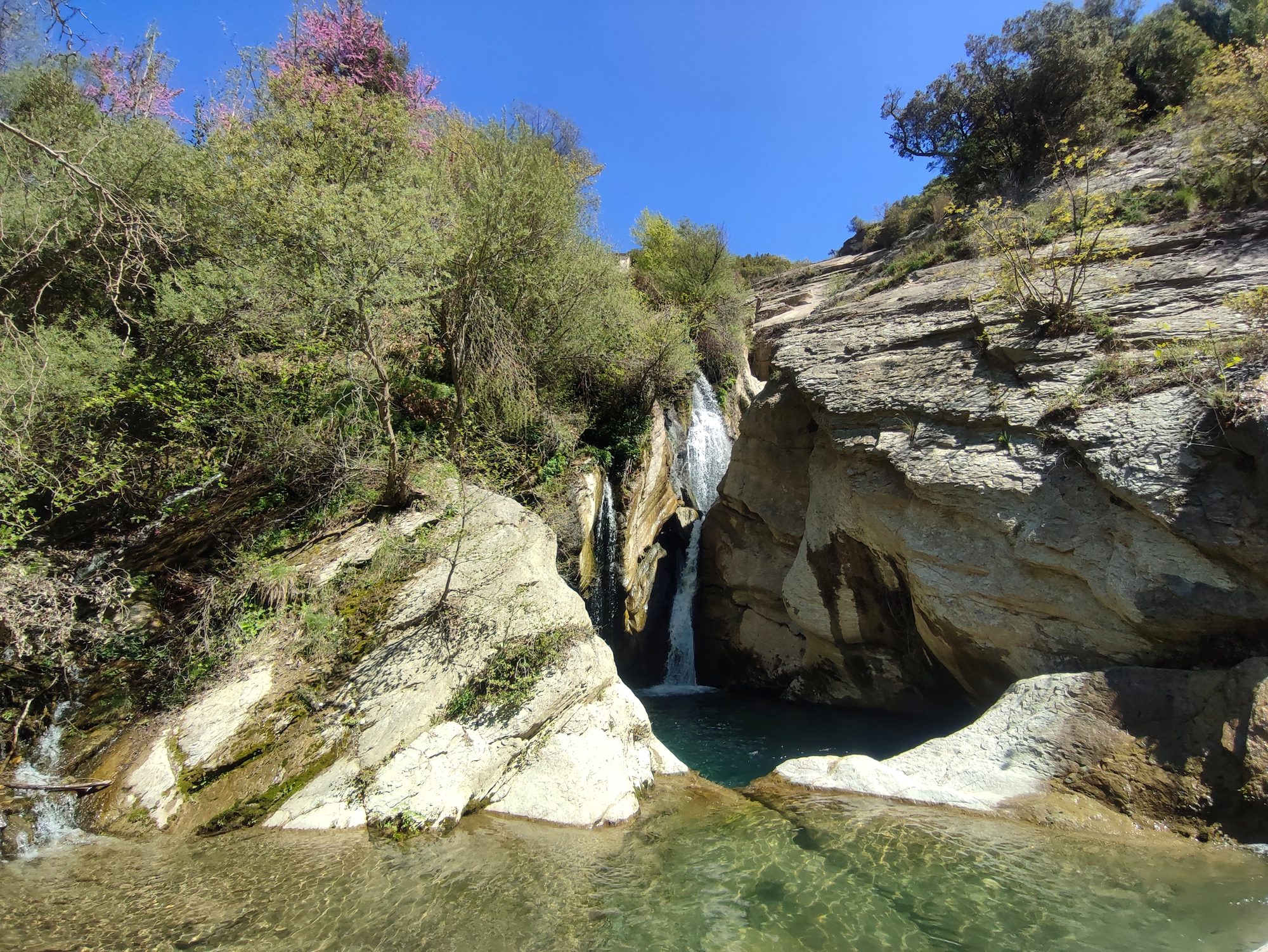
On the road in from Berat, a short detour at the village of Bogovë leads to the Bogovë waterfall, a fifteen minute walk from the village to a white limestone bowl where the water comes out of the mountain cold enough to make you shout. In summer it is the best swim in the region. In October it is a dare.

The Road Between
Here is the honest part. On the map, Çorovoda and Përmet look like neighbors, and there is indeed a direct road, 40 kilometers of it, from Çorovoda south to Piskovë in the Vjosa valley. It is entirely unpaved, single-lane gravel with hairpins and long drops, it takes over three hours, and it should only be attempted in a proper 4x4 in dry weather. It runs through the fir forests of the Hotova national park and it is one of the most beautiful drives in the country, in the way that things you should think twice about often are.
Most people, myself included on most days, take the paved loop instead: back through Berat, down the main highway to Tepelena, then up the Vjosa through the Këlcyra gorge to Përmet. Around three and a half hours, all asphalt, and the last stretch along the river is a reward rather than a penance. I wrote about what Albanian mountain roads actually demand of a driver in the driving guide; this loop asks nothing unusual by local standards.
If you do have the 4x4 and the weather, the mountain route passes near Frashër, a village of about four hundred people that produced the three Frashëri brothers, the poets and statesmen of Albania’s national awakening. Their family house is a small museum, and the teqe (Bektashi lodge) nearby was founded in 1781, burned in 1914, and rebuilt a decade later with money sent home by Albanians in America. Frashër is also reachable as a 40 kilometer side trip from Përmet, which is how I would do it.
Përmet: The Sweet One
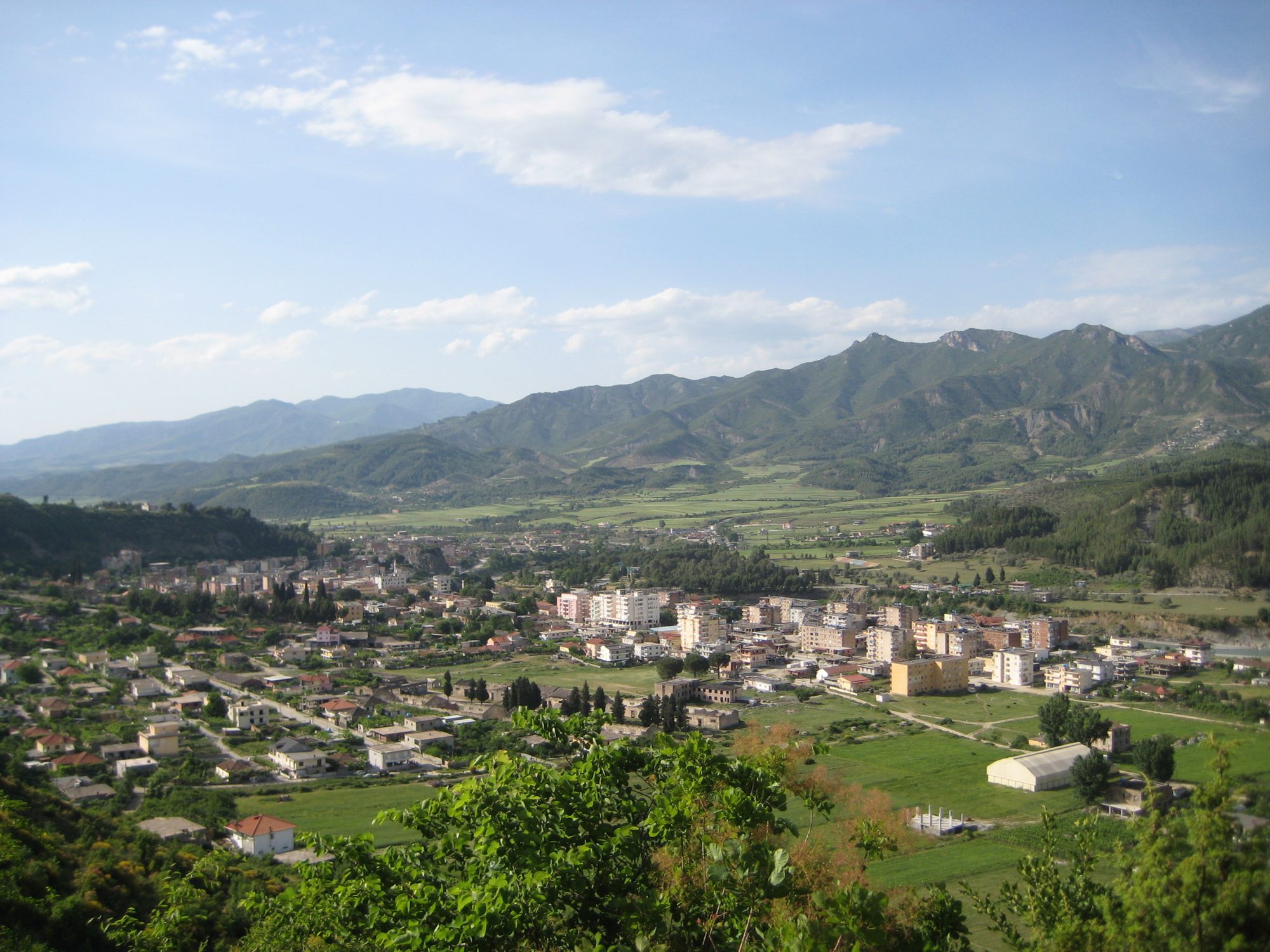
Përmet is everything Çorovoda is not: tidy, riverside, planted with roses, a town that has quietly decided that being small and good is a strategy. It sits on the Vjosa, which since 2023 has been protected as Europe’s first wild river national park, and it has built its reputation on the sweet side of the Albanian table. This is the town of gliko, the spoon sweets I learned to make from my great-aunt Donika in a kitchen ten minutes’ walk from the main square, and I have written that whole story in the gliko guide.
Raki mani is the other half of Përmet’s reputation. Mulberry trees line the riverbanks and village lanes here, and the raki made from their fruit is darker in character than any grape version, rounder, faintly jammy, with a nose that reminds me of dried figs and hot stone. Përmet shares the mulberry faith with Boboshtica near Korça, whose raki mani has a place in Slow Food’s Ark of Taste, but Përmet is where the mulberry meets the rest of the table: a glass of raki mani, a saucer of gliko, a wedge of white cheese, all at once.

Tasting here works the same way as in Skrapar: through people rather than storefronts. The shops around the center sell local gliko, wine, and raki together, and most will let you try before you buy. Guesthouses pour their own at dinner. If a bottle has a handwritten label and the shopkeeper tells you whose house it came from, that is the one to buy.
The Bënja Thermal Baths
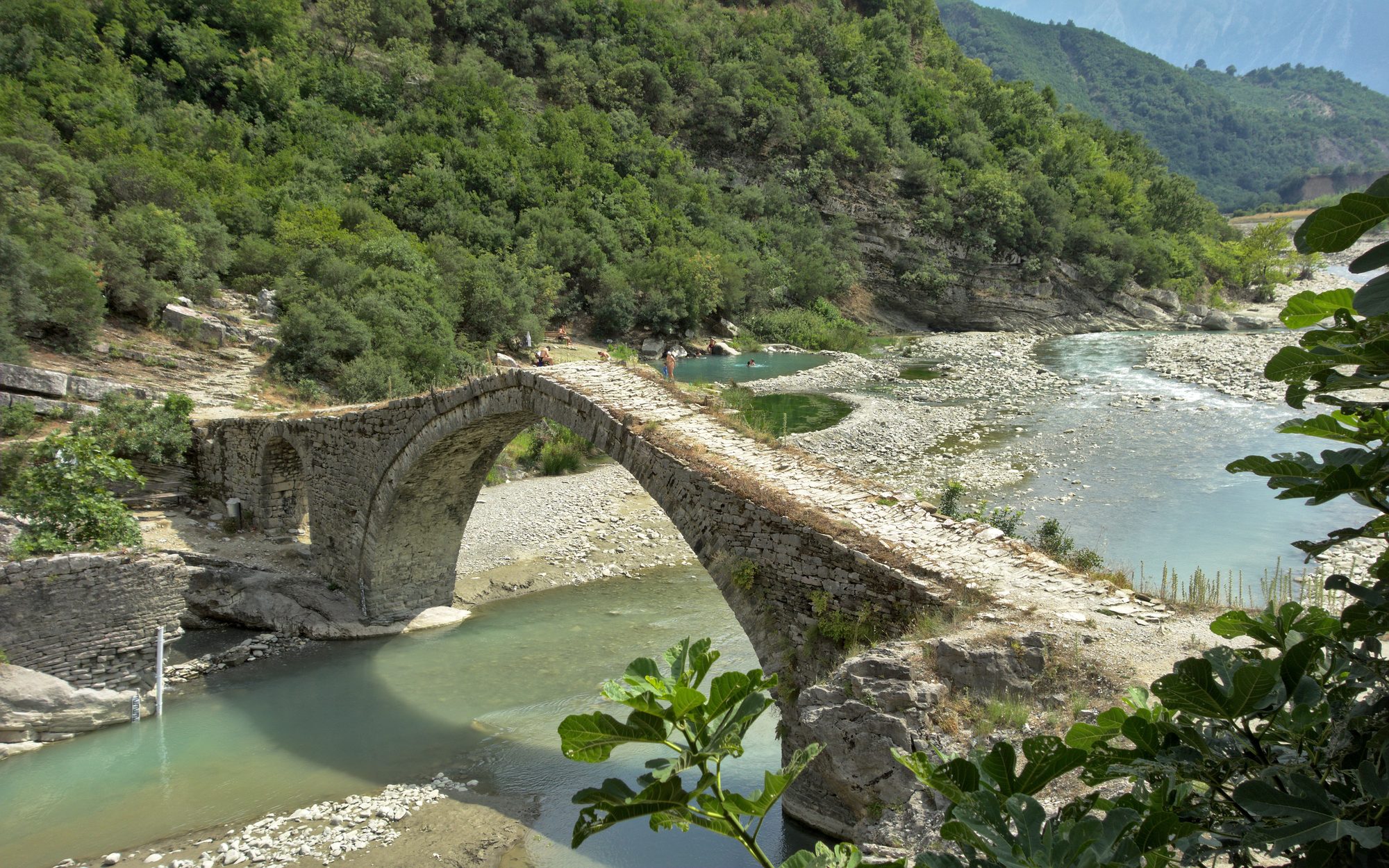
Twenty minutes from Përmet, up the Lengarica river, the Ottoman-era Ura e Kadiut (the Kadi’s bridge) arches over a set of natural thermal pools. Soaking is free; parking is about 200 lekë. The water is closer to warm bathwater than to a hot spring, which makes it perfect in the shoulder seasons, when you can sit in a pool below a 200-year-old bridge with the canyon walls going gold above you and nobody around but a few locals who have been coming since before it was on anyone’s map.

When to Go
October is the answer if raki is the reason. The harvest is in, the stills are running, the festival lands mid-month, and the whole region smells like my childhood: woodsmoke, crushed skins, something sweet turning serious. Guesthouses are open, the roads are usually still dry, and the canyon rim is at its most beautiful.
Spring (March to early June) is for the water: rafting at full flow, the Bogovë waterfall at its loudest, green hills. Summer brings tubing, swimming, and real heat in the valleys; it is the busiest season at Bënja. Winter is quiet and cold and not without charm, because that is when the raki gets drunk rather than made, but some mountain guesthouses close, and the unpaved roads are off the table.
Getting There and Around
The trail starts in Berat, a city worth two nights on its own, two hours from Tirana. Çorovoda is about another hour south on a decent paved road through Poliçan. From Çorovoda, the paved loop to Përmet takes around three and a half hours; the direct mountain road takes longer and demands a 4x4.
This is a trip where a car pays for itself several times over. The producers are in villages, the canyon viewpoints are unmarked pull-offs, and the best moments happen where no furgon goes. The local rental agencies will usually deliver a car to Berat, and for this route ask for something with clearance even if you skip the 4x4 crossing. Two more practical notes: Albania has zero tolerance for drinking and driving, so the designated driver tastes nothing and buys bottles for later, and if rafting or rough roads are on your plan it is worth having travel insurance that covers the adventurous bits rather than assuming your bank card policy does.
Without a car, you can still do a good version of this. Buses and furgons run from Tirana to Çorovoda a few times daily, currently leaving Tirana in the early afternoon and returning from Çorovoda in the early morning, passing through Berat and Poliçan on the way. Përmet has its own daily connections from Tirana down the main valley. What you cannot do by public transport is cross between the two towns directly, or reach the village producers, so carless travelers should treat Skrapar and Përmet as two separate excursions rather than one loop. The furgon guide explains the ritual of it all.
Where to Stay
Around Berat, the smart first night is Alpeta, a family winery and agroturizëm in the wine village of Roshnik, fifteen minutes from town, with vineyard views toward Mount Tomorr, rooms for around 60 to 70 euros, and their own wine and raki poured with dinner. It is exactly the kind of place I had in mind when I wrote about Albania’s farm stays. In Çorovoda itself the options are simple family-run hotels and guesthouses; book the night before rather than weeks ahead, and let the owners organize your producer visits. Përmet has the region’s most comfortable small guesthouses, many along the river; the general logic of choosing among them is in the where to stay guide.
Bringing Raki Home
The last job on the trail is getting a bottle out of the country intact.
Buy it right. From a producer or a market stall, taste first, and expect 1,000 to 2,000 lekë per liter for something serious. In Tirana, the vendors at Pazari i Ri sell regional rakis by the bottle, and the better bottle shops carry the commercial Skrapari labels. One warning for the supermarket run: Konjak Skënderbeu, the amber brandy you will see on every shelf, is a barrel-aged grape brandy and a fine thing, but it is not raki. The raki you want is clear.
Pack it right. Anything over 100 milliliters goes in checked luggage, and homemade raki usually comes in a repurposed plastic bottle, so decant it into a proper glass bottle with a screw cap, tape the cap, and bury it in the middle of your clothes. Airlines allow spirits between 24 and 70 percent in checked bags, up to five liters per person, technically in retail packaging. Anything over 70 percent is banned outright, which is worth knowing because some village batches genuinely flirt with that number. If in doubt, ask the producer how strong it is; they always know, whatever the bottle does not say.
Declare it right. Flying into the EU you can bring one liter of spirits duty-free. The UK allows four liters, and the US exempts one liter, with a small duty on more. The duty-free at Tirana’s airport carries the commercial labels if you run out of luggage space, but by then you will know the difference between a bottle with a barcode and a bottle with a story.
Somewhere south of Berat this October, my grandfather will be feeding a slow fire under his kazan, the way he does every autumn, and somewhere in Përmet a family will be picking mulberries off tarpaulins spread under the trees. Raki is not a souvenir here. It is a place, distilled. Go to the place.
Gëzuar.