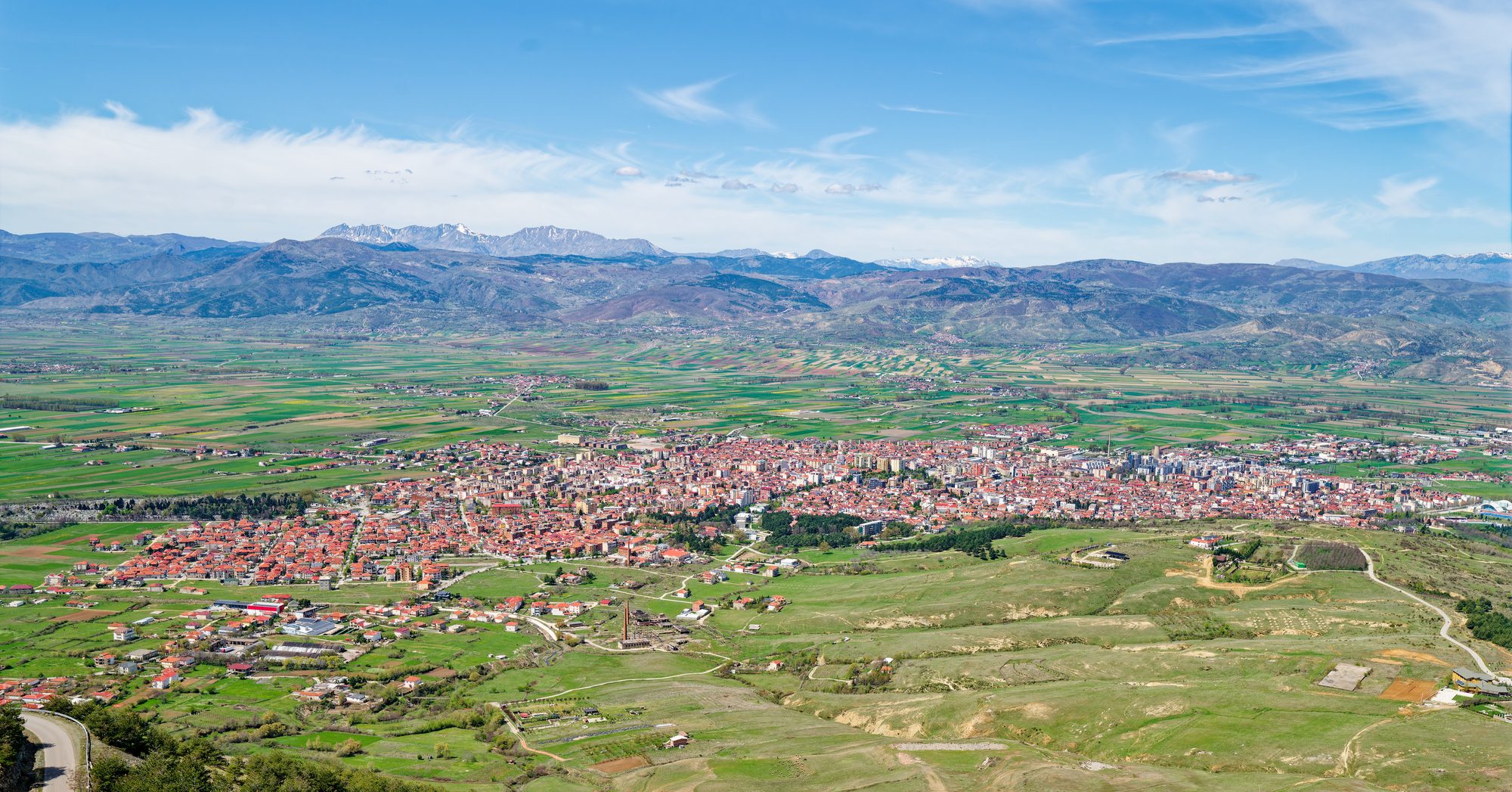
Korçë is the city I would send you to if you told me you wanted to see how Albanians live when nobody is performing for tourists. It sits at 850 metres on a plain in the south-east, an hour from Greece and an hour from Lake Ohrid, and for most of the last century it has been the country’s quiet cultural capital: the first Albanian-language school, the first brewery, the oldest serenades, and the evening walk that the rest of the country measures its own against.
It is also, at the time of writing, the only sizeable Albanian city without an English-language guide worth the name. Visitors arrive because a friend told them to, and leave saying the same thing to someone else. This is an attempt to write down what the friend says.

Why Korçë Is Different
Every Albanian city has a nickname and Korçë’s is Parisi i Vogël, Little Paris. It comes from the French army, which occupied the city from 1916 to 1920 and proclaimed an autonomous province here, and from the French lyceum that opened in 1917 and educated half the country’s later elite, Enver Hoxha among them. By the 1930s the city had cinemas, four consulates, a coffeehouse culture and a middle class that dressed for the evening. The habit stuck.
What that produced is a city that walks. Bulevardi Shën Gjergji, the pedestrian spine, runs from the red-brick panoramic tower by the bazaar to the cathedral, and at seven in the evening the whole city is on it. My aunt lives here, my father’s sister, and my first proper xhiro was on this boulevard with her, so I am biased. I have also walked every promenade in the country since, and I still think this is the best one.
The other thing to understand is the altitude. Korçë is cold in winter, properly cold, with a January average below freezing and snow on the streets, and cool in summer when the coast is unbearable. August evenings need a jacket. That is a feature, not a warning.
What to See
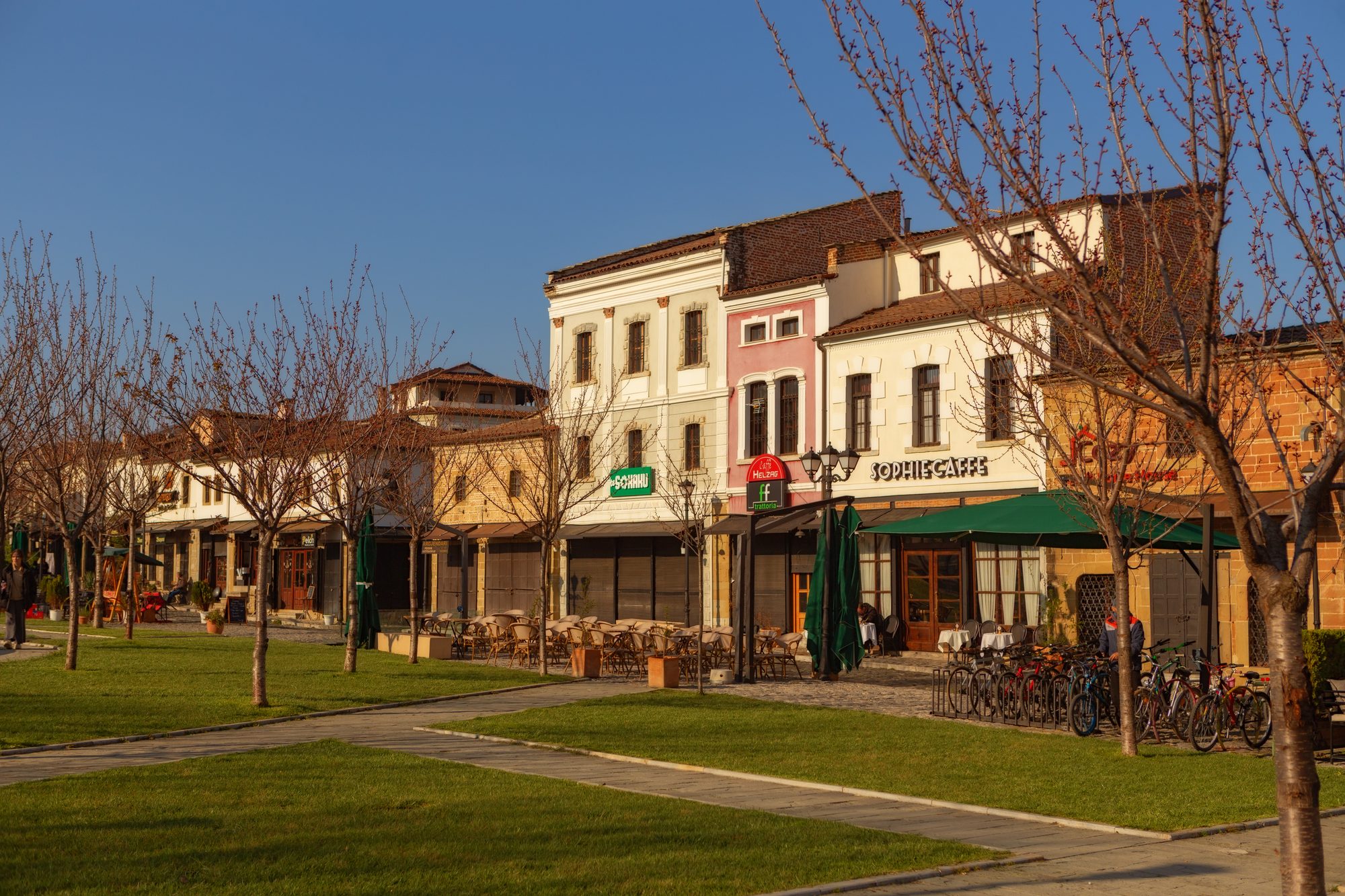
The Old Bazaar (Pazari i Vjetër). Five hundred years of trading on this spot, rebuilt in 1879 after a fire, and at its height a thousand shops and inns. It fell into ruin under communism and was restored in 2015 and 2016 with American development money, which is why it now looks the way it does: cobbles, low Ottoman shopfronts with wooden shutters, cafes on the square, a boutique hotel in the old caravanserai. Locals call it the Bazaar of the Serenades, and if you sit here late on a warm evening you will find out why.

The Resurrection Cathedral (Katedralja Ngjallja e Krishtit). The old cathedral of St George was dynamited in the atheist campaign of 1968. This one was built through the 1990s on the site and consecrated in 2004, and it is one of the largest Orthodox churches in the country, twenty-eight metres to the top of the dome, pink and cream stone, two bell towers. It is open all day and free, and the square in front is where the boulevard ends.
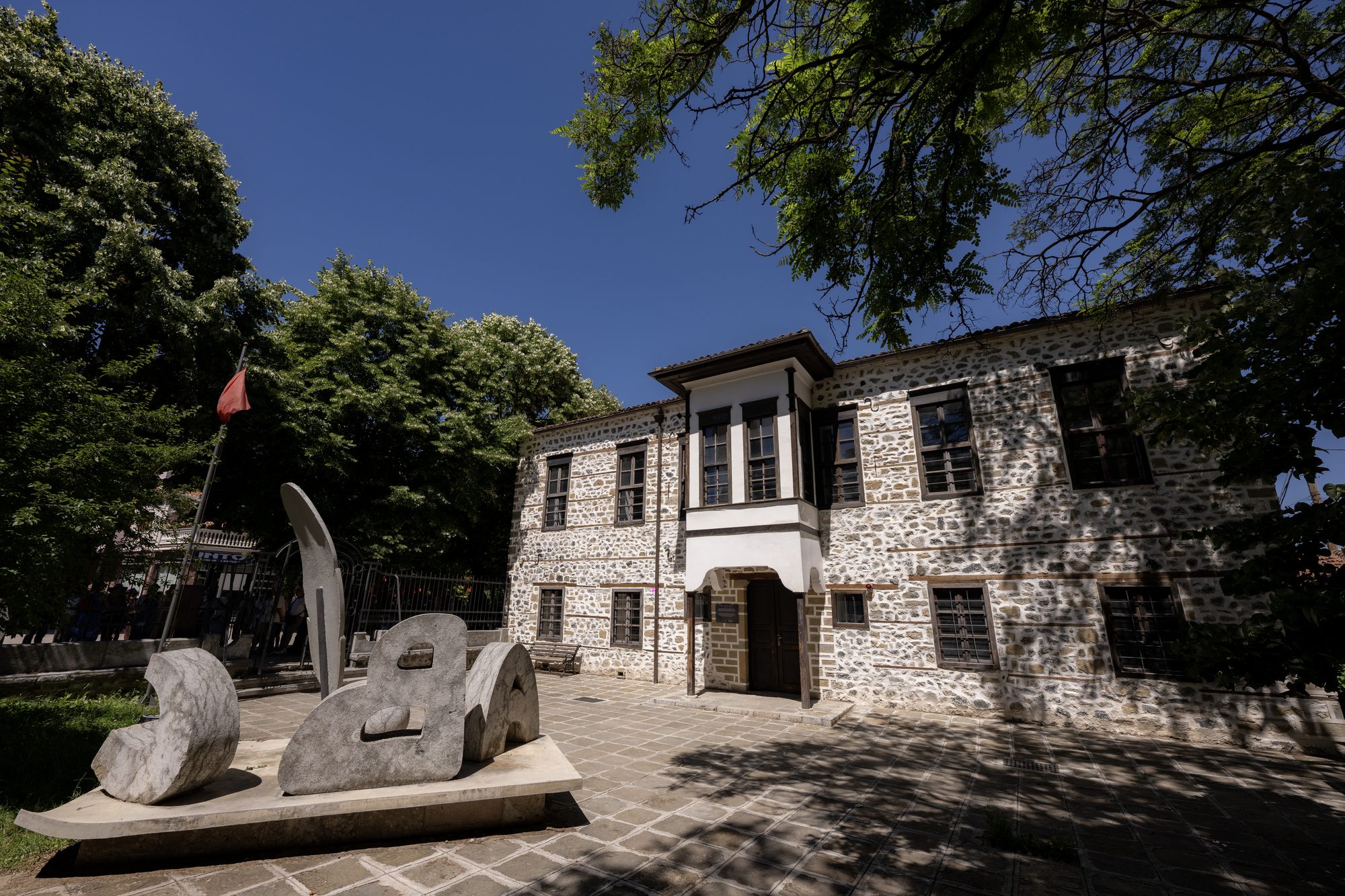
The First Albanian School (Mësonjëtorja e Parë Shqipe). On 7 March 1887 the first school to teach in the Albanian language opened in this building, at a time when the Ottoman authorities forbade it and the Greek church excommunicated the parents. It is now the Museum of Education, 300 lekë, closed Mondays, and the date is a national holiday, Teachers’ Day. For Albanians this is the most important building in the city and it is worth twenty minutes to understand why.

The National Museum of Medieval Art (Muzeu Kombëtar i Artit Mesjetar). The reason art historians come. More than six thousand icons in a purpose-built museum opened in 2016 on Bulevardi Fan Noli, including work by Onufri, the sixteenth-century master whose red nobody has reproduced, and by David Selenica, the Voskopojë painter you will meet again below. Entry is 700 lekë with an audio guide included. Daily nine to seven from April to September, closed Mondays in winter. Give it ninety minutes.
The Mirahori Mosque (Xhamia e Iljaz Bej Mirahorit). Built in 1494 and 1495, one of the oldest mosques in Albania, with a minaret that fell in an earthquake and was rebuilt. It sits just off the bazaar.
The Bratko Museum, a collection of Asian art left to the city by a Korçë-born American photographer, 300 lekë, and the Gjon Mili museum, 240 photographs by the Korçë-born Life magazine photographer who invented stroboscopic photography, 200 lekë, on the top floor of the Romanian House on the boulevard, are the two small museums worth the detour if it rains.
The panoramic tower at the bazaar end of the boulevard costs 50 lekë, cash, and is open until ten at night in summer. Go up at sunset.
Eating and Drinking
Korçë eats better than any city its size in the country, and it eats specific things.
Lakror is the dish. A thin layered pie baked under a saç, the iron dome that is buried in embers, filled with leeks and eggs, with wild greens, with nettles in spring or pumpkin in autumn. The version at Shija e Saçit, in a side lane off the centre, is 500 to 1,000 lekë and one portion feeds two people. Do not order anything else first.
Kërnacka are the small grilled sausages of minced beef and lamb with onion and garlic, and Korçë is the qofte capital of the country, which means the charcoal in the grill shops burns from morning until the boulevard empties. Taverna Vasili, a street back from the boulevard, is the one I always name: the smoke reaches you before the door does, the lemon soup and lakror are the order, and a full meal with a beer runs 1,000 to 2,500 lekë a head. It closes at four on Sundays.
Vila Cofiel does the slow food, rabbit and lamb, for 1,000 to 3,000 lekë. Komiteti in the bazaar is a raki bar dressed as a communist-era committee office, 500 to 1,000 lekë, and the place to taste a dozen rakis you will not find elsewhere. Vila 95 is where the serenades happen at dinner.
The pastries. Petulla, fried dough eaten with honey or cheese; sheqerpare, the syrup-soaked butter biscuit; walnut baklava. Korçë takes its brumëra (doughs) seriously and the bakeries on the side streets are better than anything on the square.
Birra Korça. The brewery was founded in 1928, nationalised in 1946, and bought back and rebuilt in 2004, and it is the beer you will be served everywhere in the south-east whether you ask or not. The brewery runs free tours Monday to Saturday at ten, twelve and two, twenty to thirty minutes with a tasting, and the beer garden pours a draft for 80 lekë. Closed Sundays. The beer festival it gives its name to is covered in the festival guide; the 2026 edition was the twentieth, in the middle of August, out at Drenovë.
The serenata korçare. The city’s own genre, guitar and mandolin love songs from the late nineteenth century, adapted from Ionian and Italian tunes and sung by men in close harmony. They are on the national heritage register, they are still sung at weddings and on warm nights in the bazaar, and the city now runs a serenade festival in the second half of September. If you hear singing off the boulevard, follow it.
Side Trips
Korçë is the base for a countryside that almost nobody outside Albania has heard of. This is the part of the trip that needs wheels.
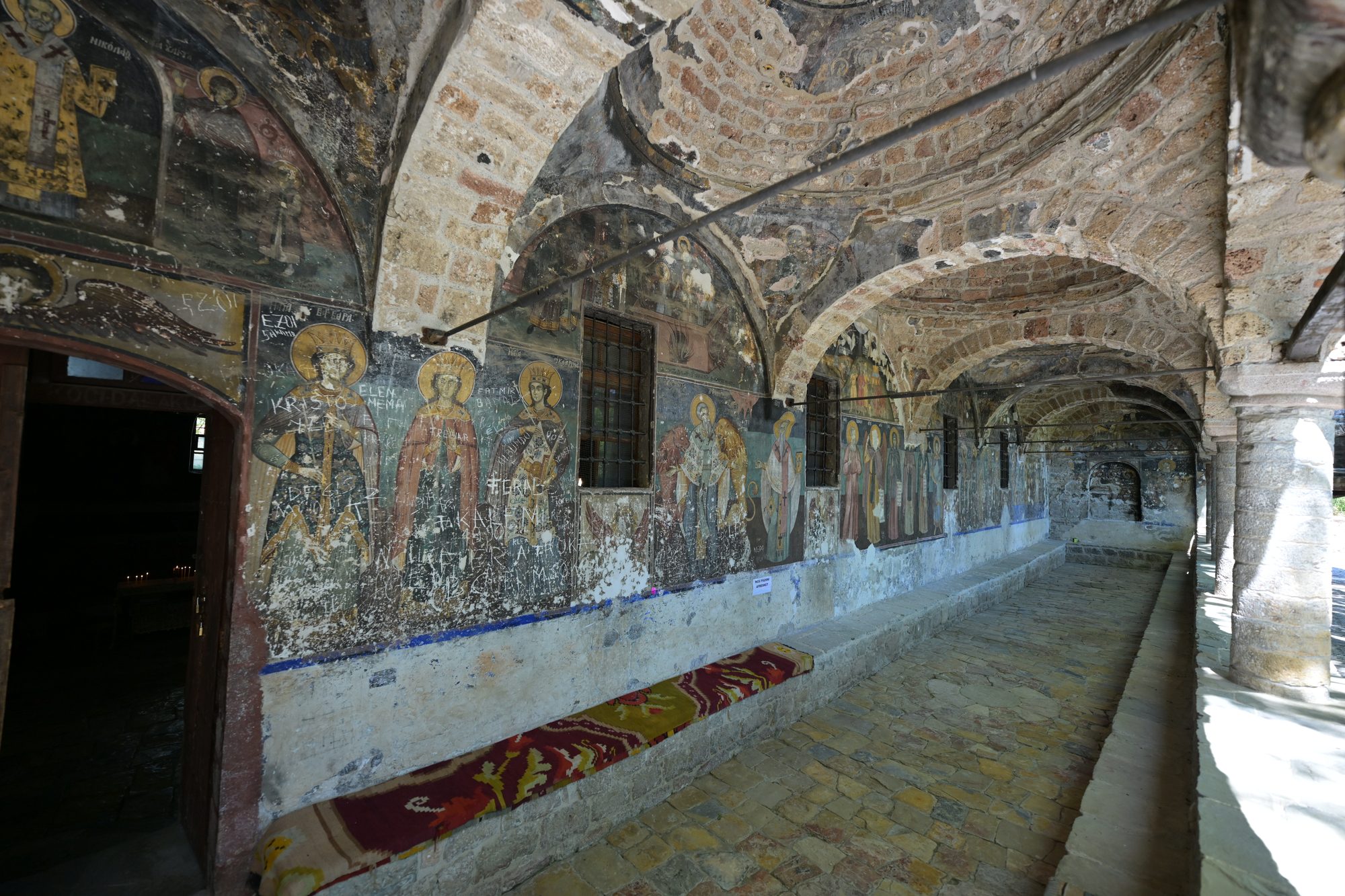
Voskopojë. Twenty-one kilometres and half an hour up into the hills at 1,160 metres. In the eighteenth century this was one of the great trading towns of the Ottoman Balkans, with a printing press, an academy and more than two dozen churches; it was sacked in 1769, again in 1788 and once more in 1916, and what remains is a mountain village with five of those churches still standing. The church of St Nicholas (Shën Kolli), built in 1721 and painted inside by David Selenica in 1726, is the masterpiece. The frescoes are among the finest post-Byzantine painting anywhere. The keyholder’s phone number is on the sign at the village entrance; entry is free or a donation. Furgons run from the fire station in Korçë four times a day for about 150 lekë.
,_Voskopoj%C3%AB,_Shqip%C3%ABri.jpg)
Dardhë. Twenty kilometres the other way, a stone village at around 1,250 metres with slate roofs, guesthouses, and the Bigëll ski tow, which opened in 2012 as the first in Albania. The snow is unreliable, some seasons it lasts ten days, so go for the village and the walks rather than the skiing.
Mborje. At the foot of Mount Morava just outside the city, a tiny church with frescoes dated to 1390, restored in 2015 when it was close to collapse. Ten minutes from the centre.
Boboshticë. A cherry-growing village in the hills where, until the 1960s, most people spoke a Slavic dialect, and where Taverna Xhufka serves whatever the owner cooked that day. I wrote about it in the agroturizëm guide.
Prespa. An hour east, a lake shared by three countries, a Macedonian-speaking village called Pustec, the largest Dalmatian pelican colony in the world, and the island of Maligrad with a fourteenth-century church in a cave. The boat from the Pustec pier is 20 to 30 euro. June and September are the months for the birds.
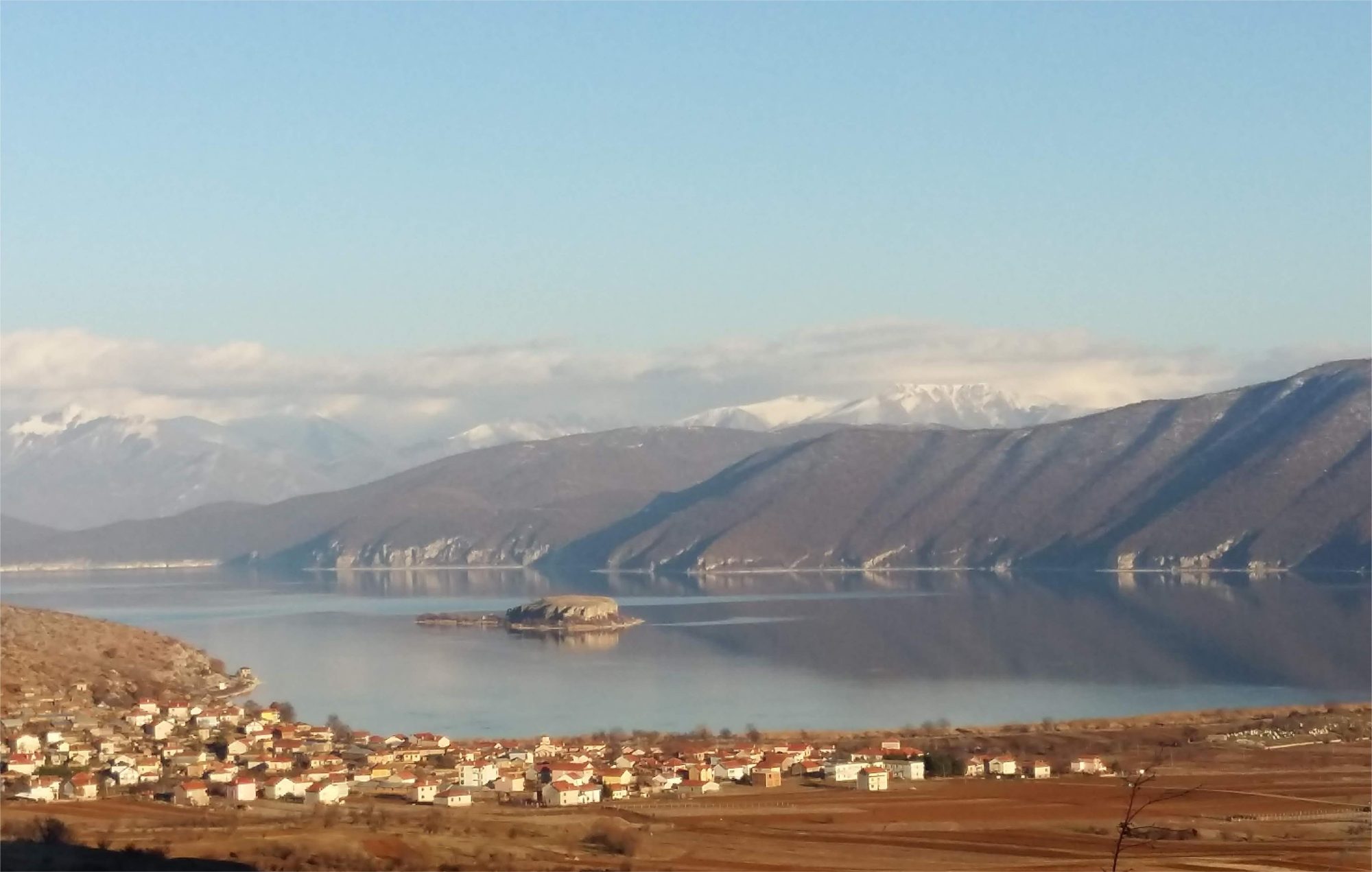

The Kamenica tumulus, eight kilometres out, is a Bronze Age burial mound with more than four hundred graves and a small museum, 200 lekë, closed Mondays.
Pogradec and Lake Ohrid, about forty-five minutes north, for the Drilon springs, the koran trout on every menu, and the village of Lin with its sixth-century mosaics. Ohrid itself is a UNESCO site and the Albanian shore is the quiet side of it.
The Morava cross. The viewpoint above the city, with a giant Korça sign in the style of a certain hillside in Los Angeles. Four kilometres up by car or a stiff walk.
Getting There
From Tirana. This is where people go wrong. Since 2024 the buses for the south-east leave from the East Terminal (Terminali Lindor) by the TEG shopping centre on the Elbasan road, not from the North-and-South terminal on the other side of the city. City bus 2 or 8 gets you there, a taxi is about 600 lekë. Around twenty departures a day between six in the morning and seven at night, about 700 lekë, three to three and a half hours via the Elbasan motorway, Librazhd and Qafë Thanë. Turning up at the wrong terminal costs you the morning; the furgon guide covers the rest.
The road itself is the weak link. A landslide closed the Librazhd to Përrenjas stretch for eleven days in February 2026 and stranded the city’s tourism for a week, and the widening of the Elbasan to Qafë Thanë section is not due to finish until 2027. Expect roadworks, and in winter expect the occasional closure.
From the airport. No direct service. Airport bus to the city, cross to the East Terminal, then the Korçë bus, which is a four to five hour day with luggage. If you are arriving late or in a group, a prebooked transfer from Rinas does it in three hours door to door, and my airport guide prices the alternatives.
From Ohrid. There is no direct bus across the border. Take the bus from Ohrid to Sveti Naum, walk the kilometre across the Tushemisht crossing, taxi into Pogradec, and catch the Korçë furgon, an hour for 200 lekë.
From Greece. The Kapshticë crossing is 37 kilometres away; Kastoria is 65 kilometres beyond it. Buses run twice a day to Thessaloniki, five to six hours, around 2,450 lekë.
From Berat. About three hours by car over the mountains via Gramsh on a road that was finally almost fully asphalted in 2025. The bus takes four hours for 500 lekë. From Gjirokastër and Përmet, the SH75 through Ersekë and Leskovik is three to four hours of spectacular, winding, occasionally alarming driving; the new Korçë to Ersekë road partly collapsed in 2024 and has been patched since.
Do you need a car? For the city, no, and parking on the boulevard side streets is easy. For Voskopojë, Dardhë, Prespa and Mborje in the same trip, yes, unless you are content with four furgons a day and no timetable. The local agencies on Localrent will deliver to Korçë from Tirana for a fee, which beats the terminal shuffle, and the rental guide explains what the deposit hold and the green card mean before you sign. Between November and March ask for winter tyres and chains; the villages are at 1,200 metres.
Best Time to Visit
May, June and September are the months. Warm days, cold nights, the villages green, the bazaar full and the boulevard at its best.
July and August are the escape from the coast. When Sarandë is 35 degrees, Korçë is 28 with a breeze, and the evening drops to 16. The carnival opens the season on the first Saturday of June, the beer festival fills the middle of August, and the serenade festival closes it in September. Bring a jumper for every one of them.
December is the surprise. The Christmas market and the lights run from the sixth of the month to New Year on the cathedral square and Bulevardi Republika, there is usually snow, and the city looks more like central Europe than the Balkans. The month-by-month guide calls Korçë the unofficial winter capital, and it is right. Mountain roads need chains and the villages can be cut off, and this is the one trip where I would buy travel cover for the driving rather than the swimming.
Where to Stay
Hani i Pazarit, in the restored caravanserai in the Old Bazaar, is the address, at roughly 65 to 115 euro depending on season. Life Gallery on Bulevardi Republika is the four-star with the spa and indoor pool, reopened after a full rebuild in 2023, 80 to 110 euro. Grand Hotel Palace is the older central option at around 70 euro. Villa Domenico is the mid-range choice near the bazaar.
Family guesthouses like Bujtina Leon run about 45 euro, and the two hostels in the city start around 10 to 11 euro a bed. In the villages, Dardhë and Voskopojë both have guesthouses with wood stoves and enormous breakfasts, and I have covered how bujtina work elsewhere.
Practical Tips
Mondays. Almost every museum is closed. Plan the city for Tuesday to Sunday and use Monday for Voskopojë.
Sundays are quiet: Taverna Vasili shuts at four, the brewery does not open, and the bazaar shops drift.
English is thinner here than on the coast. Italian and Greek help. The tourist office is more often closed than open, so ask your hotel instead.
Cash for everything small. Museums, furgons, the tower, the village churches.
Evenings are cold, even in July. Nobody believes this until they are sitting on the boulevard at ten at night in a t-shirt.
Walk the xhiro. Seven o’clock, the boulevard, from the tower to the cathedral and back. Roasted chestnuts in autumn, ice cream in summer, and the sound of a city that has done exactly this every evening for a hundred years. Everything else in this guide is optional. That is not.