I get asked this more than any other question, usually in a slightly apologetic tone, as though the person is embarrassed to be asking. Someone has told them Albania is dangerous. They cannot remember who, or why, but the impression is there and they would like it either confirmed or removed.
So here is the honest version, with the numbers attached.
Albania is a safe country to travel in. It is safer than its reputation by a wide margin, and by the ordinary measures of violent crime it is safer than several countries you would not think twice about visiting. But it is not risk free, and the thing most likely to hurt you here is not the thing people warn you about.
It is the roads.

What the Numbers Actually Say
Albania’s intentional homicide rate was 1.4 per 100,000 people in 2023, according to UN Office on Drugs and Crime figures. That is a record low since records began in 1992.
For context, France sits at roughly 1.3, Belgium higher still, and the United States at around 6. Albania is not an outlier in Europe. It is unremarkable, which is exactly the point.
Both the US State Department and the UK Foreign Office reflect this. The American advisory sits at Level 2, “exercise increased caution”, the same level applied to France, Italy, Germany and the UK. The FCDO’s summary is that most visits are trouble free, and it notes that while crime exists, foreigners are rarely targeted.
Roughly 12.5 million people visited Albania in 2025. If this were a dangerous country, that would be very hard to hide.
Now the other number. Albania’s road traffic death rate is about 10.8 per 100,000 inhabitants. France is 4.9. Italy is 5.3. Germany is 3.3. The United Kingdom is 2.6.
Put those two figures side by side and the shape of the risk becomes obvious. You are close to eight times more likely to die on an Albanian road than to be murdered in Albania. And that understates it for a visitor, because homicide here is overwhelmingly a matter between people who already know each other, while the roads do not care who you are at all.
The FCDO does not hedge on this. Its Albania page says driving “can be very hazardous and often aggressive and erratic”, and that deaths from road traffic accidents “are amongst the highest in Europe”.
Where the Reputation Came From
It is worth understanding why Albania carries a menace it no longer earns, because the answer is specific and it has a date on it.
In 1997 the country collapsed. A set of pyramid investment schemes had swallowed the savings of something like two thirds of the population, perhaps 1.5 billion dollars in a country where the average monthly wage was around 80 dollars. When they failed, the state failed with them. Army depots were looted, roughly 600,000 weapons went into private hands, and about 2,000 people died in the months of disorder that followed.
Sali Berisha, president at the time, has since called the schemes the regret of his life while maintaining his government simply did not understand what it was dealing with. Critics say the failure to regulate or even warn was the whole problem. He remains one of the most polarizing figures in Albanian politics, now leading the opposition, and faces corruption charges over a property deal which he denies and describes as politically motivated. You will find Albanians who defend him passionately and Albanians who will not say his name.
That year produced the images that fixed Albania in the foreign imagination: young men with looted Kalashnikovs, boats of refugees crossing to Italy. It also produced a homicide rate above 41 per 100,000, which is roughly thirty times what it is today.
1997 was twenty nine years ago. The country that made those images does not exist any more. But reputations outlive their causes, and the film and television industry has spent two decades using “Albanian” as convenient shorthand for organized crime, which has not helped.
The Real Risk: Albania’s Roads
Albania went from almost no private cars to a fully motorized country in about fifteen years. Private car ownership was effectively banned under communism. My gjyshe, who is 83 and has lived in the same Tirana apartment for most of that time, remembers when a car on her street was worth stopping to look at.
That history matters, because a country that motorized gradually also built up driving habits, enforcement culture and road design gradually. Albania got all the cars at once.

Albanian statistics attribute the overwhelming majority of accidents, more than 85 percent in recent years, to driver behaviour rather than road condition. That matches what you see. The specific things to expect:
Overtaking on blind bends. This is the big one. On mountain roads, drivers will commit to an overtake without sight of what is coming. Assume at all times that a car may appear in your lane.
Speed on rural roads. Enforcement outside cities is thin and intermittent.
Vehicles without lights after dark. Not rare. Unlit carts, unlit parked cars, occasionally unlit moving cars.
Pedestrians and livestock in the carriageway. Especially near villages, at dusk, and on any road with a market on it. Goats have no road sense whatsoever.
Road surface that changes without warning. A good asphalt road can become gravel with a lip in it, unsigned, around a corner.
The FCDO adds one more, which I mention because visitors find it startling: minor traffic disputes can escalate quickly, and some motorists may be armed. Do not get into roadside arguments. Let it go. This is the single piece of advice I would most want a visitor to absorb, and it costs you nothing.
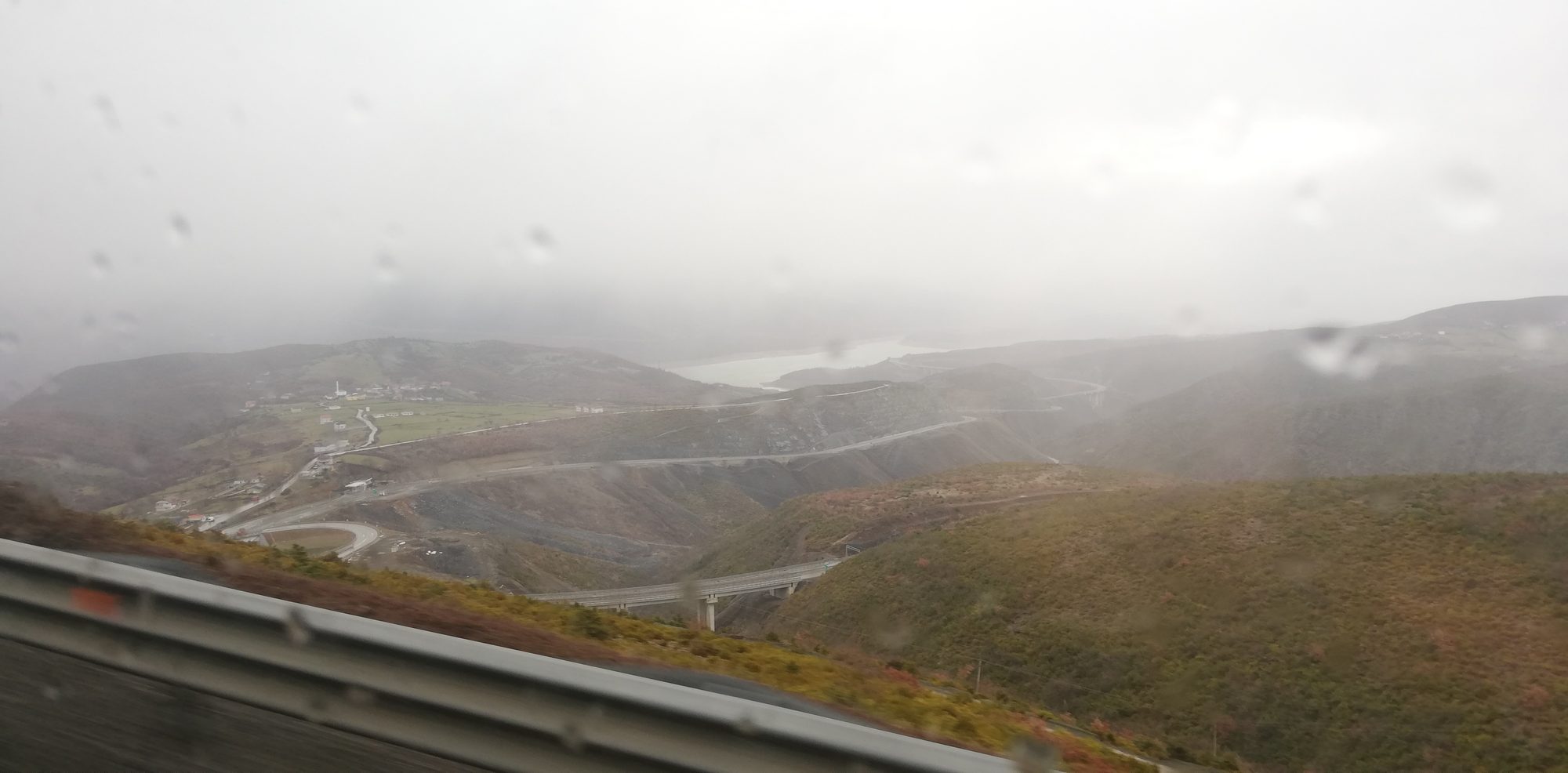

What this means practically. Drive defensively and slowly, particularly on the Llogara descent, the SH8 along the Riviera, and anything in the northern mountains. Avoid driving at night outside cities, which removes a large share of the risk on its own. Albania has zero tolerance for drink driving, so do not have the raki and then drive. And if you are not a confident driver, use furgons and buses instead. Someone who drives these roads daily is a better bet than you are on day three.
Crime You Might Actually Meet
Real, but low grade, and mostly financial rather than physical.
Taxi overcharging is the most common way visitors lose money, and Tirana airport is where it happens. The official fixed fare into the city is around 2,500 lekë. Unlicensed drivers in the arrivals area will quote 3,000 to 5,000. A ride on one of the local apps, Patoko or Clust, usually runs 1,100 to 1,500; there is no Uber or Bolt here. Use an app, or use the official rank, and agree the fare before you get in anywhere else. If you would rather have the whole question settled before you land, a prebooked pickup through Welcome Pickups is a fixed price with a named driver waiting in arrivals. It costs more than Bolt and considerably less than the men shouting taxi.
Pickpocketing happens in the usual places: crowded markets, bus stations, the busier stretches of the Riviera in August, nightlife areas late on. Ordinary precautions are sufficient.
Money changing. Use ATMs attached to actual bank branches, or exchange offices with the rate posted on a board. Street changers offering a better rate are offering it for a reason.
Card machines. Check the amount on the terminal before you enter a PIN. Occasionally a decimal point moves.
What you are very unlikely to meet is violence directed at you as a foreigner. Albania’s organized crime problem is real and it is why the American advisory mentions drug networks, but it operates in a world that does not intersect with tourism. In practical terms it is about as relevant to your holiday as the Mafia is to a week in Sicily.
Travelling Alone, and Travelling as a Woman
Albania is a comfortable country to travel alone in, and women travelling alone generally report the same.
The main thing to expect is not threat but attention. In smaller towns and villages a woman eating alone in a restaurant is still slightly unusual and you may be looked at, asked where your husband is, and then fed enormous quantities of food by someone’s mother. Curiosity here is genuinely curiosity. It is rarely a prelude to anything.
Some traditional coffee houses in rural areas remain effectively male spaces. Nobody will throw you out, but you will notice. Modern cafés everywhere, and all of Tirana, are entirely mixed.
Catcalling exists at roughly southern European levels. Ignoring it works. The hospitality code Albanians call besa still carries real weight, especially in the north, and a guest’s safety sits close to the centre of it. This is not a museum piece. It is one of the reasons solo travellers here so often describe feeling looked after.
Things That Feel Dangerous and Are Not
Being invited into someone’s home. It will happen. It is not a setup. Accepting is the correct move, and refusing outright can read as an insult. Take the raki.
Blood feuds. Foreign coverage of the Kanun and gjakmarrja (blood taking) has been lurid and largely detached from present reality. The practice persists in a small number of families in the far north, it concerns those families alone, and it has no bearing on visitors whatsoever.
Remote villages. Statistically the safest places in the country. The risk in the mountains is terrain and weather, not people.
Shepherd dogs. Genuinely intimidating, rarely an actual danger. Stop, do not run, do not turn your back, wait for the shepherd. There is more in our first-timer’s guide to hiking in Albania.

Natural Hazards Worth Knowing
Earthquakes. Albania is seismically active. The 6.4 magnitude earthquake near Durrës in November 2019 killed 51 people and caused damage worth close to a billion euros. Significant quakes are infrequent, but learn where the stairs are.
Wildfires, roughly April to October, and worst in late summer. They can close roads at short notice. Check conditions before heading into forested areas in August.
Unexploded ordnance. The FCDO warns of landmines in remote areas near the northern border with Kosovo. This is narrow in scope but it matters to hikers: stay on marked paths in that region and respect warning signs.
The sea. Albania’s beaches are largely unlifeguarded. Currents on the Ionian side can be strong, and the drop off at some Riviera beaches is abrupt.
Practical Notes
112 is the emergency number and the one to remember. The older direct lines, 129 for police, 127 for ambulance and 128 for fire, are still in use.
Get travel insurance that covers driving and hiking. Given everything above, this is the least optional recommendation in this article. A travel insurer like EKTA covers Albania and sells online in minutes. Public healthcare is limited outside Tirana and serious cases are often referred abroad.
Carry cash in lekë. Not a safety issue exactly, but being stuck in a village with only a card is its own small emergency.
Sort your phone data before you fly. Albania is outside EU free roaming, and the first phone bill after an unprepared week here is its own minor incident. An Albanian eSIM like Airalo costs a few euros and means the taxi apps and your maps work from the arrivals hall, which is exactly where you need them.
Tell someone your route if you are hiking alone. Mobile coverage in the mountains is patchy.
Check current advisories before you travel. The FCDO and US State Department pages are both updated as things change, and anything written months in advance, including this, can go out of date.
The Honest Summary
If you came here worried about crime, you can stop. The statistics do not support the worry, the advisories do not support it, and twelve and a half million visitors a year do not support it. Walk around Tirana at night. Take the furgon. Accept the invitation.
Then get in a car on a mountain road and concentrate, because that is where this country will actually test you.
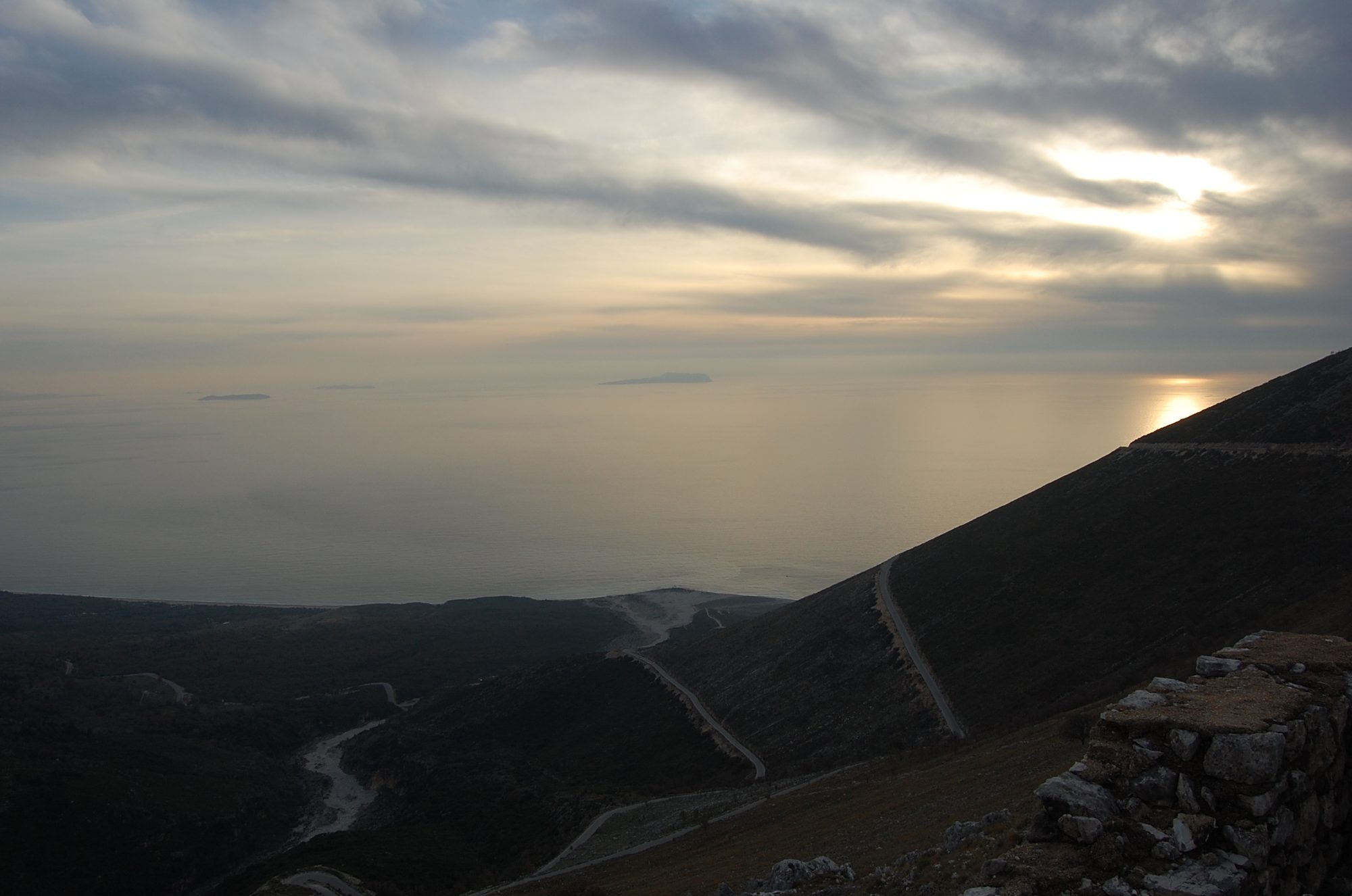

The most dangerous hour of my week is not a walk home through Blloku at two in the morning. It is the drive to my father’s village, on a road I have known my whole life, where someone will come round a blind bend on my side of the white line at least once.