Albania is one of the best hiking countries in Europe that almost nobody outside the Balkans has figured out yet. The mountains are genuinely wild, the trails are uncrowded even in August, and a week of hiking here still costs less than a weekend in the Dolomites. If you have done your alpine hiking in Austria, Switzerland, or northern Italy, you are going to find Albania rougher, quieter, and in places more beautiful than anything you have walked through before.
This guide is written for someone who has never hiked in Albania and is trying to figure out whether it is the right trip, when to come, and what to actually expect on the trail.
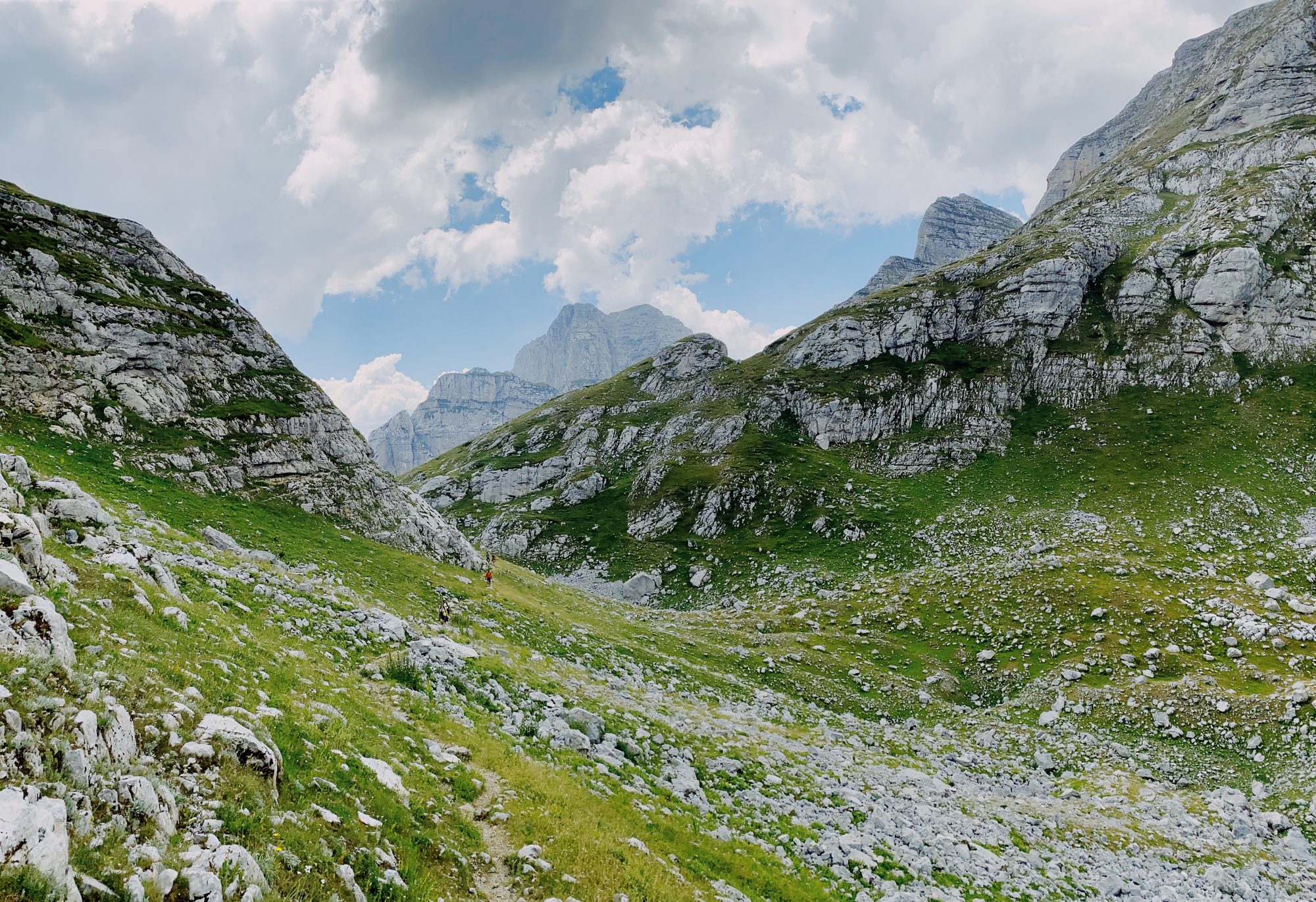

The Three Ranges You Actually Need to Know
Albania has mountains almost everywhere. For hiking planning, think of them as three distinct zones.
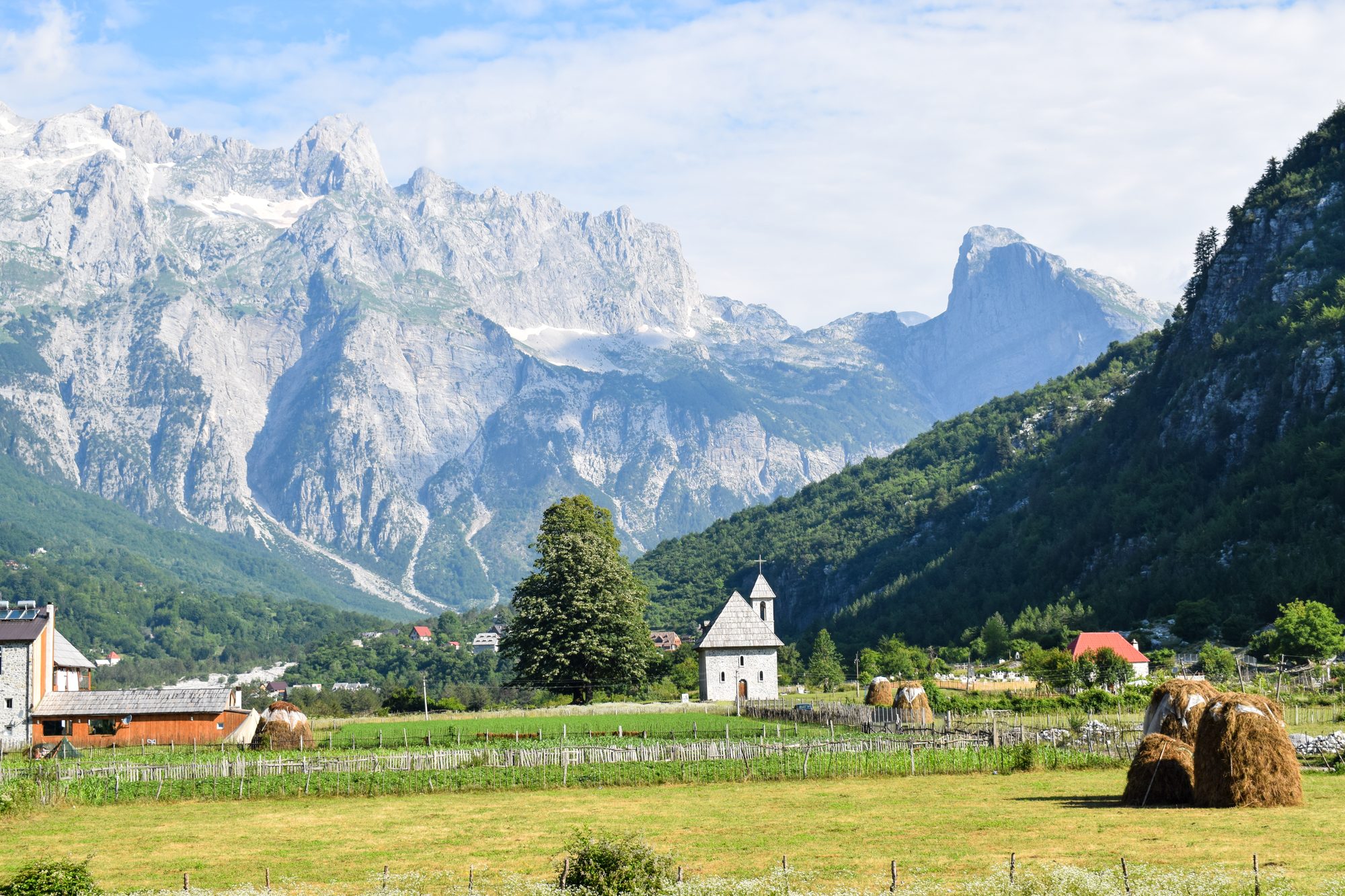
The Albanian Alps (the north). Also called the Accursed Mountains, Bjeshkët e Nemuna in Albanian, Prokletije in Montenegrin. Limestone peaks, deep valleys, stone-built villages like Theth and Valbona, and the hiking most people come for. This is where the famous Valbona-to-Theth day hike runs, where the Peaks of the Balkans circuit loops across three countries, and where Albania feels most different from the rest of Europe.
The central and eastern ranges. Mount Korab on the North Macedonian border (2,764 m, the highest point in the country), Mount Tomorr above Berat (2,416 m, also a Bektashi pilgrimage site), and the wilder massifs around Dibër and Librazhd. Less visited than the north, more logistically involved, often requiring a local guide and sometimes a border-zone permit.
The Riviera mountains (the south). Llogara Pass, Mount Çika, the Karaburun peninsula. Shorter ranges, but dramatic because they drop straight into the Ionian Sea. This is where you can hike in the morning and swim in the afternoon without moving the car more than twenty minutes.
For a first trip, the Albanian Alps are almost always the right answer.
When to Go
The short version is mid-June through late September for the Alps, and a much wider window for the south.
| Month | Albanian Alps (Theth, Valbona) | Central peaks (Korab, Tomorr) | South (Llogara, Çika) |
|---|---|---|---|
| Jan-Mar | Closed, deep snow | Closed | Cold but hikeable on clear days |
| Apr | Guesthouses closed, snow on passes | Snow lingering | Wildflowers, lovely |
| May | Trails opening, guesthouses reopening mid-month | Still snow on summits | Excellent |
| Jun | Good by mid-month, wildflowers | Snow clearing late June | Hot on the ridge, fine early morning |
| Jul | Peak season, busy by Albanian standards | Good | Very hot, pre-dawn starts |
| Aug | Peak season | Peak for pilgrimage on Tomorr | Brutal heat, avoid midday |
| Sep | Best month. Clear, warm, uncrowded | Excellent | Hot early, cooling late |
| Oct | First half good, guesthouses close late Oct | Snow returning | Pleasant |
| Nov-Dec | Closed | Closed | Cool, often clear |
September is the month I point first-timers at. Daytime temperatures in the twenties (Celsius), stable weather, guesthouses still open, and a fraction of the already-small summer crowd.
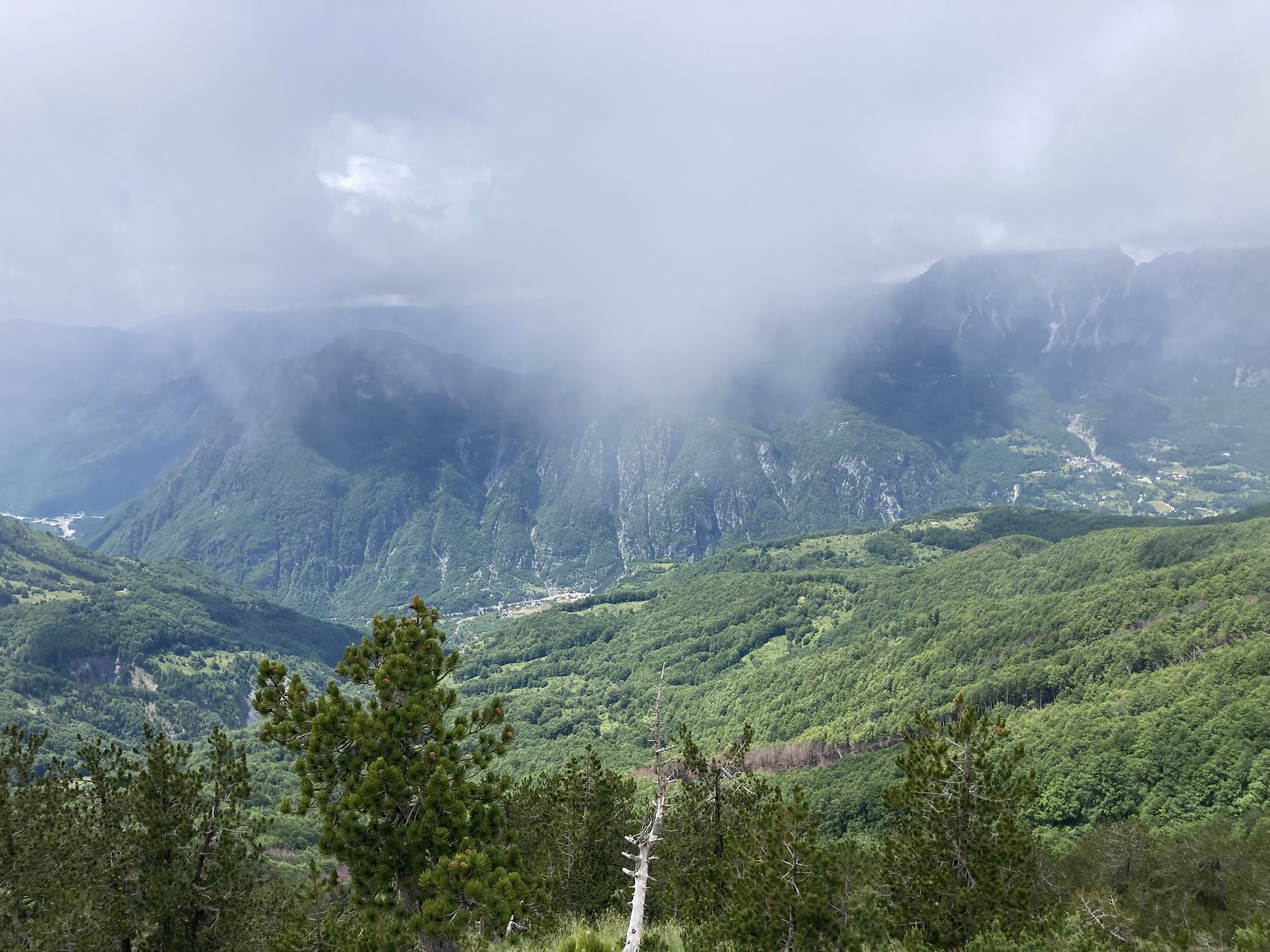

What Hiking in Albania Is Actually Like
If your baseline is Switzerland or the Italian Dolomites, reset some expectations.
Trail marking is inconsistent. The main routes in Theth and Valbona are well marked in red-and-white blazes. Off those, marking varies from faint to nonexistent. Download GPX tracks before you go. Do not rely on blazes alone.
Infrastructure is minimal in the mountains. No gondolas taking you halfway up. No mountain huts with espresso machines. You stay in bujtina (family-run guesthouses), you eat what the family is cooking, and you leave with your water bottles refilled from the tap. The simplicity is part of the appeal, but come prepared for it.
Phone signal is patchy. Vodafone covers the Theth valley reasonably well, Valbona less so, and most ridges not at all. This is not Austria. Tell someone your route. If your phone takes an eSIM, an Albanian data plan from Airalo takes five minutes to set up before you fly, though no plan on earth reaches the ridges.
Roads into trailheads are rough. The road from Shkodër to Theth is paved now, finally, and so is the road up the Valbona valley as far as the village. The last stretch to the Rragam trailhead, though, runs on gravel through a dry riverbed and will make you question your rental car choice. Budget an extra hour. Use a 4x4 if you are going deeper than the main valleys. If you are renting, the local agencies on Localrent stock proper 4x4s, not just city hatchbacks.
Trails are quieter than you expect. On the Valbona-to-Theth day hike in high season you will pass maybe thirty other walkers over six hours. On almost any other trail in the country you will see no one.
The First Trip: What to Actually Do
If you are designing a first hiking trip, here is the honest answer.
Three or four days: Fly to Tirana, bus to Shkodër, furgon or transfer to Theth, hike the day loops in Theth National Park (the Blue Eye, the Grunas waterfall, the Lock-in Tower loop), then walk Theth to Valbona in one day. Ferry back across Lake Koman. This is the Albanian Alps highlight reel and it is genuinely a top-ten hiking experience in Europe.
A week: Same as above, plus two or three days on the Peaks of the Balkans circuit. You can do partial loops without committing to the full ten-day version, and the sections through Çerem and Dobërdol are the quietest high-alpine hiking in the Balkans.
Ten days: Add Mount Korab as a day trip from Radomirë village with a local guide, or drive south and hike a few days in Llogara and the Karaburun peninsula for the coast-meets-mountain contrast.
.jpg)
Solo Versus Guided
For the main Alps trails in season, you do not need a guide. Valbona-Theth is a graded, marked day hike that thousands of people walk every summer without one. Theth National Park’s day loops are well signed. If you are comfortable reading a GPX track in OsmAnd or Wikiloc, you can do both solo.
You do want a guide for:
- Mount Korab (border-zone permits, logistics)
- Most of the central massifs (unmarked, remote)
- Winter or shoulder-season hiking anywhere in the north
- Full Peaks of the Balkans circuit if you have never done multi-country border hiking before
Local guides in Theth and Valbona cost roughly 60 to 100 euros per day for a group. Guesthouses can arrange them on a day’s notice in high season.
Permits, Borders, and Paperwork
Most hiking in Albania needs no permit. Exceptions:
- Peaks of the Balkans circuit. You need a cross-border permit that lets you enter Kosovo and Montenegro at unofficial mountain crossings. Apply at least two weeks ahead through a registered agency in Shkodër, Valbona, or Theth. Costs around 20 to 30 euros.
- Mount Korab. The summit straddles the North Macedonian border, and approach involves the restricted border zone. Go with a local guide from Radomirë who handles the paperwork.
- Protected area fees. A small entrance fee (200-500 lek) applies at some national parks including Theth and Valbona. Paid in cash at the ranger station.
Gear and Apps
Nothing exotic. A normal three-season hiking kit covers most of what you need.
Non-obvious items worth packing: a dog deterrent (a walking pole held firmly is usually enough; a pocket-sized air horn is overkill but reassuring the first time a sheep-guarding dog the size of a small bear announces you), a head torch with spare batteries, and more water capacity than you think you need for south-facing ridge walks in summer.
For maps, install OsmAnd (OpenStreetMap) with the Albania region downloaded offline, and browse Wikiloc for GPX tracks of specific routes. Both work without signal.
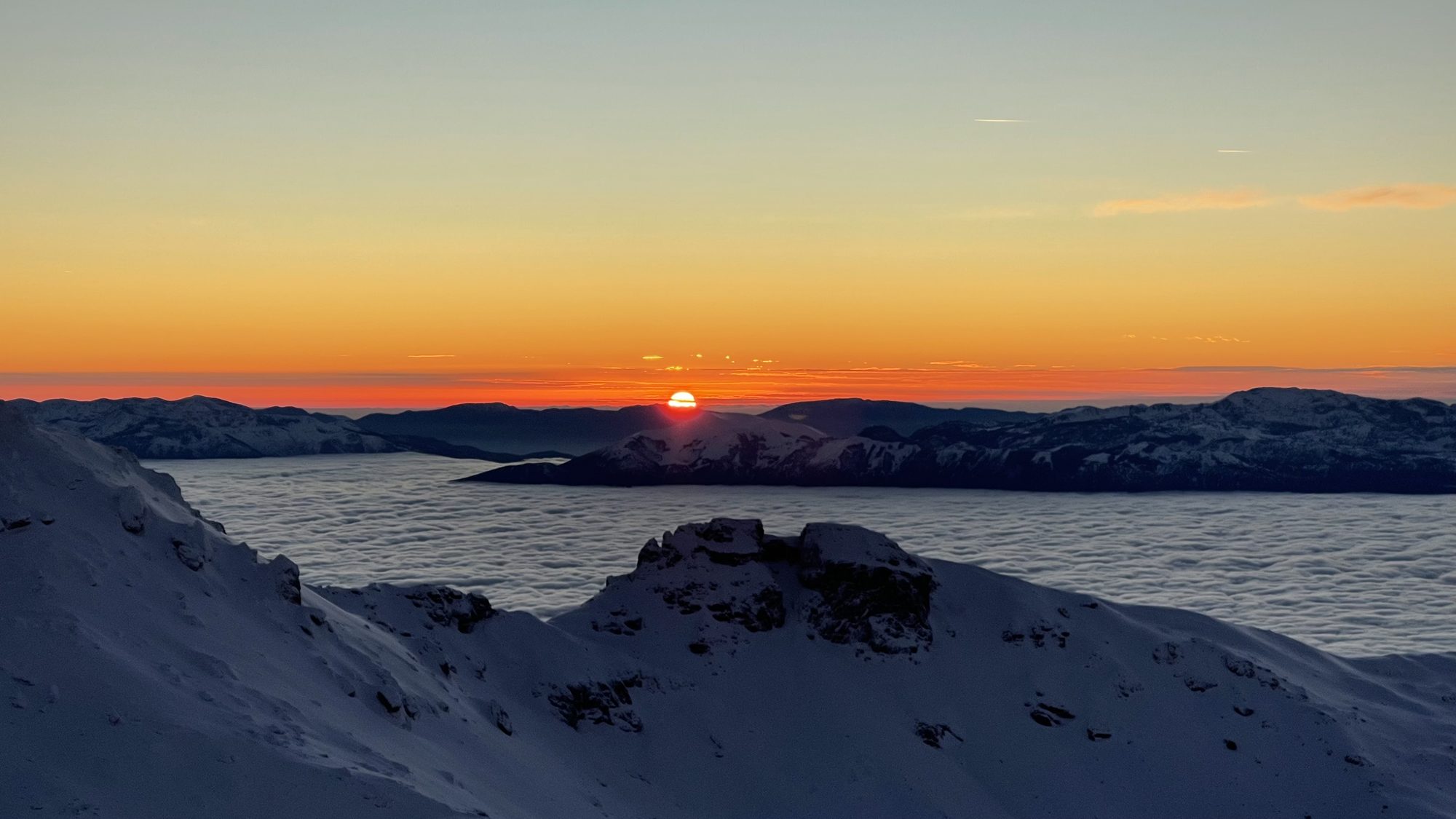

Safety, Honestly
Albania is a safe country to hike in. The real hazards are not people.
Shepherd dogs. Large livestock-guarding dogs (often Sharri / Illyrian shepherds) patrol summer pastures in the Alps. They are doing their job. Do not run, do not make eye contact with the dog, put a walking pole or your backpack between you and it, and walk calmly in a wide arc around the flock. Ninety-nine times out of a hundred the dog decides you are not a problem and lies back down. The shepherd is usually in view and will call the dog off if you are having trouble.
Weather in the Alps shifts fast. A clear morning can turn into thunderstorms by early afternoon. Start early, be off exposed ridges before 3 pm in July and August.
Water sources are inconsistent. Some trails have reliable springs every hour or two. Others have none. Carry more than you think, and ask the guesthouse before setting off.
Rescue is limited. There is no equivalent of the Austrian Bergrettung. In a genuine emergency you call 112 and the response depends heavily on where you are. Travel insurance with mountain rescue cover is sensible for multi-day routes and for Korab. A travel insurer like EKTA covers Albania and sells online in minutes; whichever you choose, confirm hiking is actually included.
A Word on the South
The southern mountains are often treated as an afterthought in hiking guides to Albania, which is a mistake.
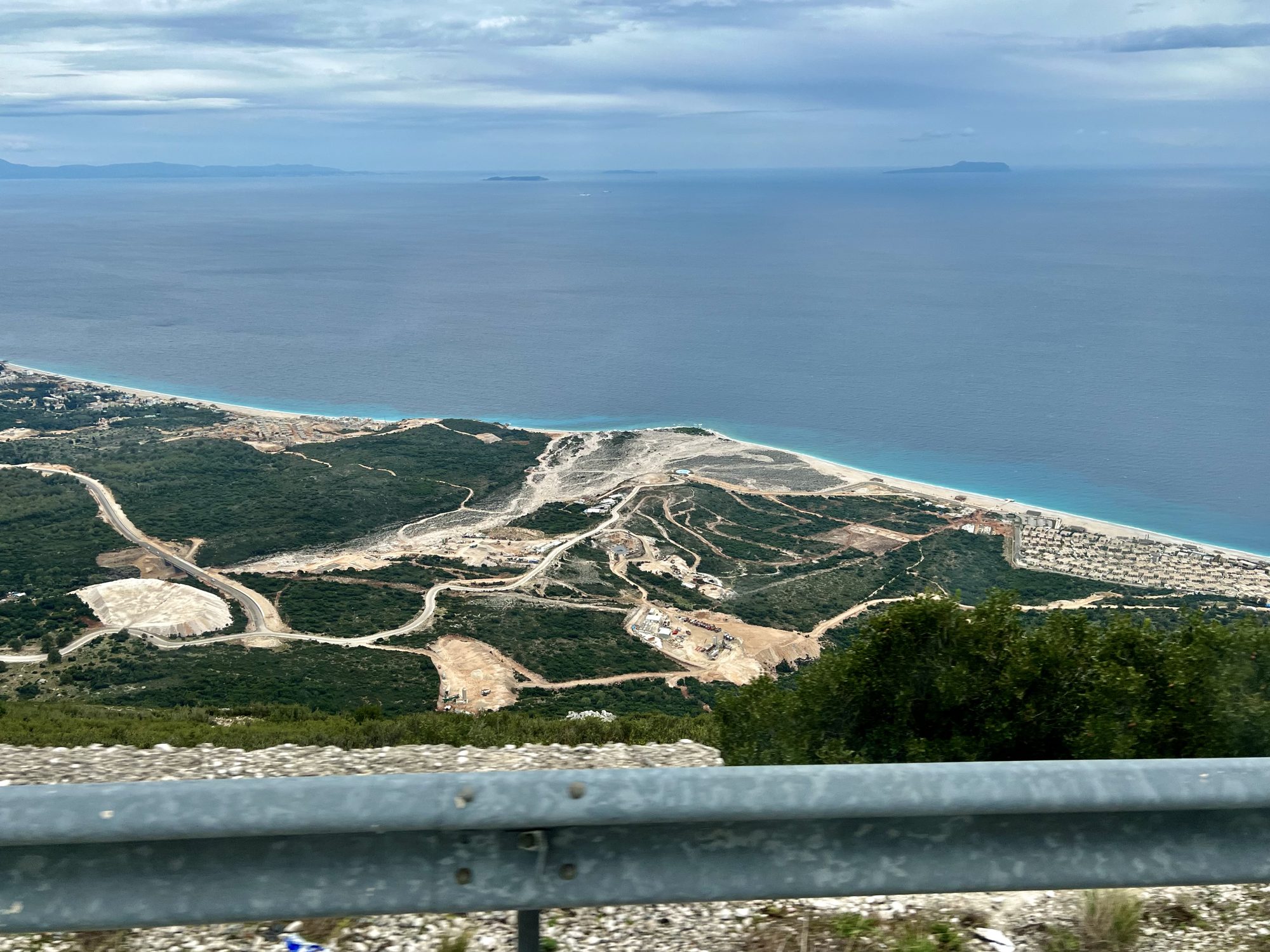

Llogara National Park sits on a pine-covered ridge that drops 1,000 meters straight to the Ionian Sea. You can hike Caesar’s old trail over the pass (the same route his legions used in 48 BC), summit Mount Çika, or walk the Karaburun peninsula’s remote coastline. The season here is far longer than in the Alps. April, May, October, and even parts of November are pleasant.
If you are combining hiking with the Albanian Riviera beaches, this is the range to add.
Where to Go Next
If this guide has you convinced, the next pieces to read are the ones that cover specific routes in detail:
- The 10 hiking trails in Albania to know — the overview of which individual trails are worth your time.
- The highest mountains in Albania — peak-by-peak breakdown if you want a summit.
The country rewards hikers who come with specific plans and flexible expectations. You will get wet feet on some of the river crossings. You will question the road to your trailhead. You will also stand on a pass at 8 in the morning looking at a valley full of limestone peaks and no one else in it, and you will understand why Albanians get defensive when someone calls this a “cheaper alternative” to the Dolomites. It is not an alternative. It is its own thing.