Driving is the single most dangerous thing most visitors will do in Albania. That is not a scare line, it is arithmetic: the country’s road death rate runs around 10.8 per 100,000 people against a homicide rate of 1.4, which makes the road roughly eight times more likely to kill you than a person will. I have laid that argument out in full in the piece on whether Albania is safe.
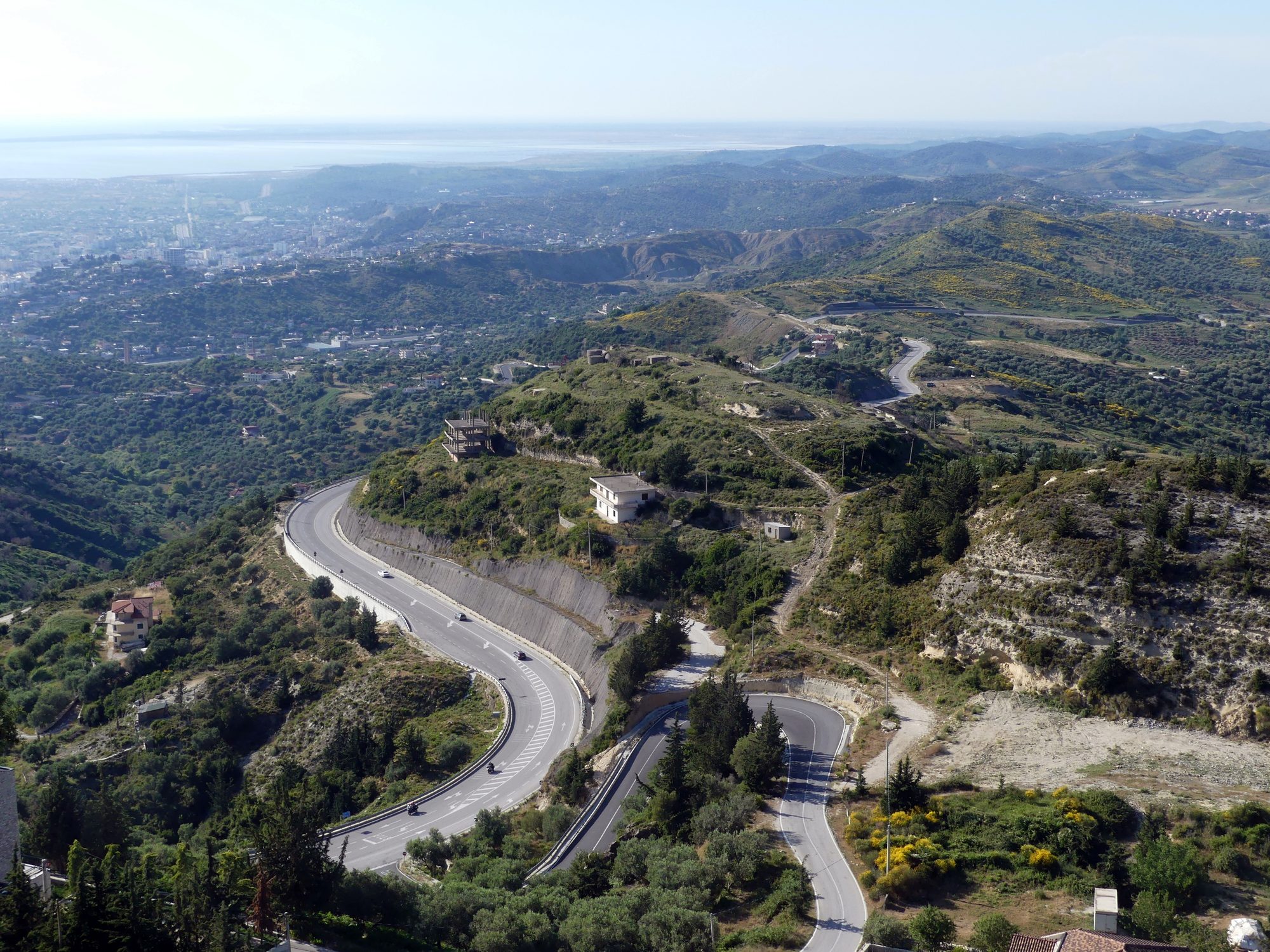
It is also, on the right day, one of the great driving countries in Europe. The coast road south of Vlorë, the Drino valley, the climb to Theth. These are roads people fly here for.
Both things are true. This article is about how to get the second without the first.
.jpg)
The Rules, As Written
Start with the law, because a lot of it is stricter than people assume.
| Limit | |
|---|---|
| Built-up areas | 40 km/h |
| Rural roads | 80 to 90 km/h |
| Motorway | 110 km/h |
| Blood alcohol | 0.01 percent, effectively zero |
Forty in town is the one that catches everybody. Not fifty. Foreign drivers arrive with a European instinct for 50 km/h in an urban area and are, technically, speeding from the first roundabout.
The alcohol limit is effectively zero. Not one glass of wine with dinner, not one beer at lunch. Albania is a country where raki is offered at eleven in the morning as a matter of hospitality, and where the drink-driving law is among the strictest in Europe. Both facts are true at once and you have to manage the collision yourself. Say no, or do not drive.
Fines carry a fifty percent discount if paid within fifteen days. Speeding runs from 1,000 to 3,000 lekë for one to ten over, up to 5,000 to 20,000 for more than twenty over. Pay through e-Albania, a post office, or a bank.
Headlights on, always. Dipped beams during the day are required and normal.
Carry the documents. Licence, passport, rental agreement, green card. Article 133 of the road code technically requires non-resident foreigners to hold an International Driving Permit alongside their national licence. In practice, EU, UK and US licences are accepted without one almost universally, by rental desks and by police alike. It costs very little to have one anyway, and if your licence is not in the Latin alphabet, it is not optional.
The Rules, As Practised
This is the part no rental company will tell you, and it matters more than the speed limits.
Indicators are informational, not contractual. A signalled manoeuvre in Albania often means “I am doing this”, not “I intend to do this and will wait”. Give people room to be already committed.
Lane markings on multi-lane roads are advisory. Particularly in Tirana, particularly at rush hour. Three painted lanes may carry four cars abreast. Do not defend your lane; you will lose and it will not have been worth it.
Roundabouts run on nerve. The formal rule is give way to the left. The operating rule is that the car already moving has the right of way and hesitation reads as an invitation. Enter decisively or wait for a genuine gap. Do not creep.
The horn is punctuation. A short beep means “I am here” or “the light has changed” or “hello”. It is not aggression and you should stop reading it as such by day two.
Overtaking happens on blind bends. It should not. It does. The defensive response is to keep right, keep your speed steady, and be ready for a car coming towards you on your side of a mountain road. This is the single most common way visitors have a serious accident here.
Pedestrians step out. Crossings are treated as suggestions in both directions. In towns, drive as though someone is about to walk into the road, because periodically someone is.

The Police
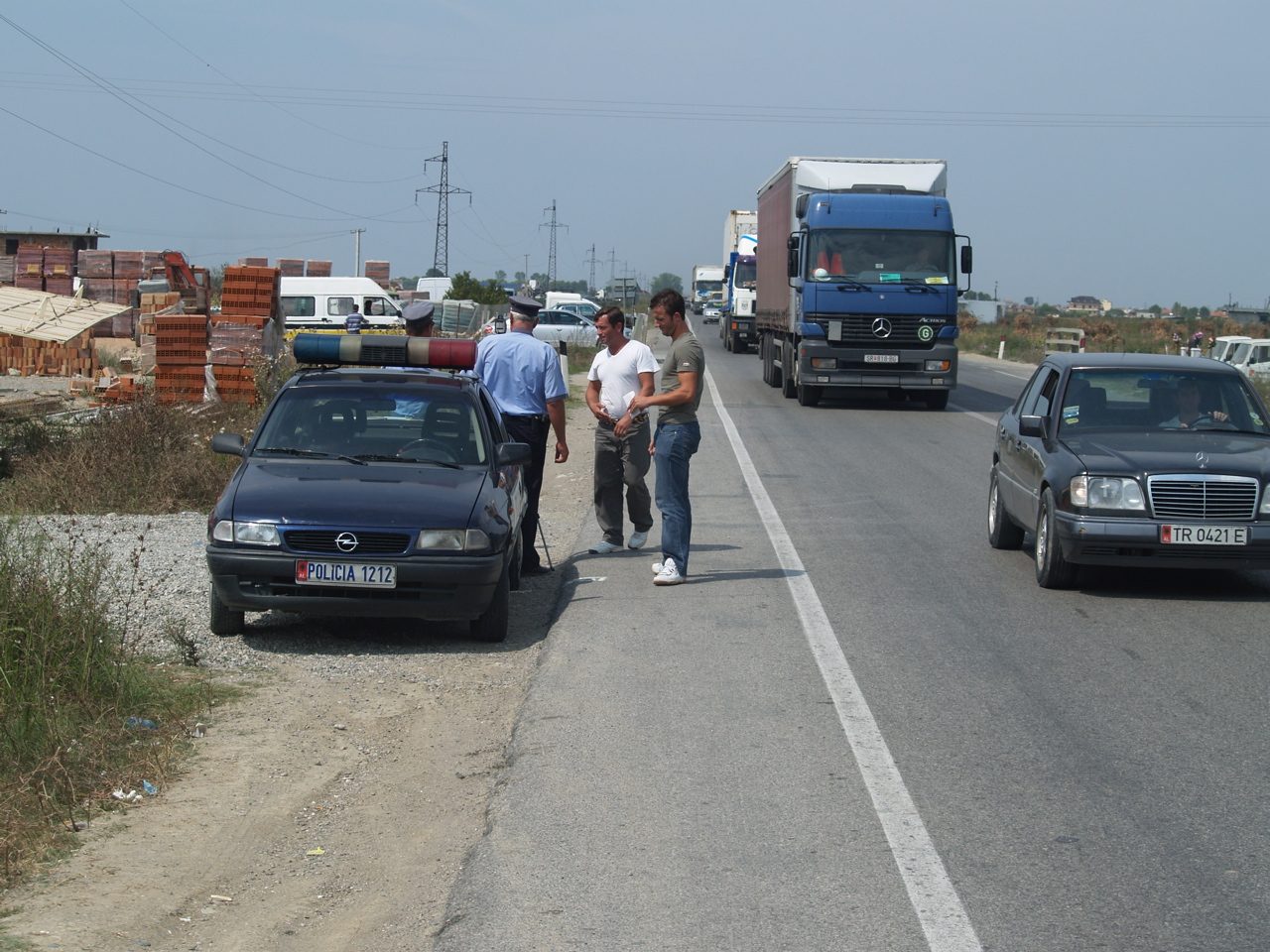
You will be stopped. It is routine, and foreign plates and rental stickers do attract attention.
What normally happens: a hand out of a patrol car window or an officer at the roadside waving you in. Pull over calmly, wind the window down, hand over licence and documents when asked, keep the engine off. Most of these are document checks and last ninety seconds.
Be pleasant and unhurried. “Mirëdita” (good day) goes a surprisingly long way. English is common enough among traffic police on tourist routes.
If you are fined, ask for the ticket. A written fine, payable at a bank or through e-Albania, is the correct outcome and the one you should insist on politely. Cash handed over at the roadside is not a fine.
Radar is real and concentrated. Fixed cameras run on the Tirana to Durrës motorway and the SH1 north, issuing electronic tickets to the vehicle. Mobile radar units work the main national routes. The rental company will pass any ticket on to you, usually with an administration fee attached.

The Roads, Honestly Graded
Motorways and main national routes. Genuinely good. The Tirana to Durrës motorway, the SH1 north to Shkodër, the Tirana to Elbasan road through the tunnel. European standard, well surfaced, fast.
The SH8 coast road, Vlorë to Sarandë. Beautiful, two lanes, endless hairpins, and busy in August with tour coaches that cannot take the bends without using your half of the road. Not technically difficult. Mentally tiring. Do not plan it as the second half of a long day.
The Llogara pass. The tunnel underneath opened in 2024 and turns forty minutes of mountain into about seven, with a 250 lekë toll for a car. The old pass road over the top is still open and is the better drive in clear weather. In rain or fog, take the tunnel and do not think about it.
Mountain roads to Theth, Valbona, Qafështamë, Bovilla. Much improved, and the Theth road in particular is a different proposition from what it was five years ago. Still narrow, still with drops, still with sections where meeting a van means one of you reverses. A normal hatchback manages the main ones in dry summer conditions. I would not take one up to Bovilla in the rain.
Anything unpaved. Check your rental agreement. A great many policies exclude unsealed roads entirely, and even full cover routinely excludes tyres and undercarriage, which are precisely what gravel damages.
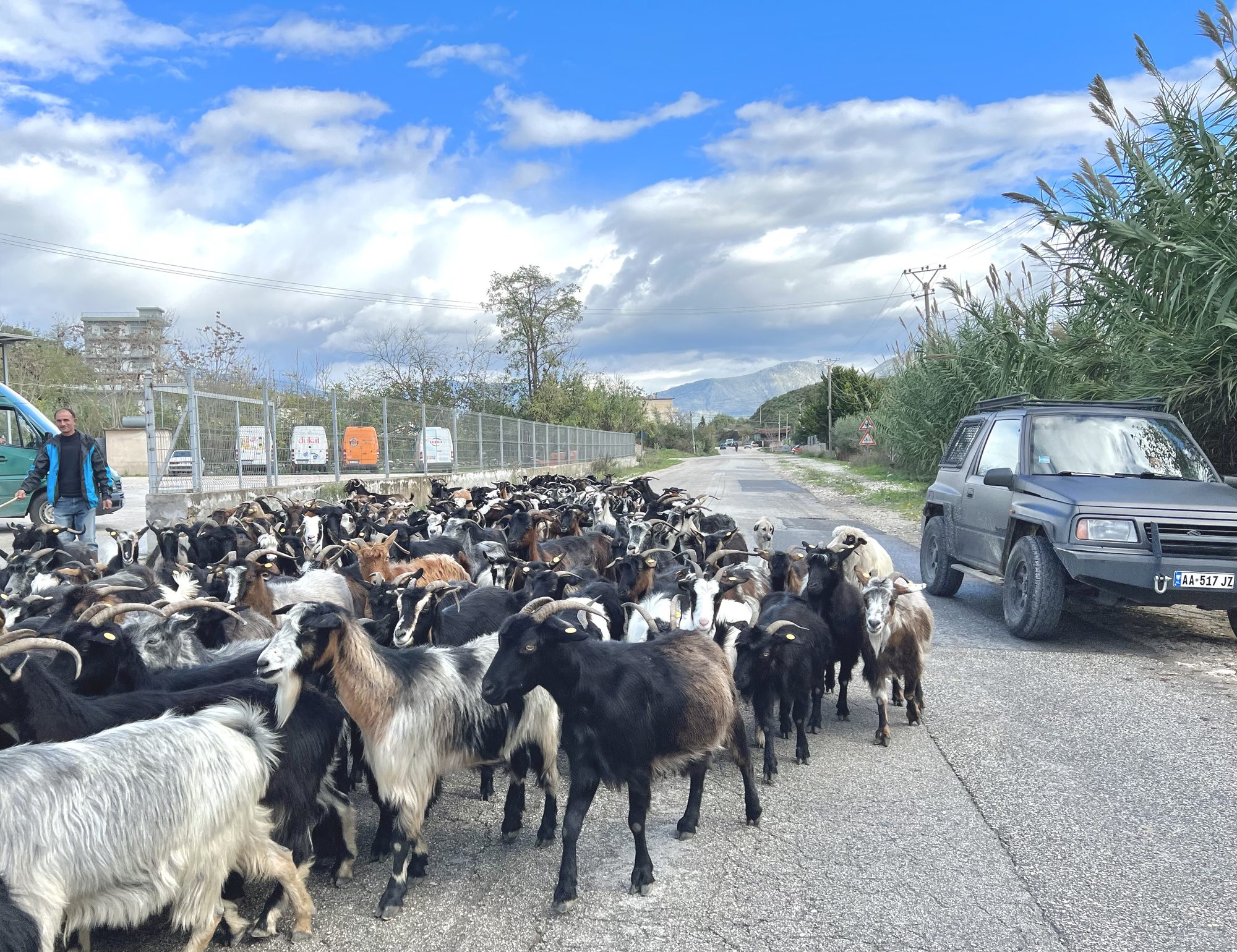
Night driving. Avoid it outside towns. Unlit roads, unlit pedestrians, unlit livestock, and the occasional unlit vehicle. Nothing about Albania is improved by seeing it in the dark.
Parking, Which Is Its Own Problem
Tirana is the difficulty. Central parking runs on a zone system with yellow and blue lines, attendants who issue tickets, and rates around 50 to 100 lekë an hour. Illegally parked cars get towed, and recovery costs upwards of 4,000 lekë against a 500 lekë parking fine.
The practical answer is to not have a car in Tirana. Collect it on the day you leave the city and drop it back on the day you return. I say the same thing in the itinerary guide and I mean it more each summer.
On the coast in August, parking is the constraint on which beach you can actually reach. Arrive before ten or accept a walk.
In old towns, Berat and Gjirokastër both have streets that Google will route you down and that you should not attempt. Park at the bottom and walk up.
Fuel and Practicalities
Petrol is around 189 lekë a litre and diesel around 206 as of late summer 2026, so roughly 2.05 and 2.22 euro. Note the direction: diesel costs more than petrol here, which is the reverse of most of Europe, so ignore any rental desk suggesting a diesel will save you money on fuel.
Stations are frequent on main routes and thin in the mountains. Fill up before you go north or east, not after. Many prefer cash, and attendants will usually fill the car for you.
Should You Drive at All?
An honest question, and the answer is not always yes.
Drive if you want the Riviera on your own terms, you are going anywhere rural, you have more than a week, or there are three or more of you sharing the cost. The country’s best parts are exactly the ones public transport reaches worst.
Do not drive if you are only doing Tirana, Berat and Sarandë, in which case the furgon network does it for a fraction of the money. Do not drive if you are nervous in traffic, because Albanian urban driving will not gently ease you in. And do not drive if you want wine with dinner every night, because that is genuinely incompatible with the law here.
If you decide against it, a pre-booked driver for the long transfers costs less than people expect once split between three or four, and removes the Riviera coach traffic from your day entirely.
If you decide for it, book early for summer, compare deposit terms rather than headline rates, and use the local Albanian agencies rather than the airport chains. Most of them are listed on Localrent, and everything I know about what to refuse at the desk is in a separate article, because that conversation deserves its own space.
Either way, insure properly. Standard travel policies frequently exclude driving in countries with Albania’s accident statistics, or cap medical evacuation at a number that will not cover a helicopter off a mountain road. A policy that names driving explicitly is a few euro a day, and it is the cheapest line in this entire article.
The Six Things That Actually Matter
Forty in town. Zero alcohol. Headlights on.
Assume the oncoming car on a mountain bend is overtaking.
Do not drive at night outside towns.
And do not keep a car in Tirana. Nothing good happens there that you needed four wheels for.