Dhërmi and Himara are twenty-five minutes apart on the same road, they share the same sea, and people write to me every summer asking which one to book. The honest answer is that they are two different holidays that happen to be neighbours.
Dhërmi is a stone village stacked two hundred metres up the flank of the Ceraunian mountains, with its beach a steep half hour below it and the loudest beach clubs in Albania strung along the water. Himara is a real town: a curved waterfront, a pharmacy, a fish shop, a bus station, and an old Greek-speaking quarter up on the hill that most visitors never climb to.
This guide is the practical version of both. Where the beaches are, what the boats cost, how the tunnel changed the drive, and where to sleep depending on the trip you actually want. For a beach-by-beach ranking of the whole coast, I have written that separately in the southern beaches guide. This is about the two places you come back to at night.
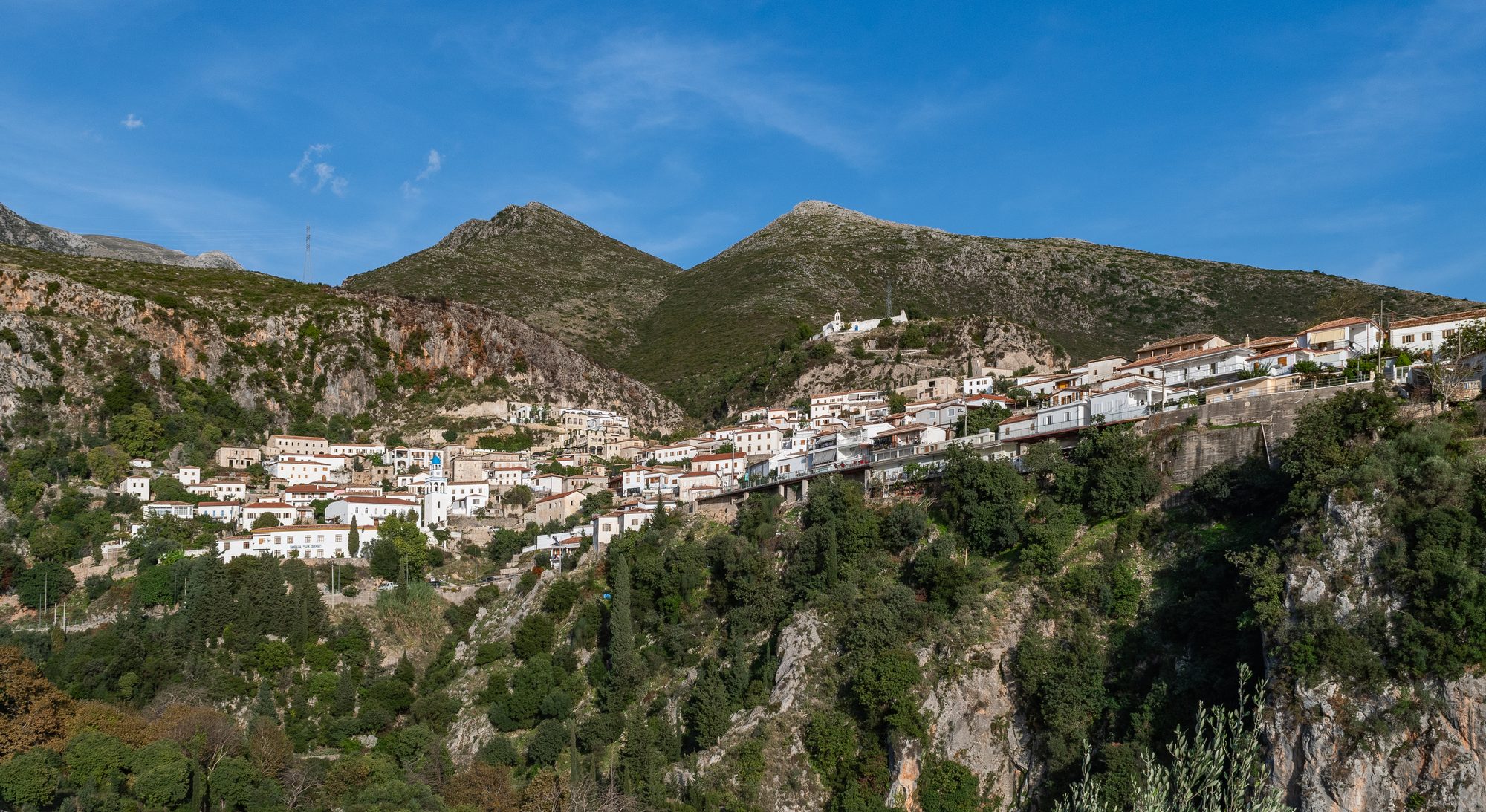

Two Villages, One Mountain
The coast here belongs to the Himara region, seven villages between the Llogara pass and Borsh where Greek is still spoken alongside Albanian and the road signs come in two alphabets. Dhërmi is Drimades in Greek, Himara is Himarë in Albanian, and you will see both spellings on the same street. The region kept a stubborn independence for centuries; from 1537 the Himariots held their own weapons, their own tax exemption and their own flag under the Ottomans, and the place has never quite lost the habit.
Then came the other history. Under communism this was a closed border zone, foreigners were not allowed anywhere near it, and Dhërmi hosted a workers’ holiday camp rather than tourists. The coastal road was rebuilt in 2009, a Dutch DJ played on the beach in 2010, and the Riviera as you now see it is essentially fifteen years old.
That matters because it explains the texture. There are no old hotels here, only old villages and new ones. Everything on the water was built after 2010, and much of it is still being built.
Dhërmi: The Village and the Beach
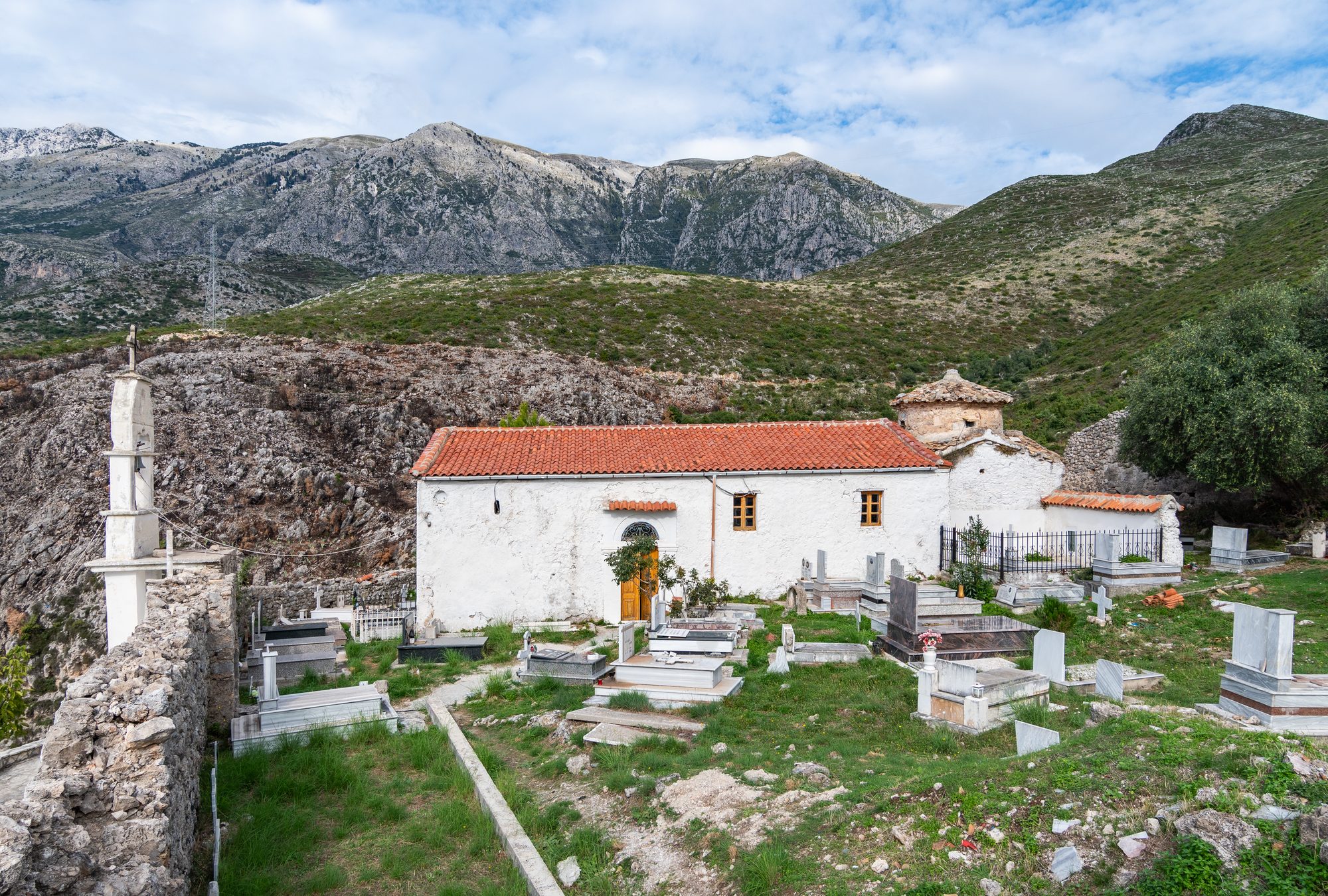
The village (fshati) sits at around two hundred metres, a cluster of stone houses, chapels and a couple of family restaurants around lanes too narrow for a car. Climb another fifteen minutes above it and you reach the monastery church of Shën Mëria (St Mary), Panagia in Greek, with its cemetery, its frescoed interior and a view that takes in the whole bay. This is where I send people at seven in the evening. The beach clubs will still be there when you get down.

The beach is a kilometre of white and grey pebbles below the village, and it splits in two. The southern stretch is Dhërmi proper, hotels and restaurants along the shore, Albanian families in August. The cove immediately north is Drymades, and Drymades is the beach club strip: wooden decks, sound systems, and a string of bars that runs from barefoot cheap to genuinely expensive. Kala and Turtle Fest both happen here, and the festival guide covers the dates.
The gap between them is the thing nobody warns you about. Village to beach is a steep half hour on foot, or five minutes by car on a road with two proper hairpins. There is no bus down. In July that walk back up at four in the afternoon is genuinely unpleasant, and taxis at four in the morning are not a system you can rely on. Decide before you book whether you are a village person or a beach person, because you will not be both on the same evening without a car.
Where the buses stop. On the main road above the village, not at the beach. If you arrive by bus with luggage, it is two and a half kilometres downhill to the water. Ask your host to collect you; most will.
Himara: A Town That Works
Himara is what I recommend to most people, and I have said so before in the where-to-stay guide. It is a functioning small town with a permanent population, which is precisely why it does not photograph like Ksamil and precisely why it is easier to live in for a week.
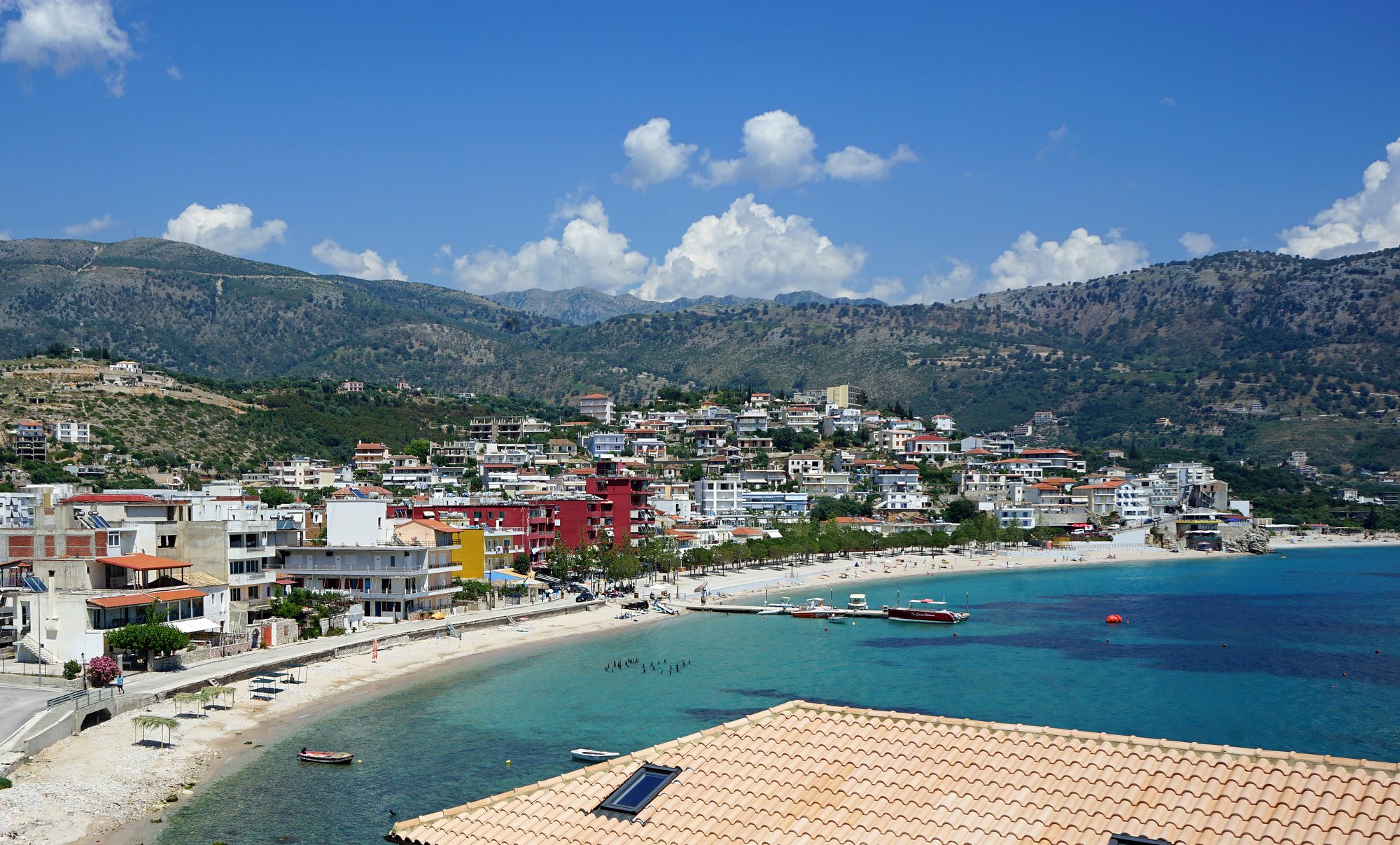
Spile is the waterfront, a five-hundred-metre curve of pebble-and-sand town beach with a promenade behind it that was finally finished at the end of 2025. Everything practical is here: the cash machines, which matter because Dhërmi’s run dry in peak season, the pharmacy, the fish shop, the bus stop, and a row of restaurants that serve the town as well as the visitors.
Kastro, the old town, is fifteen to twenty minutes uphill, about a hundred metres of climbing. The walls at the top are older than almost anything on this coast, with foundations from the fourth and fifth centuries before Christ, and inside them are a handful of churches, the shell of the Spyromilios mansion, one cafe, and a great deal of silence. Most of the families left after 1991. Go up in the last hour of light when the stone turns the colour of honey and the fishing boats are coming in below.
Livadh, a kilometre and a half north of town, is the beach I would actually swim at. A long pebble bay with a few bars at one end and space at the other. Potam, to the south, is spring-fed and noticeably colder, which in August is a compliment.

The Beaches Between Them
From north to south, with the honest version of each:
Palasë. North of Dhërmi, a long pale-pebble bay and the only Blue Flag beach in the country. The northern end now belongs to the Green Coast resort development, which is the most controversial piece of construction on this coast; families from Palasë have been contesting the land titles for years. Walk south along the pebbles and the empty version reappears.
Gjipe. The famous one. You park at the top of a canyon, 300 to 500 lekë, and walk twenty to thirty minutes down a shadeless track to a small cove between white cliffs. The walk back up is thirty to forty minutes and in July it hurts. Carry a litre and a half of water each and wear real shoes; a hiker broke a leg in the canyon in June 2026 and had to be carried out. By boat it is fifteen to twenty euro one way from Himara, which is the civilised option if you are not a walker.
Jalë. A compact pebble-and-sand cove between Dhërmi and Himara, twelve kilometres from Himara, with olive trees behind it, a few guesthouses, and calm water that suits children. Aquarium, a tiny cove reached by a rough kilometre and a half of path from Livadh, sits just beyond it.
Filikuri. The cove below the headland south of Potam. Officially it is boat or kayak only; unofficially there is a rope-assisted scramble from Potam that I do not recommend to anyone who values their ankles.
Porto Palermo. Eight kilometres south of Himara, a small peninsula with Ali Pasha’s castle on it, built around 1804, in a bay so sheltered that the communists dug a submarine tunnel into the far side of it. The tunnel is still a restricted military zone and you look at it from the road or from the water. The castle costs 300 lekë, cash only, and is open roughly nine to seven in summer. The beach beside it is small, calm, and one of the better snorkelling spots on the coast.
Grama Bay. Boat only, around the Karaburun peninsula, where sailors from the third century BC onwards carved their names into the rock. A full-day trip from Himara, roughly sixty euro, and worth it once.
Boats, Sunbeds and What They Cost
The boat is the point of basing yourself here. Half the coves on this coast are easier by water than by road.
| From Himara | Time | Roughly |
|---|---|---|
| Water taxi to Livadh | 10 min | 5 to 10 euro |
| Water taxi to Jalë or Filikuri | 20 min | 10 to 15 euro |
| Water taxi to Gjipe | 30 min | 15 to 20 euro one way |
| Caves tour | 2 hours | 30 euro |
| Gjipe and Drymades tour | 3 to 3.5 hours | 40 euro |
| Grama Bay | 5 to 6 hours | 60 euro |
From Dhërmi the same trips run a little dearer, from about 35 euro for Gjipe and 75 for Grama. Kayaks rent by the day in Himara for the price of a restaurant lunch.
Sunbeds come in pairs with an umbrella. Expect 1,500 to 3,000 lekë at Dhërmi and Drymades, and the big clubs will quote a minimum spend instead; 1,000 to 2,000 lekë at Livadh and Potam; 1,000 to 1,500 at Spile, Jalë and Gjipe; and free to 500 at Porto Palermo. Rules introduced in 2025 reserve part of every beach as free public space, so there is always somewhere to put a towel down. Beach bars are cash only, almost without exception.
Parking at Dhërmi beach is around 500 lekë a day and full by noon in August.
A word on speedboats. Swimmers have been hit at Gjipe and at Potam in recent summers, one of them a child. Stay inside the buoys where they exist and look before you swim out from a beach that boats use.
Eating
The regional food is simpler than the mountain cooking inland and better than the beach clubs suggest.
Olive oil first. Himara and Borsh press a peppery oil that is served with everything, and a bottle is the correct souvenir. Sea urchin (iriq deti) roe on bread appears from late spring. Lamb on the spit and kukurec (lamb offal wrapped in intestine, grilled, better than it sounds) belong to village feasts and to a couple of the tavernas.
In Himara, Taverna Lefteri on the Spile front has been there since 1998 and does a proper grilled fish for 1,200 to 2,500 lekë a head. Taverna Velco and Lui at Potam are a notch cheaper than the promenade. Jester’s at Livadh does lunch on the beach without robbing you. Merluc is the fish shop by the harbour if you are self-catering.
In Dhërmi, Aloni on the beach is the seafood dinner, at 3,500 to 4,000 lekë a head. Sofia Bar in the upper village feeds you for 1,000 to 1,500 with the view included. Morsi at Drymades is the one beach club I would eat at.
A byrek from the bakery is still 50 to 100 lekë. A whole grilled fish is 1,000 to 1,500. Anything more than that is paying for the deck it is served on.
Where to Sleep
In Himara, 45 to 120 euro a night gets a good double in season, and the same apartment that costs 45 in June costs 130 in the second week of August. Rapo’s Resort at Potam is the old four-star. Amphora Guesthouse is inside the walls of Kastro, which is the most atmospheric address in the town. Rea Boutique and Casa Bella are the newer mid-range, and Himara Hostel exists for the budget.
In Dhërmi, prices run 60 to 150 euro and climb further in August, when beachfront rooms have been quoted at 250 to 300. Old Town Hotel is in the village. Roots and Zoe Hora are the design-led places above the beach. Summer Dream and the Grand Boutique are the beachfront standards. Drymades has been a construction site through 2026, and several guests this summer wrote about waking to concrete mixers, so ask directly what is being built next door before you pay a deposit.
My rule: Himara if you want to move around, Dhërmi if you want to stay put on one beach and go out at night. Book by March for July and August. Read the cost guide for why the lek has made all of this dearer for euro visitors than it looks.
Getting There
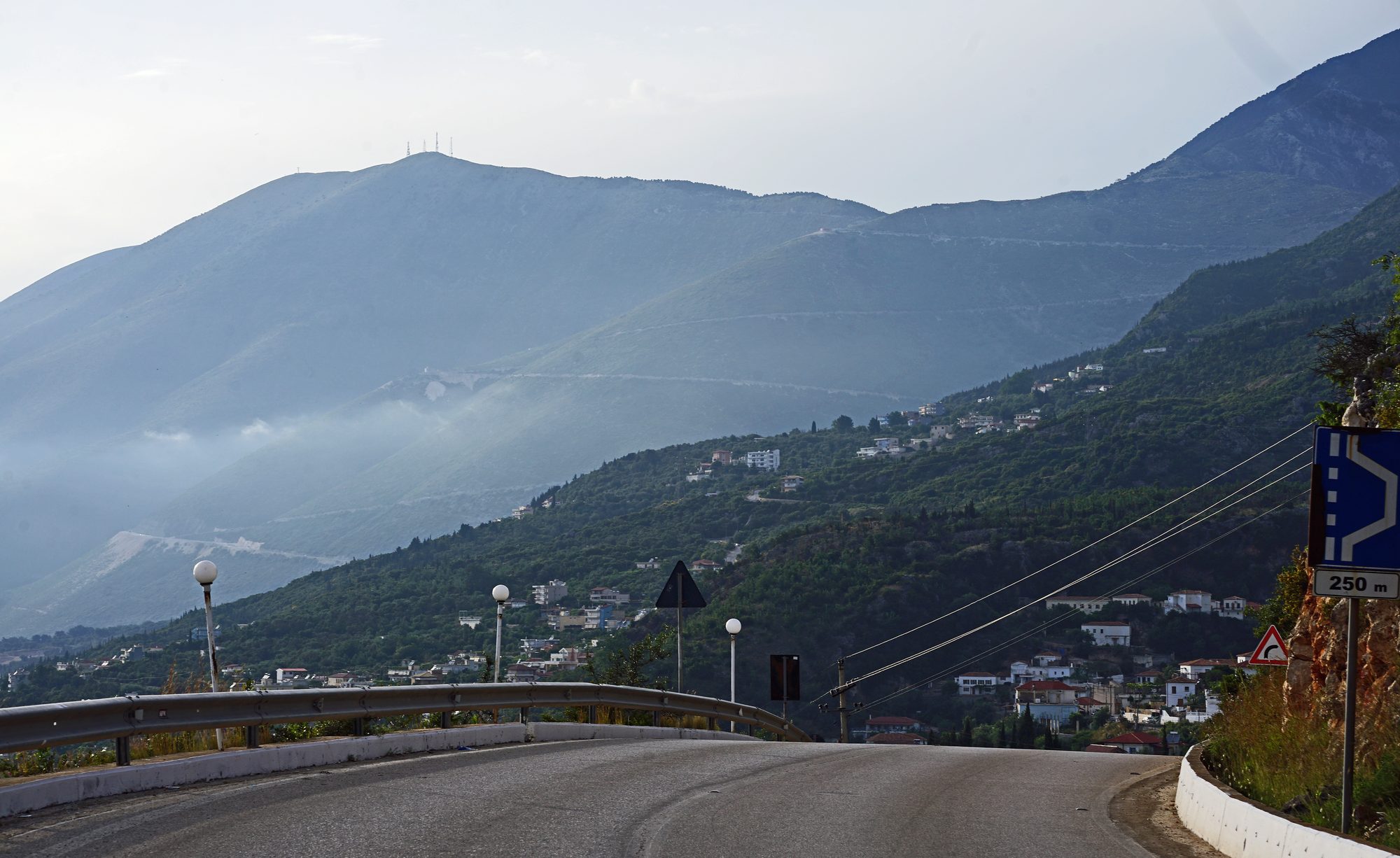
By car is how most people arrive, and since July 2024 the drive is different. The Llogara tunnel bores 5.9 kilometres under the pass and takes seven minutes instead of thirty. Since April 2026 it costs 250 lekë each way for a car, 500 return, paid in cash; carry lek because card acceptance is not something I would bet a queue on. The old pass road over the top is still open and still free, and on a clear day it is the better drive. In fog or rain, take the tunnel and do not think about it. The driving guide covers the rest of the SH8, which is one lane of hairpins behind a truck for long stretches, and beautiful.
| Route | Time |
|---|---|
| Tirana airport to Dhërmi | 3.5 to 4 hours |
| Tirana to Himara | 3.5 to 4 hours, 216 km |
| Vlorë to Himara, via the tunnel | 1 to 1.5 hours |
| Sarandë to Himara | 1.5 to 2 hours |
| Dhërmi to Himara | 25 minutes |

By bus. Tirana to Himara runs several times a day from the regional terminal, three and a quarter to three and three-quarter hours, about 1,200 lekë or 15 euro, and the same bus serves Dhërmi on the way. Vlorë to Himara is 800 to 1,000 lekë. Himara to Sarandë runs around six times a day for about 1,000 lekë, cash to the driver, and the eight o’clock departure is the one that connects with the Corfu ferry. Between Himara and Dhërmi it is 25 minutes and two or three euro. The furgon guide explains how any of this actually works on the day.
From the airport. There is no direct bus from Rinas to the coast. You take the airport bus into Tirana, cross to the terminal, and start again, which with luggage on a July morning is a long day. If you want to be in the sea by lunchtime, a prebooked transfer from the airport is the honest answer, and split between three people it costs about what the bus and two taxis would anyway. The airport guide has every other option priced.
From Corfu. Finikas Lines and Ionian Seaways run between Corfu and Sarandë, thirty minutes on the hydrofoil and up to seventy on the conventional boat, 19 to 30 euro one way, around a dozen sailings a day between June and mid October. You cannot bring a hire car across. From Sarandë it is the bus north, or a car.
Do you need a car? For a week based in Himara, no, if you are happy with boats and the odd taxi. For Dhërmi village, yes, or you will spend your holiday on that hill. For the coves between the two, yes. The local agencies on Localrent will usually deliver to Sarandë or Vlorë, which saves driving the SH8 twice, and what to check before you sign is worth five minutes. Taxis are unmetered: Himara to Dhërmi is 15 to 20 euro, Himara to the Gjipe car park 1,000 to 1,500 lekë, and you agree the price before you get in.
Best Time to Visit
June and September, and I will keep saying it until the whole country listens. The sea is 23 degrees in June and still 24 in September, the clubs are open, the parking is possible, and the rooms cost half of August.
July and August are hot, full and loud. The sea hits 25, the Drymades sound systems overlap after midnight, and the fifteenth of August is the single busiest day of the Albanian year. If those are your dates, book early and take Himara over Dhërmi.
May and October are the shoulders. Most hotels and restaurants open in early June and the beach bars close one by one through October, so in May you get warm days, cool water and half the places shut. October is my favourite month here: 22 degrees in the water, empty pebbles, and the honey and olive harvests going on in the villages above.
Water and power. The coast has struggled with both. The state now pipes water tens of kilometres to the developments at Dhërmi and Palasë, the drought in summer 2026 cut the natural springs, and hotels at Jalë and Dhërmi have run on generators in bad weeks. Ask before you book somewhere remote, and do not expect a cold shower at midday in August to be a choice.
Practical Tips
Cash, in lek. Beach bars, boats, parking, the tunnel, the castle at Porto Palermo, and most tavernas. Himara has cash machines; Dhërmi’s empty out in August.
Zero alcohol at the wheel. The legal limit is 0.01 per cent, which is effectively nothing, and the SH8 is the wrong road to argue with. The safety piece explains why the road, not crime, is the real risk here.
Water shoes. Every beach is pebble, whatever the brochure said.
The coastal path runs Dhërmi to Gjipe to Jalë to Livadh, and sections of it were blocked as recently as 2024. Ask in the village before committing to it with a rucksack.
Insurance. Between the canyon, the speedboats, the hairpins and the fact that Albanian private clinics want payment up front, a week of travel cover costs less than one boat trip.
Say kalimera. In the seven villages of the Himara region a Greek good morning gets a warmer answer than an Albanian one from anyone over sixty, and nobody minds which language you try first. The politics of that are contested, a mayor was jailed over it in 2023, and the visitor’s job is simply to be polite in both.
Combine it with Sarandë, Butrint and the Blue Eye to the south, or with Vlorë and the ferry to Italy in the north. And if you can only manage one evening here, spend it on the walk up to Kastro. The beach clubs will be exactly where you left them.