Tirana is a good city, and two days is about right for it. The problem is that most people give it three or four because they have flights either side, and then spend the extra time looking for something to do in a capital they have already walked.
The answer is that Tirana sits in the middle of the country’s narrow waist, and almost everything worth seeing in central Albania is inside ninety minutes of it. A castle where a national hero held off an empire. The largest Roman amphitheatre in the Balkans. A cave with a cave bear’s skull still in it. A mountain you reach by cable car.
Most of them are reachable for under three euro each way on public transport. Here they are, in the order I would actually do them.

1. Krujë
The one everyone does, and rightly.
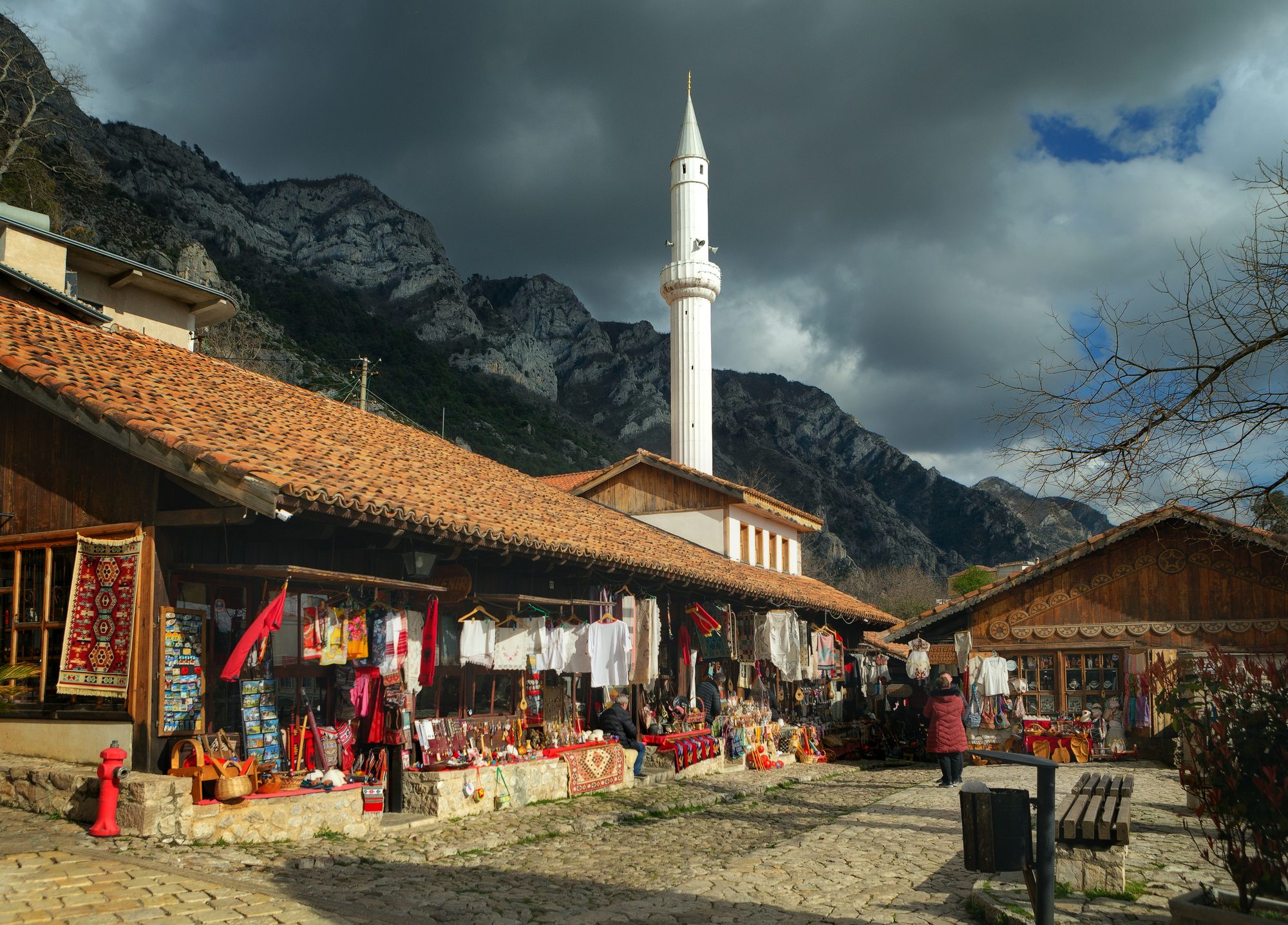
A hilltop town an hour north of Tirana where Skanderbeg held off the Ottoman Empire for twenty-five years, with a castle, a museum built into it, and the best-preserved old bazaar in central Albania running up to the gate.
Getting there: furgons and minibuses leave the North and South terminal roughly hourly for about 150 lekë, so a euro and a half. The journey is about an hour.
The one mistake to avoid: there are two towns. Krujë is up the hill with the castle. Fushë-Krujë is a flat, unremarkable town seven kilometres below it, and the two minibuses often park side by side with similar signs. Say “Krujë, kalaja” (Krujë, the castle) and check the driver nods.
Timing: leave Tirana by eight, be back by four on the last dependable return. Half a day is genuinely enough unless you want the ethnographic museum, which is excellent and adds an hour.
2. Durrës
An hour, and stranger than its reputation.
Durrës is Albania’s oldest continuously inhabited city and its main port, and most visitors write it off as a beach town with too much concrete. That is fair about the beaches and unfair about the city.
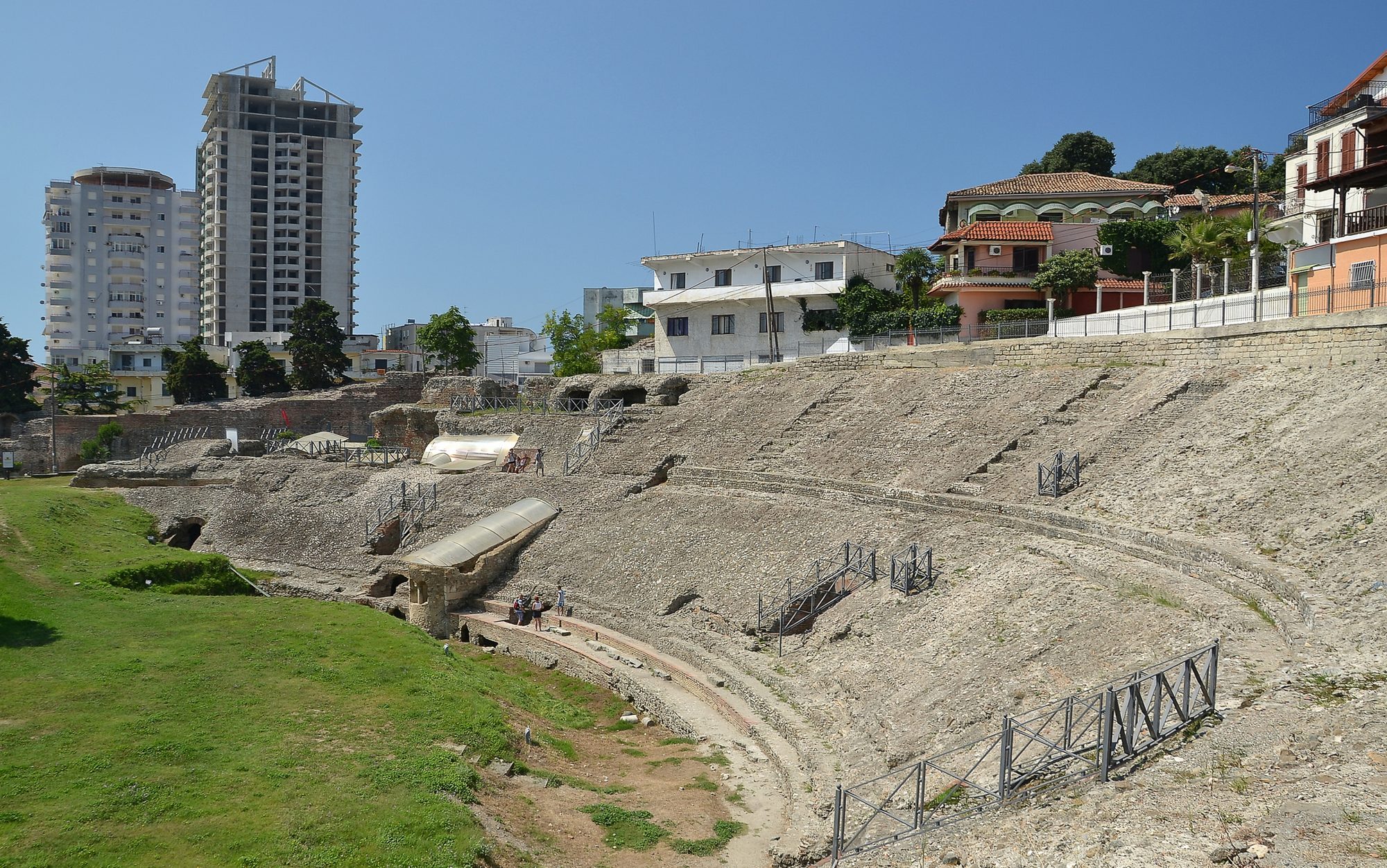
The Roman amphitheatre is the reason to go: the largest in the Balkans, built in the second century for something like fifteen thousand people, and sitting in a hole in the middle of a working modern neighbourhood with apartment blocks looking down into it. Nothing about the setting is dignified and it is all the more remarkable for it. Add the Venetian tower, the Byzantine walls, and the archaeological museum on the seafront.
Getting there: buses from the Zogu i Zi area every twenty minutes, 150 to 200 lekë, thirty to forty minutes.
Skip the beach unless you specifically want a Balkan seaside resort in full summer swing, which is a legitimate thing to want but is not the Riviera.
.JPG)
3. Mount Dajti
The half day that needs no planning at all.
The Dajti Ekspres cable car starts at the eastern edge of Tirana and climbs to about 1,050 metres in fifteen minutes, and the view back over the city and the plain to the Adriatic is the best in central Albania.
Cost: around 1,500 lekë return, so roughly 16 euro, which makes it the most expensive thing per minute in this article and still worth it once. Note that the cable car rests on Tuesdays, so do not save it for the wrong day.
Getting to the bottom station: any taxi from the centre, fifteen minutes. There is also a city bus to Porcelan and a short walk.
Do more than the viewing terrace. There are real trails up there, and the walk along the ridge takes you out of the restaurant crowd within twenty minutes. I have written about the day hikes around Tirana in detail, and Dajti is where most of them start.
4. Pëllumbas Cave
The best day out near Tirana that most visitors have never heard of.
Shpella e Zezë, the Black Cave, sits above the Erzen canyon about forty minutes southeast of the city. It is a genuine cave, several hundred metres deep, with palaeolithic occupation layers and a cave bear skull found inside. The walk up from Pëllumbas village takes about forty-five minutes on a decent path.
Getting there: a city bus runs to Pëllumbas from near the Tirana zoo, though not frequently. Most people take a taxi one way, around 1,500 to 2,000 lekë, and arrange the return.
Bring a torch. Phone lights are not enough past the entrance chamber.
5. Lake Bovilla
The photograph everyone has seen, and the road nobody mentions.
A reservoir in a limestone bowl about forty minutes north of Tirana, with a viewpoint on Gamti mountain that gives you the turquoise water framed by rock. It is genuinely spectacular.
The honest part: the final approach is a steep, narrow, unsurfaced road, and getting there without a car means a taxi driver willing to take it. Many are not, and the ones who are will charge accordingly. Agree the price and the wait before you set off.
6. Petrelë Castle
Ninety minutes, and it makes a good lunch.
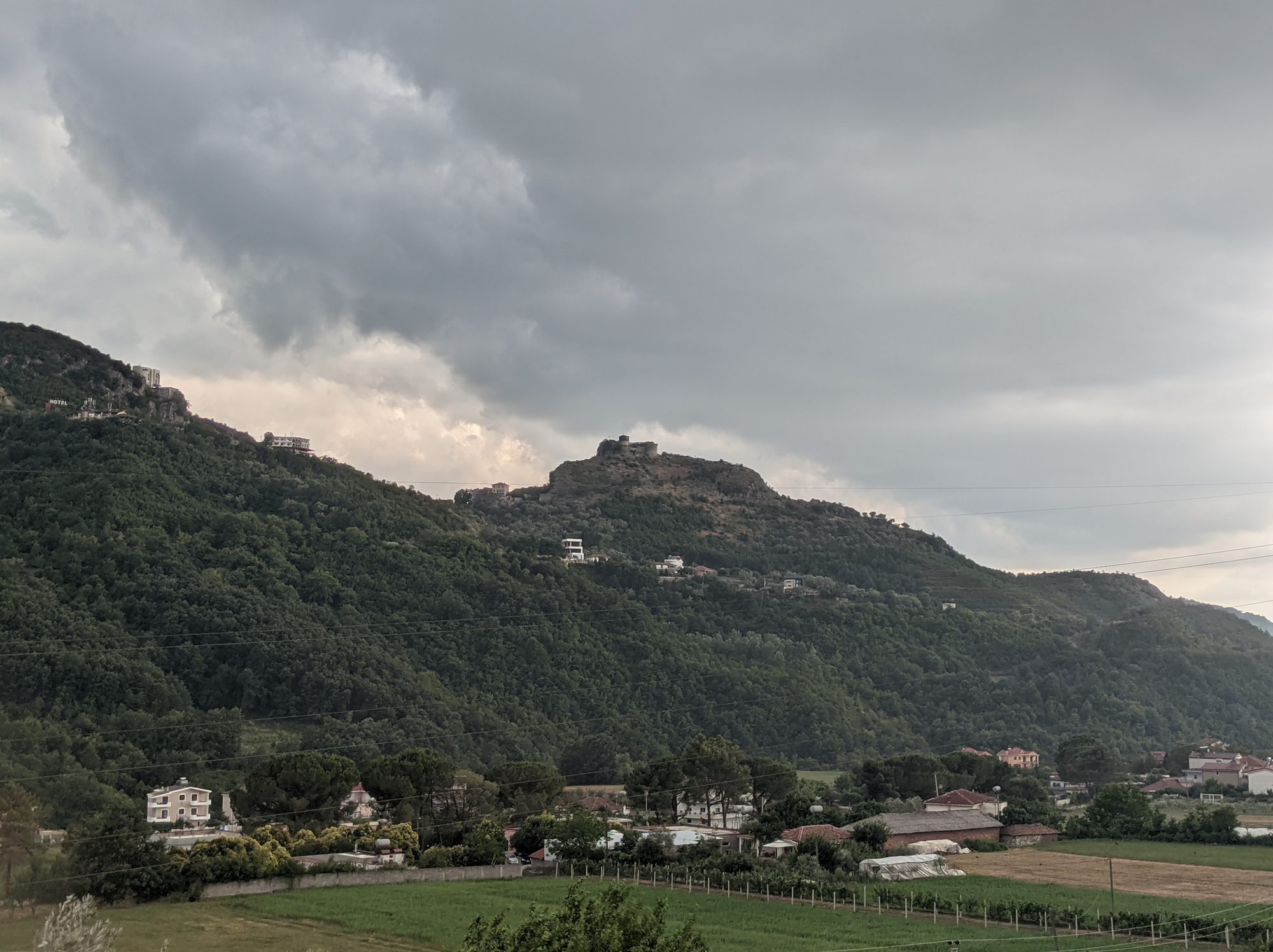
A small triangular castle on a hill fifteen kilometres south of Tirana, with foundations going back to the sixth century and a restaurant inside the walls looking over the Erzen valley and the olive terraces.
Getting there: this is the one on the list that public transport does not really solve. Take a taxi, around 1,000 to 1,500 lekë each way, and treat it as a long lunch rather than an expedition.

7. Elbasan
The day trip nobody takes.
Forty-five minutes through the mountain tunnel southeast of Tirana sits a city with a Roman-founded, Ottoman-rebuilt walled centre that almost no visitor bothers with. There is a castle quarter you can walk in fifteen minutes, a hammam, a clock tower, and the fact that Elbasan is where tavë kosi comes from, which if you have read the piece on Albania’s national dish is reason enough.
It is also the home of ballokume, the cornmeal and butter cookie baked for Dita e Verës in March.
Getting there: frequent furgons from the terminal, around 300 lekë, under an hour on a good road.
Go if you have already done Krujë and Durrës and want somewhere without a single tour group in it.
8. Berat
Doable in a day. Better as a night.
Two hours each way puts Berat inside day-trip range, and plenty of people do it. Furgons run frequently from the terminal for 400 to 500 lekë.
But I would not. Four hours of driving for five hours in a town whose best hour is the light on the Mangalem windows at seven in the evening is a poor trade. If Berat is on your list, give it a night. The itinerary guide puts it where it belongs.
If you only have one day and you must choose, Krujë gives you more per hour travelled.
How to Actually Move Around
The terminals. Almost everything north and south leaves from the combined North and South terminal out near Casa Italia, which is a short taxi ride from the centre and not walkable. Durrës buses go from Zogu i Zi. There is now an East terminal at Tirana East Gate for eastern routes.
Furgons do not run to a timetable in any binding sense. They leave when reasonably full, roughly hourly on the popular routes, and stop running in the late afternoon. The full guide to how furgons work covers the etiquette, but the short version is: turn up, say your destination, pay the driver, and do not plan a tight return.
Taxi apps, not Uber. Neither Uber nor Bolt operates in Albania. Patoko and Clust are what people use, and both need data, so sort connectivity before you need a ride from a village at four in the afternoon. An eSIM installed before you fly is the version of this that does not involve queueing at an airport desk.
Combining two in one day works for Krujë and Durrës, which sit on opposite sides of Tirana at similar distances. It does not work for anything involving Bovilla or Pëllumbas, both of which eat a day.
If you want three of these in one day, which is a reasonable thing to want on a short trip, a driver booked for the day costs less than three separate taxis and removes the four o’clock furgon anxiety entirely. Split between three or four people it is genuinely competitive with the bus.
And if you are renting a car anyway, do not collect it until you are leaving Tirana for good. Parking in the centre is a zone system, towing is enthusiastic, and a car sitting outside your apartment for three days is money burned. Pick it up on the morning you head south. The Albanian agencies are generally cheaper and more flexible about where they hand it over than the airport chains.
If You Only Have One Day
Krujë in the morning, back by two, Dajti cable car at five for the light.
That is a full, varied, genuinely good day in central Albania, and it will cost you about twenty euro all in.