In the stone villages of Albania’s northern highlands, a small number of elderly people are the last living remnants of a tradition that has almost no parallel anywhere else in Europe. They were assigned female at birth. They swore an oath, in front of twelve village elders, to live the rest of their lives as men. Once the oath was spoken, it could not be taken back.
They are called burrnesha, from the Albanian word burrë (man). English writers usually translate the term as “sworn virgins.” Neither word captures what the role actually was: a social and legal transformation, recognized by an entire village, that lasted a lifetime.
Fewer than a dozen are thought to remain. When the last of them are gone, one of the strangest and most specific institutions of Albanian highland life will be gone with them.

Where the Tradition Came From
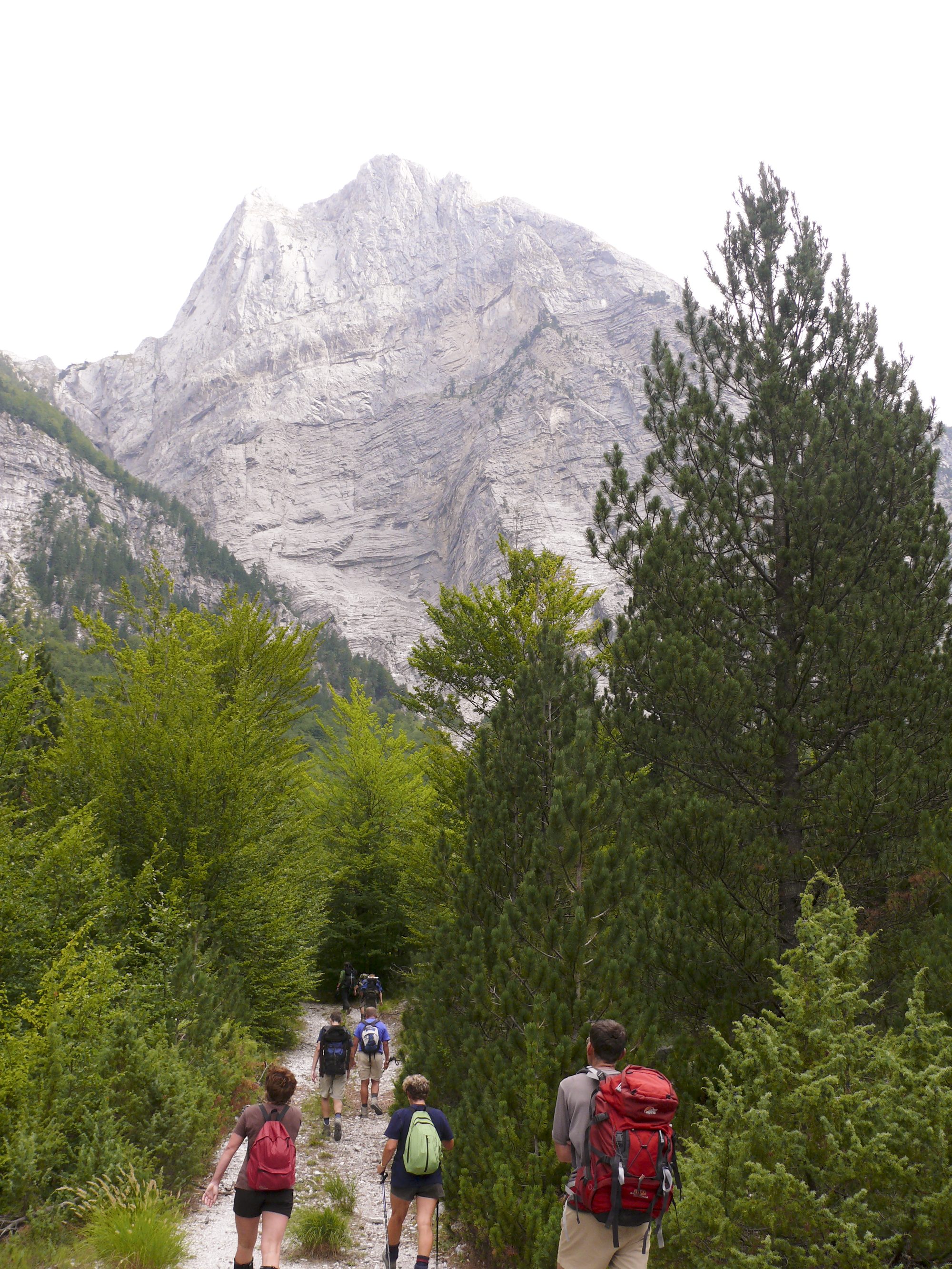
To understand the burrnesha, you have to understand the world they came out of. The northern Albanian highlands, Malësia, were for centuries a place where the Ottoman state barely reached. The villages in Dukagjin, around Shkodër, in Tropojë, and across the valleys of what we now call the Accursed Mountains, governed themselves by the Kanun of Lekë Dukagjini (Kanuni i Lekë Dukagjinit), a set of oral customary laws attributed to a 15th-century prince and finally written down by the Franciscan priest Shtjefën Gjeçovi in the early 1900s.
The Kanun was remarkably detailed. It covered property, marriage, hospitality, debt, and the infamous system of blood feuds (gjakmarrja). It was also firmly patrilineal. Land, houses, and family name passed through men. A household without a male heir was a household without a future.
Women lived under severe restrictions. They could not inherit property. They could not refuse the marriages their families arranged for them. In most villages they could not smoke, drink raki with the men, or vote in the councils that decided local matters. If the men of a family were killed in a blood feud, a widow or an eldest daughter could find herself without any legal standing at all.
Inside these rules, the Kanun allowed one extraordinary exit: a woman could swear to become a man.
The Oath
The oath was taken in front of twelve elders, often at the village church or a gathering of kin. The woman swore to remain celibate for life. From that moment on, she was addressed as a man. She took a male name, or kept her own and used it as a man’s name.
She wore men’s clothes and cut her hair short. She sat with the men at weddings and funerals, carried a rifle, smoked, worked the land that a son would have worked, and inherited in the place of the brother she was not.
The vow was considered irrevocable. Breaking it, under the strictest readings of the Kanun, could be punished by death. In practice, anthropologists who have spent time in these villages report that the punishment was almost never needed. The oath held because the community held it.

Why a Woman Would Take It
There was no single reason. The stories anthropologists have gathered, most famously by the British researcher Antonia Young, who spent decades in the Albanian and Kosovar highlands, all point to a small cluster of circumstances.
A family with only daughters needed a son. In a society where land passed only to men, a family without a male heir risked losing everything to distant cousins when the father died. If the eldest daughter swore the oath, the land stayed.
A blood feud had taken the men. The Kanun demanded that a killing be avenged on a male relative of the killer, and feuds could wipe out the men of a household in a single generation. The women left behind were left without any public voice. A burrnesha could speak, negotiate, and carry a weapon in a world that gave widows and orphan sisters no standing.
A woman did not want to marry the man her family had chosen. Refusing an arranged marriage in the old Kanun system was a profound dishonor. It could reignite a feud, or cost her family its standing in the village.
Taking the oath was one of the few ways to refuse without shame. The community accepted it. The intended groom could not object, because the bride was no longer a bride. She had become a man.
For some, the reasons may have been more private. Antonia Young and others have been careful not to map modern Western categories of gender or sexuality onto the role, but the possibility is there. The Kanun gave a small, culturally sanctioned opening. What each person did with that opening was their own.
What Daily Life Looked Like
A burrnesha’s day was the day of a highland man. You were up before light. You went to the fields with the other men, or to the mountains with the flock. In the evening you sat on the stone benches outside the kulla, drinking raki with the men of the village.
You smoked if you wanted to, argued over land, attended the councils where village matters were decided. You were served first at the table. Younger relatives kissed your hand when they entered the room.

The physical transformation was often quiet. A short haircut, trousers in place of a dress, a waistcoat and white felt cap (qeleshe) at weddings. In the old photographs you sometimes see what looks like a slight man in his seventies, weathered face, cigarette in hand, standing with a walking stick outside a stone house. Only the people who knew the family knew the history.
Most burrnesha were not trying to pass as men in some theatrical sense. The transformation was social, recognized, and complete. They were men in the eyes of the village, and that was the whole point of the oath. It turned a legal category into a lived identity.
The Last Generation
The communist regime that took power in 1944 did not care for the Kanun. Enver Hoxha’s government banned the old customary codes, criminalized blood feuds, gave women the legal right to inherit, and worked hard to pull the northern highlands into the modern Albanian state. The tradition did not end, but it shrank.
The bigger shift came after communism. Young women in the north now finish school, move to Shkodër or Tirana, inherit from their fathers under ordinary Albanian civil law, and choose whom they marry. The old reasons for taking the oath have almost all fallen away.
The burrnesha who remain are mostly in their seventies and eighties, living in small villages across Tropojë, the Shkodër highlands, and the Dukagjin valleys. The best-known public figure, Stana Cerović of Montenegro, died in 2016 after living her entire life as a man on her family’s land near Šavnik. The last in Albania itself have given occasional interviews to researchers and documentary photographers and otherwise prefer to be left alone. Estimates from anthropologists in recent years put the number below a dozen, almost certainly declining.
When the last of them die, there will be no replacements. No young woman in Albania today needs to swear off marriage in front of village elders to inherit her father’s land or refuse a groom. That is a good thing. What is being lost along with the tradition is something harder to name: a specific solution that a specific society invented for a specific set of problems, and that worked, in its own harsh way, for hundreds of years.
What You Can Still See Today
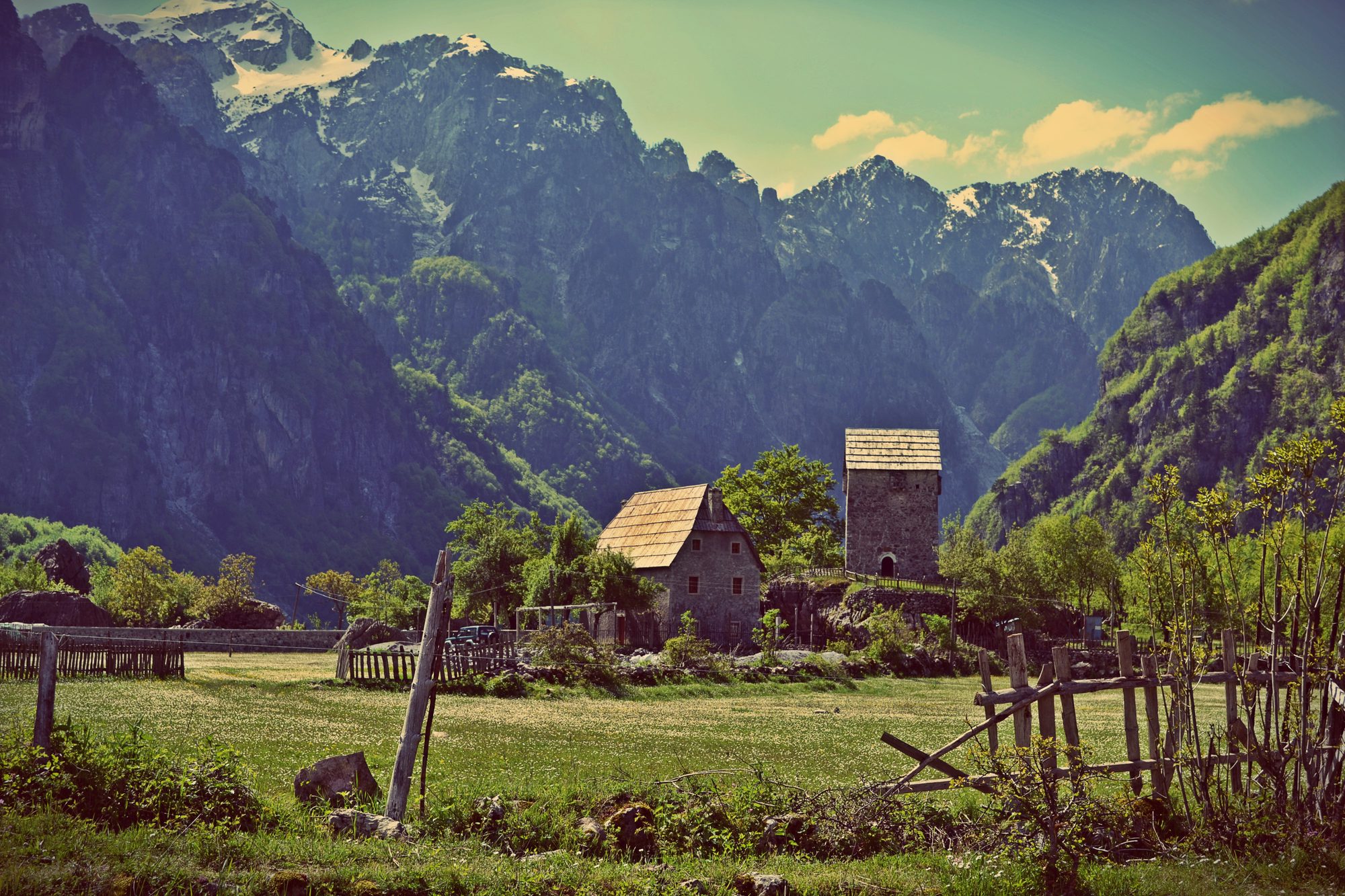
There is no museum dedicated to the burrnesha. The tradition was lived in kitchens, courtyards, and mountain fields, not in institutions. But if you travel in the north, you are moving through the landscape the Kanun shaped.

In Theth, the Kulla e Ngujimit (the Lock-in Tower) is a square stone tower where men marked for killing in a blood feud could shelter, sometimes for years. It sits in the middle of the village. There is a small fee of around 150 LEK, paid to the caretaker who opens it on request. The rules the guide explains are the feud rules, inverted, that opened the door for a daughter to become the family’s son.
In Shkodër, the Marubi National Photography Museum holds one of the most remarkable photographic archives in the Balkans, begun in the 1850s. Among tens of thousands of glass plates and prints are portraits of highland people in traditional dress, including subjects whose biographies local historians have connected to the sworn virgin role. It is worth a visit for anyone interested in the north as it actually looked before the twentieth century reshaped it.
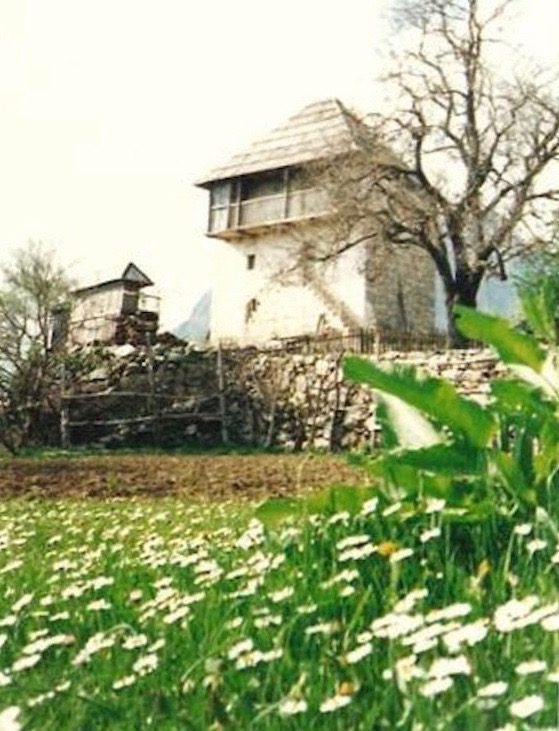
In the Dukagjin highlands and the villages above Tropojë, you can still see kulla towers with walls a meter thick at the base and narrow slit windows (frëngji) that were designed for rifles, not light. They are not relics. Some are still lived in. Ask at any guesthouse and someone will tell you whose kulla is whose, which feuds ended last year, which grandmothers were once grandfathers in the eyes of the law.
A Word on How to Talk About It
If you meet a burrnesha, or hear a family story about one, the kindest thing is to follow the village’s lead. If the community uses masculine pronouns, use them. If a name is used, use it. The role was never about performance for outsiders. It was about a person keeping a serious promise in front of people who had known them their whole life.
The tradition is fading because Albania has changed, and most of those changes are good. Women here now have options their grandmothers did not. But it is worth knowing that the older Albania, the one that the Kanun governed for so long, was not only the brutal place it is sometimes painted as. It was also a place that, in its own narrow and difficult way, made room for a daughter to live out her life as a son, and then honored that promise for the rest of her days.
That is worth remembering, even as the people who lived it slowly leave us.