Half of what is written online about the Blue Eye is out of date, and the half that matters most is the half about swimming.
You cannot swim in it any more. Not “officially discouraged”, not “at your own risk”. There are wardens, they enforce it, and the enormous number of photographs of people leaping into that impossible blue circle are all from before the rule came in. If jumping in was the reason you were going, adjust your expectations before you drive an hour to find out.
Which raises the fair question of whether it is still worth the trip. I think it is, but for different reasons than the internet suggests, and only if you go at the right hour.
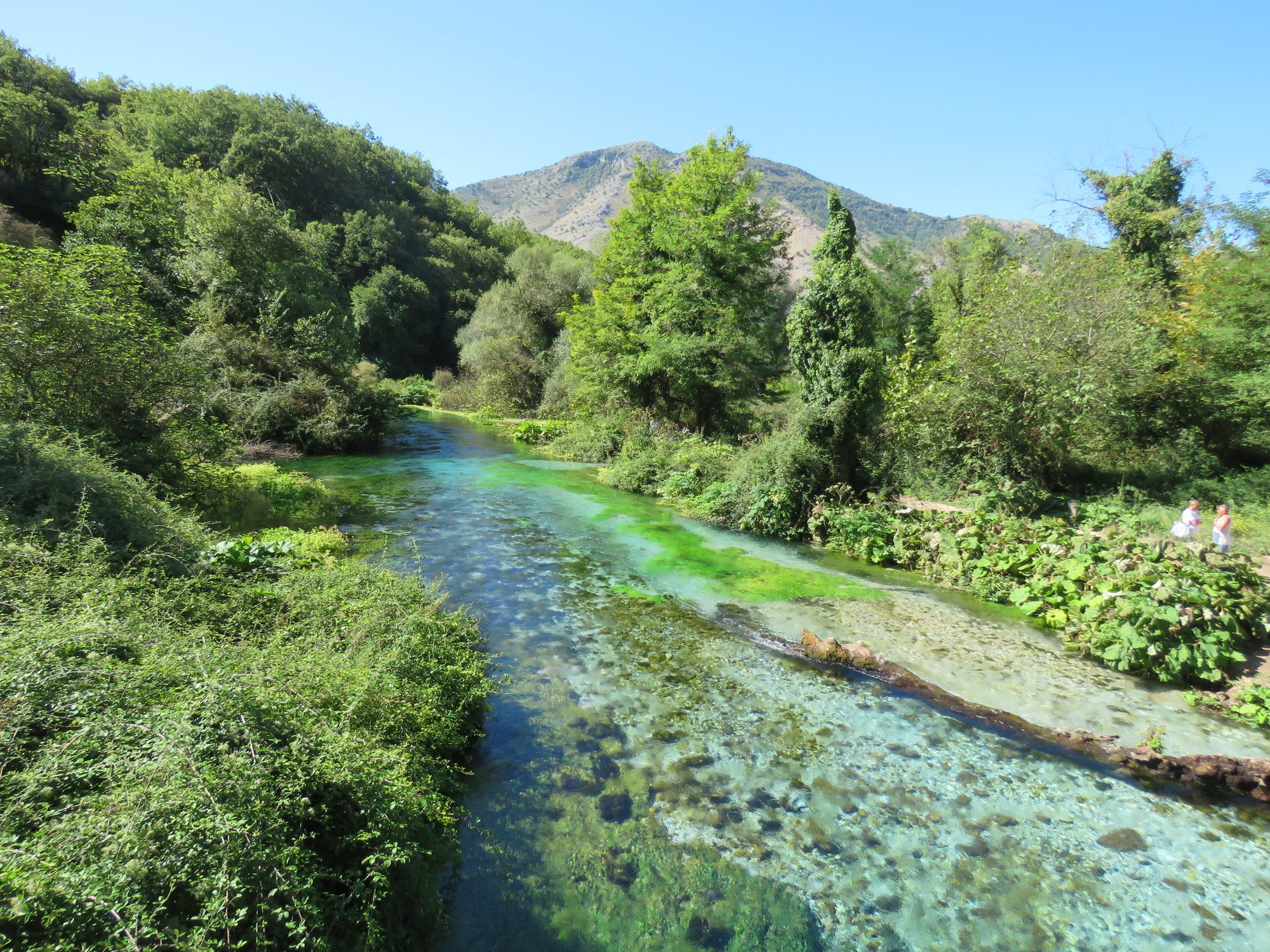

What It Actually Is
Syri i Kaltër is a karst spring, which means water that has travelled underground through limestone for years, filtered clean, emerging under its own pressure from a vertical shaft in the rock.
The numbers are the interesting part. Roughly 18,400 litres a second come up out of that hole, continuously, all year. Divers have gone down past fifty metres and not found the bottom. The water sits at a constant ten degrees, summer and winter, which is why the surface steams faintly on a cold morning and why five seconds in it feels like an ice bath.
That volume is also the practical reason the swimming ban is not only bureaucratic. The upward pressure at the vent is genuinely dangerous, and the cold at that temperature is not a joke either. Both things were true when people were jumping in; they were simply not enforced.
The spring feeds the Bistricë river, which runs down to the sea near Sarandë and has been supplying the region’s drinking water and hydropower for decades. What you are looking at is not only a beauty spot, it is southern Albania’s tap.
Getting There
The Blue Eye sits between Sarandë and Gjirokastër, about 22 kilometres from Sarandë and roughly midway if you are travelling between the two.
By car: about 20 to 25 minutes from Sarandë on a good road, signposted from the SH99. There is a large car park at the entrance and this is where the first surprise arrives.
The two-kilometre walk. From the car park to the spring itself is about 2 km, roughly 20 to 25 minutes on foot through the woods. It is flat, shaded and pleasant. But a great many people arrive expecting to park beside the water and are caught out, particularly in August heat with small children. There are electric buggies and scooters for hire if you would rather not walk it.
By bus: buses and shuttles run between Sarandë and the site, but they drop you at the main road, which adds the same two kilometres plus a bit more. Workable, not elegant.
By taxi or transfer: the usual answer for people without a car. From Sarandë, agree the price and the waiting time in advance, because there is nothing at the site to negotiate with and no reliable way back. A pre-booked transfer is worth considering specifically because it removes the “waiting at a roadside in the afternoon” problem, which is the actual failure mode here.
Honestly, though, this is a car destination. The Blue Eye combines naturally with Gjirokastër, Butrint and the road south, and none of those connect well by bus. If your southern days involve more than one of them, hire something; the local agencies on Localrent will usually deliver to Sarandë, and what to watch for at the rental desk is worth five minutes before you book.
Costs and Opening Hours
| Entry | 50 lekë per person |
| Parking | 200 to 800 lekë depending on duration |
| Open | 07:00 to 19:00 daily |
| Payment | Cash only, lekë or euro |
Fifty lekë is about fifty cents. This is one of the cheapest paid attractions in Albania and the price is not the issue.
The issue is cash. There is no ATM at the site and no card machine at the gate. Arriving with only a card means turning around. Bring small notes.

Best Time to Visit
This is the part that decides whether you enjoy it.
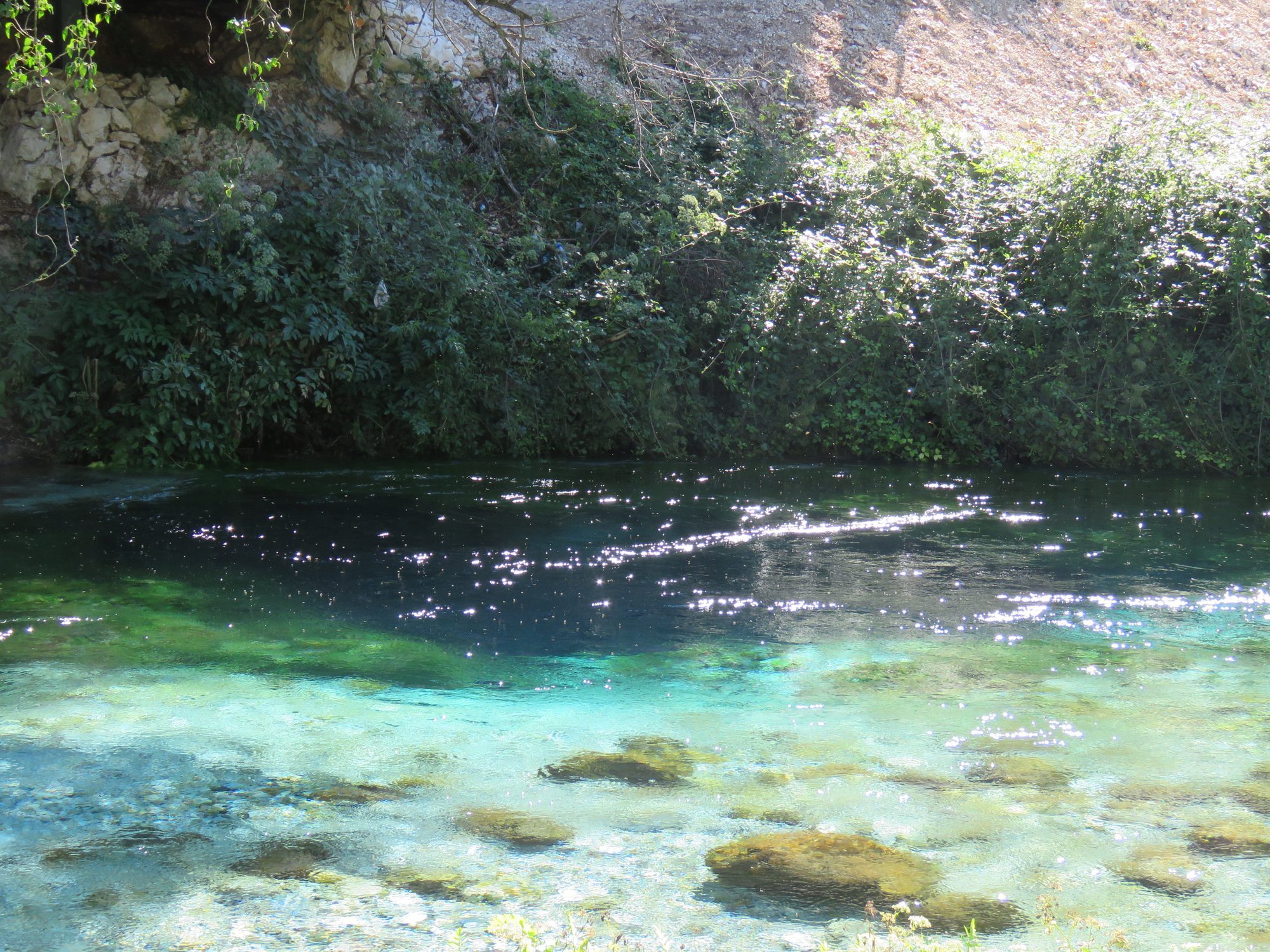
Go between seven and nine in the morning. The site opens at seven. The tour coaches from Sarandë and the cruise arrivals at Corfu start landing from about ten. Between those two facts sits the entire difference between a quiet forest spring and a queue for a viewing platform.
The light is also better early. The colour of that water depends almost entirely on the sun reaching into the vent, and by mid-afternoon in summer the trees on the eastern side have taken the angle away.
Season. The spring runs identically all year, which makes it one of the few Albanian attractions with no bad month. May, June and September are the best combinations of light, water clarity and crowd. July and August are busy and hot, though the woods are cool and the two-kilometre walk is genuinely pleasant shade.
Winter is underrated. Fewer people, the same water, steam coming off the surface on a cold morning, and Gjirokastër forty minutes away with nobody in it.
Practical Tips
Do not try to swim. Beyond the wardens and the fine, ten degrees and 18,400 litres a second is a serious combination. People have got into trouble here.
There is a river pool below the spring where getting your feet in is tolerated and where families tend to end up. It is still freezing. It is also the nicest part of the site on a hot day.
Wear something on your feet you can walk 4 km in. Flip-flops for the round trip from the car park is a mistake people make constantly.
There is a restaurant on site. It is fine, it is priced for a captive audience, and there is better food in Gjirokastër.
Two hours is plenty. Including the walk both ways. This is a half-day at absolute most, which is why it belongs combined with something.
Combine it with: Gjirokastër, 40 minutes north, or Butrint, 50 minutes south. The classic southern day is Blue Eye at eight, Gjirokastër for lunch and the castle, back down for the evening. That works beautifully and almost nobody does it in that order.
Is It Worth It?
A qualified yes, and the qualification is the hour.
At eight in the morning in September, with the light going straight down the vent and half a dozen people on the platform, it is one of the strangest and most beautiful things in southern Albania and easily worth the detour.
At one in the afternoon in the second week of August, with four coaches in the car park and a queue on the walkway, it is a twenty-minute stop at a nice pond and you will wonder what the fuss was.
The Blue Eye has not got worse. It has got more popular, and it has stopped letting people jump in, which was always the photograph rather than the place. What is left is a genuinely remarkable piece of geology in a beautiful patch of forest, and it rewards the people who set an alarm.
Set the alarm.
A note on the other Blue Eye. There is a second Syri i Kaltër in Theth, up in the northern Alps, and the two get confused constantly online. That one is a spring-fed mountain pool at the end of a walk, colder, smaller, and reached on foot from the village. If you are looking at the Valbona to Theth hike, that is the one you will meet. They are 300 kilometres apart.