Every Albanian city keeps one street for the evening. Not always the widest street, and not always the prettiest, but the one where, as the day’s heat breaks, the whole town comes out to walk slowly up and down until dark. I have already written about what the xhiro is and why it survives, the nightly ritual that outlived dictatorship, the arrival of cars, and the smartphone. This is the practical companion: the actual boulevards, where they run, when they fill, and what to eat while you walk.
Treat it as a field guide. None of these places charge admission, none need booking, and the only planning required is arriving before sunset with a little cash in your pocket for ice cream.

How the evening works
The timing moves with the sun. In July and August the boulevards fill from around eight and stay full past eleven. In May and October everything slides a couple of hours earlier, and in winter the xhiro shrinks to a brisk after-work circuit done in good coats. Weekends are fuller than weekdays, and Sunday evening is the peak of the week everywhere in the country.
The rhythm never changes: walk the full length, turn, walk back, repeat, and at some point surrender to a cafe chair for a macchiato or an akullore (ice cream) that stretches to an hour. If you remember only one rule, walk slower than feels natural.
The coast
Vlorë: the Lungomare
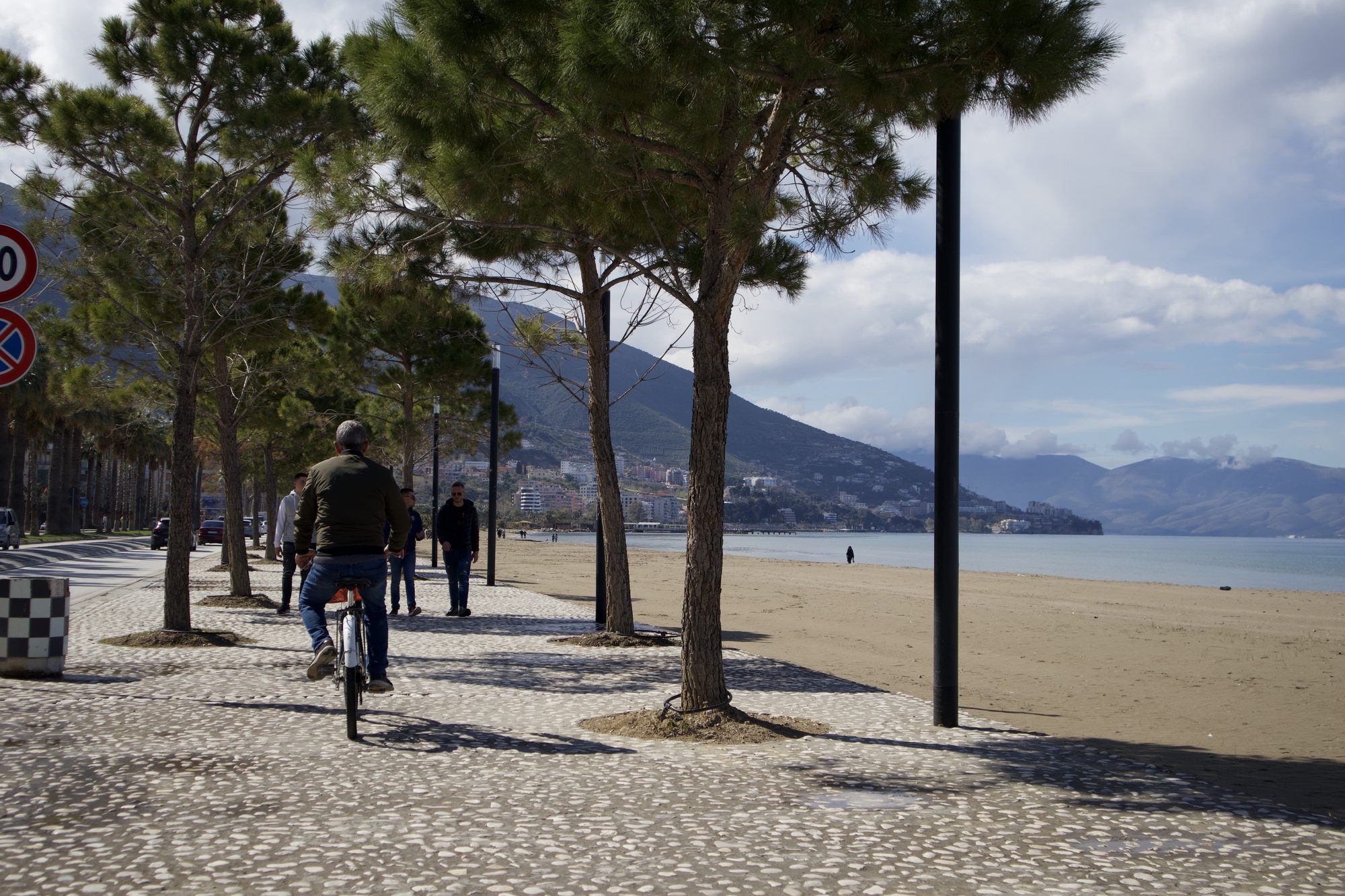
The biggest seafront walk in Albania starts at Sheshi i Flamurit (Flag Square), where independence was declared in 1912, and runs south along the bay. The rebuilt core of it, nearly four kilometers of stone paving threaded with pines and young palms, was designed by a Belgian architecture firm and ended up nominated for the European Union’s Mies van der Rohe prize. That is a strange sentence to write about a walkway, and a deserved one.
On a July evening the Lungomare is less a walk than a slow river: families five across, joggers weaving, vendors selling misër i pjekur (grilled corn) off charcoal carts, an amphitheatre facing the water, kids treating the circular concrete platform by the shore as a stage. The path gives out toward Uji i Ftohtë, the Cold Water district at the south end, and construction pushes it further toward Radhimë and Orikum every year. The Lungomare is still growing.

Durrës: the Vollga
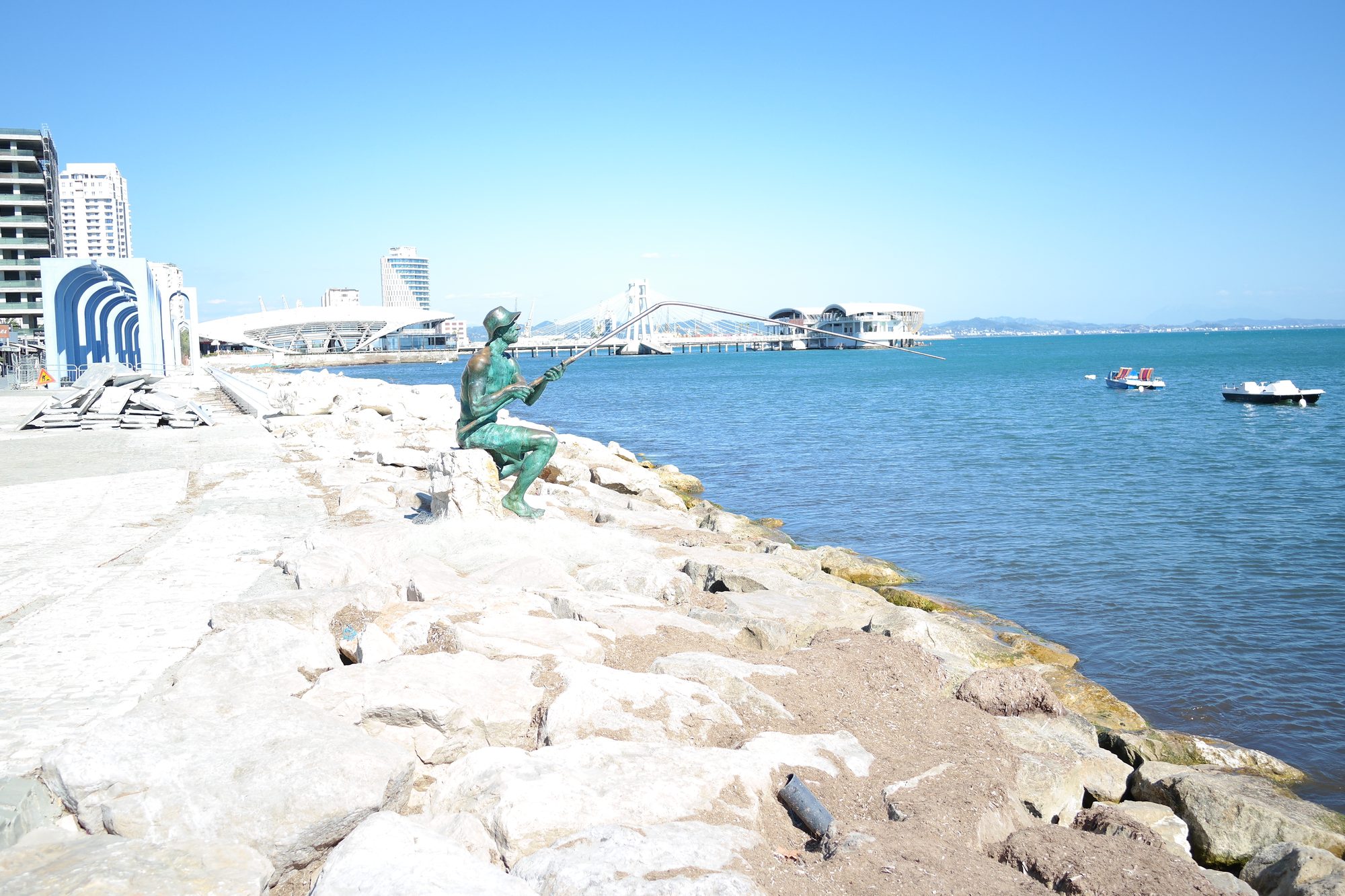
Officially the seafront here is Shetitorja Taulantia, a kilometer and a half of wide paving along the water. Nobody calls it that. The name that stuck comes from a hotel: an Italian-built seafront palace from the late 1930s that spent the communist decades renamed after the Volga river, back when Albania and the Soviet Union were friends. The friendship ended. The name stayed.
This is the loudest, most carnival xhiro in the country. Stalls, popcorn, candy floss, fairground rides, and, near the water, the improbable bronze quartet of John Lennon, Mick Jagger, Bob Dylan, and Tina Turner, which every teenager in Durrës treats as a photo backdrop. Durrës sits barely half an hour from Tirana’s airport, so if you land in the late afternoon you can drop your bags and be on the Vollga for your first Albanian sunset. A prebooked transfer from the airport makes that painless with luggage; the furgon from Tirana works fine without it.

Sarandë: Bulevardi Hasan Tahsini
The Riviera’s xhiro curls around the whole bay for a good kilometer, palms overhead, the town beach below, Corfu a grey shadow on the horizon. The boulevard is named for an Albanian scholar who became the first rector of Istanbul University, and his statue now watches over the most dressed-up evening walk in Albania, equal parts catwalk and family outing, running on Riviera time deep into the night.
Do it properly: swim at the town beach at six, dry off over a coffee, then join the flow as the lights come on around the bay. When you want quieter water than Sarandë offers, the beaches north and south of town are minutes away.
The lake
Pogradec: the shëtitorja on Lake Ohrid
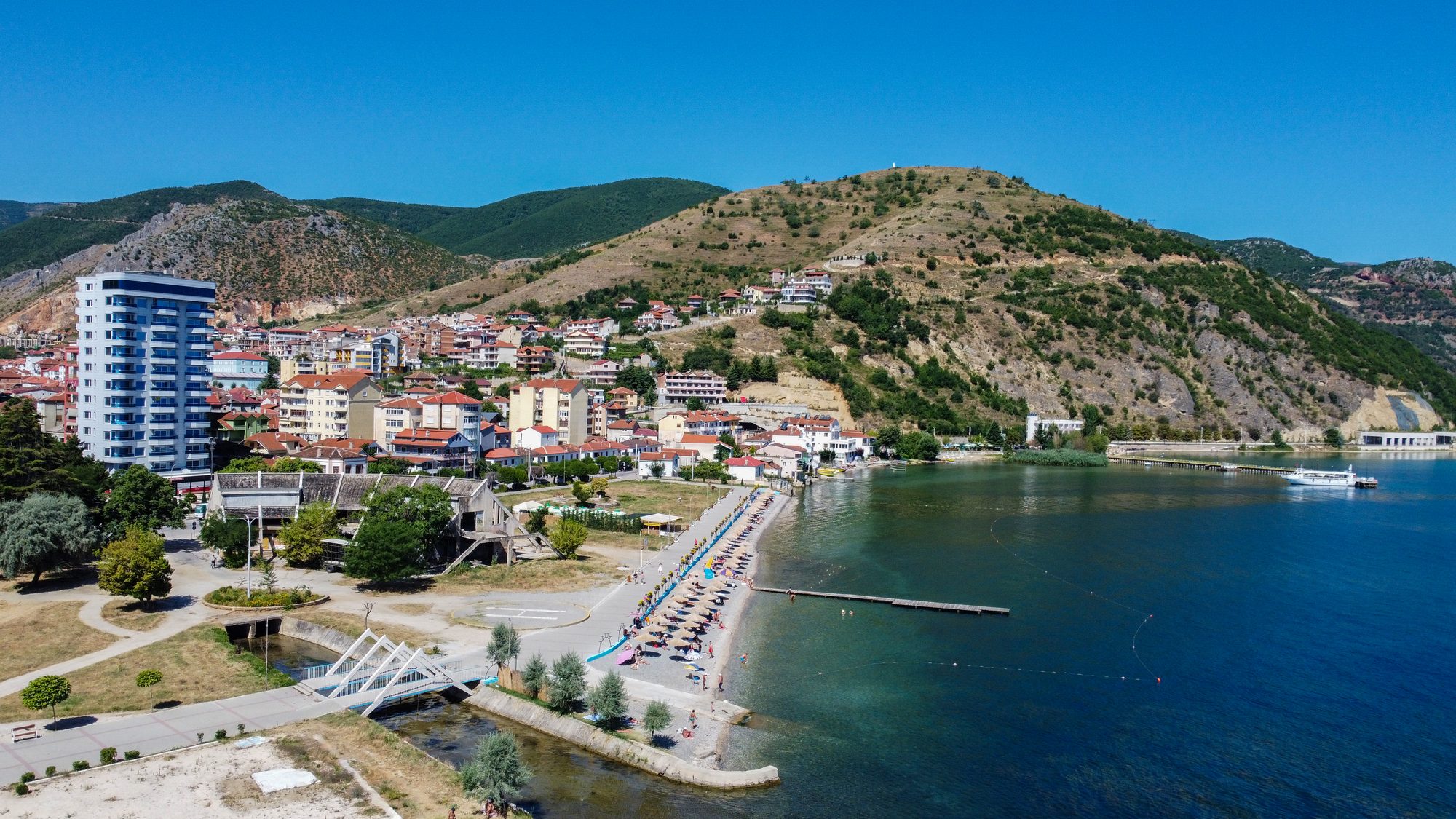
Pogradec’s lakeside promenade is my favorite antidote to the coast. Two kilometers of shoreline path on one of Europe’s oldest lakes, and a fraction of the crowds. Mid-promenade sits the bronze statue of Lasgush Poradeci, the lyric poet who took his name from the town, gazing permanently at the water he spent a lifetime writing about. It is hard to argue with his choice of view.
The cafes here hang wooden jetties out over the lake, the restaurants serve koran (the Ohrid trout, order it grilled), and the wooden pavilions along the shore fill with pensioners playing cards from mid-afternoon, warming up hours before the walkers arrive. At dusk the light goes low and pink across the water and the mountains of North Macedonia turn purple on the far shore. Nobody hurries. Nobody has anywhere to be. It is the xhiro reduced to its essence.

The inland cities
Korçë: Bulevardi Shën Gjergji
My favorite xhiro in the country, and I have said so before. The boulevard is pedestrian end to end, lined with trees and cafes, running from the red-brick viewing tower by the Old Bazaar straight down to the Resurrection Cathedral. Korçë sits high, so the evening air is cool even in August, and in autumn the whole walk smells of gështenja të pjekura (roasted chestnuts) sold in paper cones from carts.
Listen as you walk. If you hear men singing in close harmony somewhere off the boulevard, that is the serenata korçare, the city’s own tradition of strolling love songs, still alive at weddings and on warm nights. An aunt of mine lives here and hosted my first proper xhiro years ago, so I am biased. I am also right. Korçë walks its boulevard with a seriousness no other city matches. The city deserves more than one evening, and the Korçë guide makes the case.
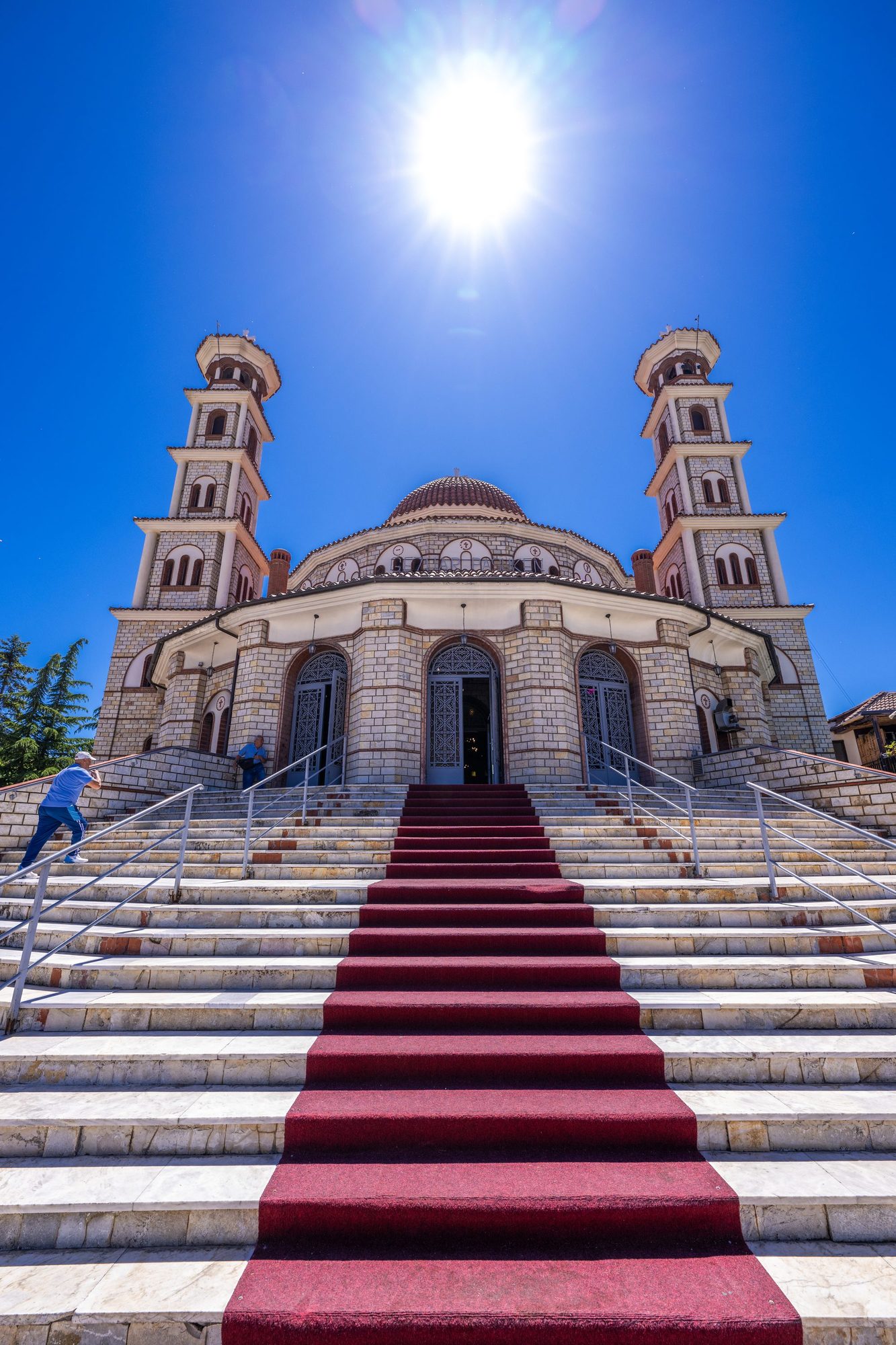

Berat: Bulevardi Republika
Broad, leafy, and running along the edge of the old town with the Osum river close by, one side all bars and qebaptore, the other open sky and mountains. Walk it at dusk, when the white Ottoman windows of Mangalem light up one by one on the hillside above. The Berat xhiro has a small-town completeness to it: by your second lap you recognize faces, by the third you are nodding at them like a local.
Gjirokastër: the Old Bazaar lanes
The one city where the xhiro goes uphill. There is no boulevard, just steep polished cobbles winding through the Ottoman bazaar under strings of lights, with cafe tables wedged onto every flat corner. The crowd gathers at Qafa e Pazarit, the five-way junction whose name means the Neck of the Bazaar, and circulates from there through the lanes. Wear shoes with grip. Those stones have been polished by four centuries of exactly this walk. The Gjirokastër guide has the castle hours, the tower houses and where to eat once the lap is done.
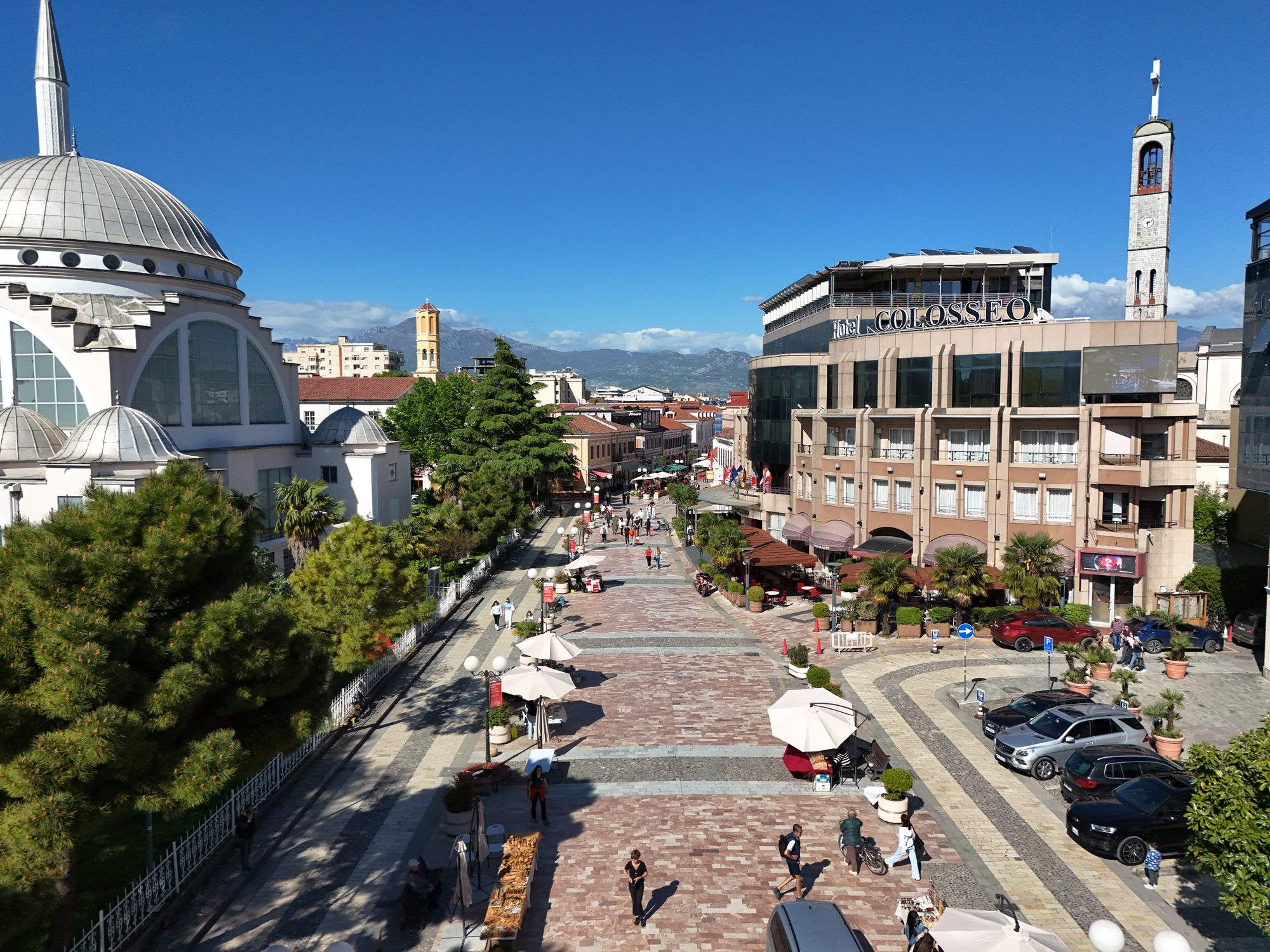
Shkodër: Rruga Kolë Idromeno
Locals just say Pedonalja, the walking street. It is named for Kolë Idromeno, the painter and photographer who documented this city a century ago, and it runs between pastel Ottoman-era facades that have been carefully brought back to life, every ground floor a cafe. Shkodër is Albania’s bicycle city, so its xhiro comes with a second, moving layer: grandmothers on bikes threading unbothered through the walkers.
When the street feels done, go ten minutes west to Shiroka on Lake Shkodra for the lakeside second act, where the sun sets behind the water and the fish restaurants take over the evening. The castle, the Marubi museum and the dawn buses into the Alps are in the Shkodër guide.
Tirana: choose your xhiro
The capital refuses to pick one street, so you have to pick for yourself.
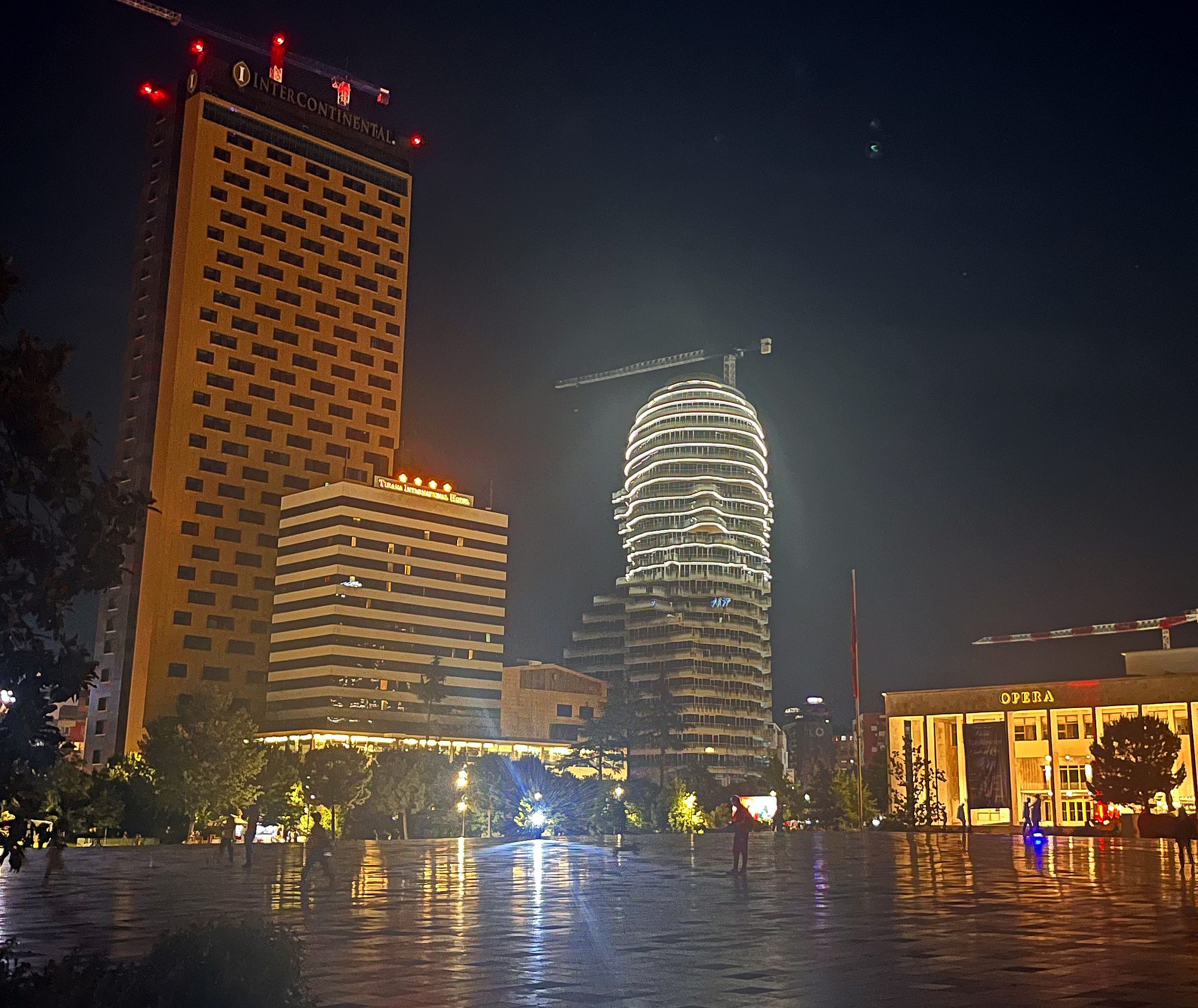
Skanderbeg Square was cleared of cars in 2017, and the vast stone slab at the center of the city quietly became its newest walking ground. At dusk it turns into a slow carousel of families, cyclists, and small children piloting rented electric cars with alarming confidence. Shëtitorja Murat Toptani, the pedestrian lane that runs past the old castle walls, is the everyday version, compact and shaded. Rruga Myslym Shyri goes car-free on weekends and fills within the hour. And the Grand Park offers the green xhiro, a loop around the artificial lake that absorbs half the city on warm evenings.
Blloku is something else: less walking, more being seen, and by ten the xhiro there has dissolved into Tirana’s nightlife proper. My advice is to walk the square at sunset, then eat at Pazari i Ri, the rebuilt new bazaar ringed with grills and raki bars, ten minutes away on foot.

Stringing them together
You can build a very good week around evening walks. The classic run goes down the coast: an evening on the Vollga in Durrës, one on Vlorë’s Lungomare, then over the Llogara Pass for Himarë’s small seafront version, and Sarandë to finish. Inland, Berat, Gjirokastër, and Korçë chain together naturally, with Pogradec as the quiet closing act.
Furgons connect every city here cheaply, and I have written a full guide to using them. The honest caveat is timing: the xhiro happens at dusk, which is exactly when intercity transport thins out, so without your own wheels you walk where you sleep. That is no hardship. But if you want a different promenade each night, a small rental from a local agency runs 25 to 35 euros a day in summer and turns the whole southern circuit into an easy loop. For the coast without a car, my coastline transport guide covers the bus and furgon timings that do exist.
Rules of the boulevard
Everything in the original xhiro piece about how to join still applies, so here is only the short version. Dress like you made a small effort. Walk slower than feels natural, then slower again. Carry small notes for the corn cart and the ice cream window. Put the phone away.
And do not treat the promenade as a route to somewhere. It is the somewhere. The evening I stopped checking how far the boulevard went and simply turned around when everyone else did was the evening I finally understood what all this walking is for.